
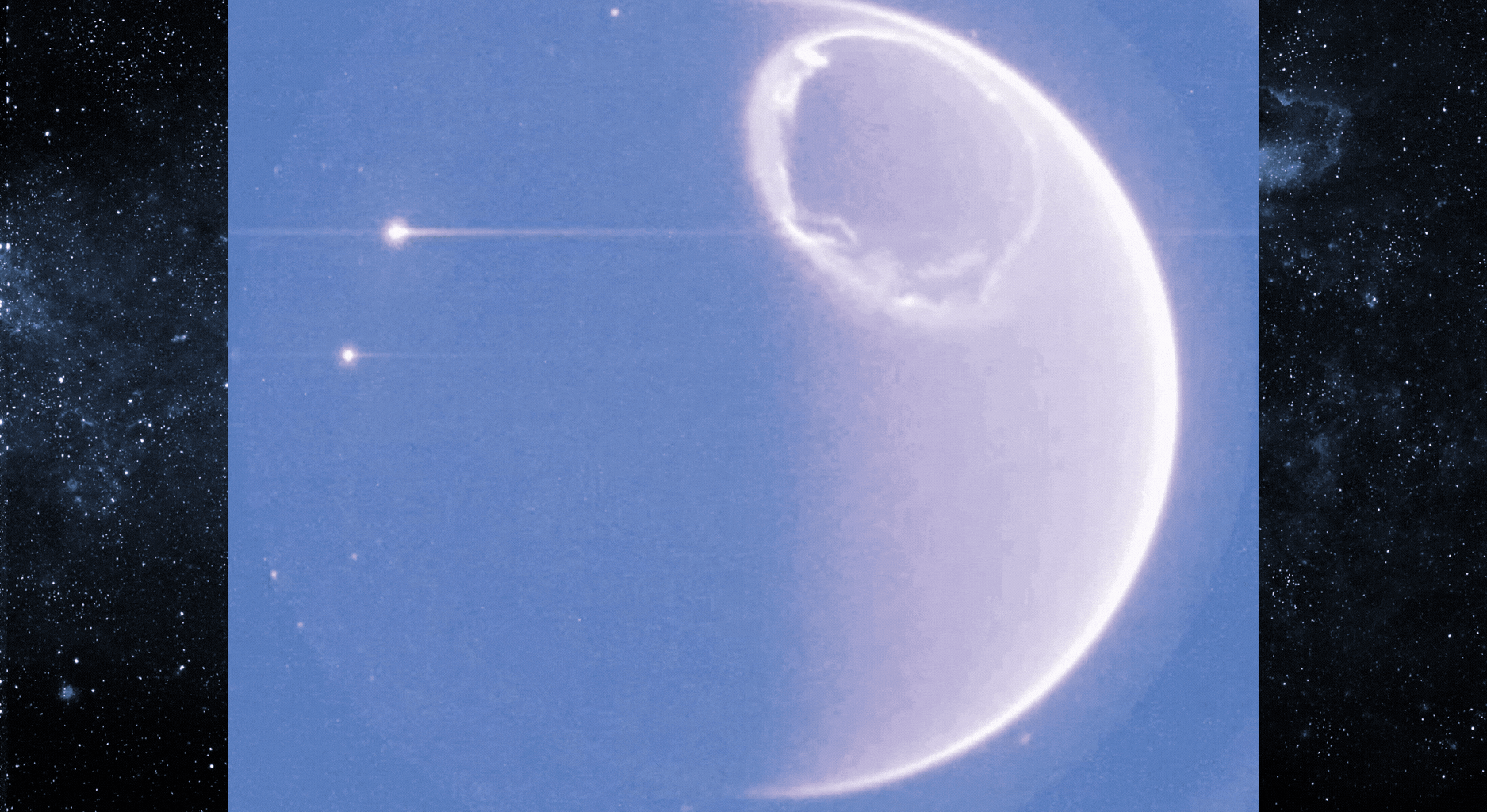

Auroral oval captured by SMILE shows the northern lights dancing on both the night and day side of Earth. (Image credit: ESA & CAS/Smile/UVI, Background added in Canva Pro.)
The northern lights are usually spotted dancing across dark night skies — but this striking new view shows them from an entirely different perspective.
Captured by the Solar Wind Magnetosphere Ionosphere Link Explorer, or SMILE, the footage reveals the full ring of auroral activity encircling Earth’s north pole in ultraviolet light, stretching across both the night and day sides of our planet. That means we can see auroras glowing on Earth’s dayside — activity that would usually be lost in the glare of the sun.
The footage was captured on July 24, according to an ESA statement accompanying the image, just two weeks after SMILE’s ultraviolet imager was switched on, offering an exciting first taste of the science to come.
SMILE is a joint mission between the European Space Agency (ESA) and the Chinese Academy of Sciences (CAS), designed to investigate how Earth responds to solar wind, the continuous stream of charged particles flowing from the sun.
The spacecraft carries four scientific instruments, including the Ultraviolet Imager (UVI), which is responsible for this remarkable view. UVI is the first camera since NASA’s Polar spacecraft ended its mission in 2008 capable of imaging the entire northern auroral oval in ultraviolet light.
You may like
Auroras occur when energized particles from the sun collide with gases in Earth’s atmosphere. But the story begins much farther out, where the solar wind interacts with Earth’s magnetosphere — a vast region of space dominated by Earth’s magnetic field.
By watching the entire auroral oval at once, SMILE can help scientists connect what is happening with the magnetosphere with the auroras glowing below. And rather than just capturing a small snapshot of what’s going on, the ultraviolet imager can continually observe the show for up to 45 hours at a time, revealing how the auroral oval changes as conditions in the solar wind change.

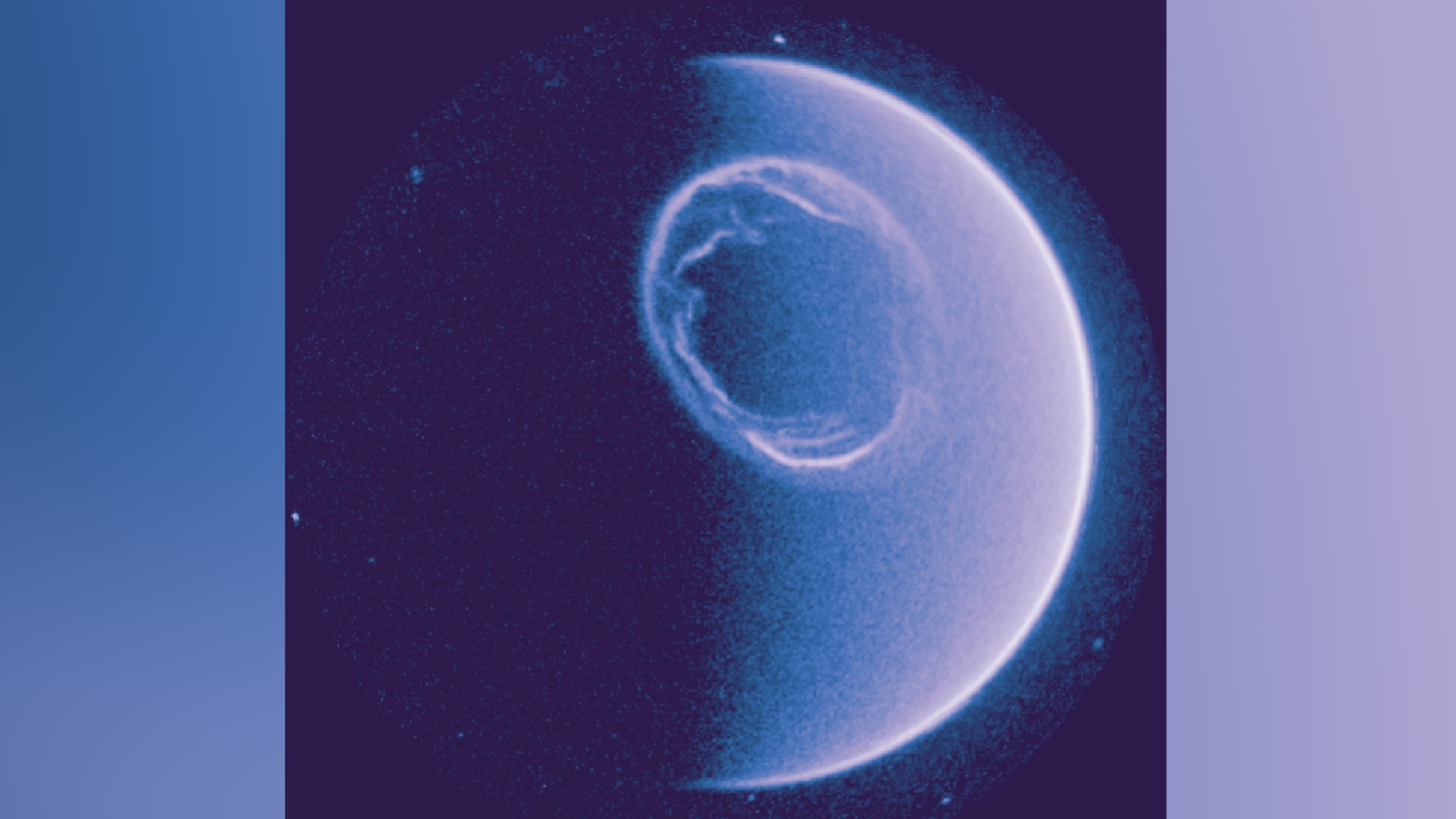
Image captured on Aug. 2, 2026, by the UVI instrument on SMILE shows a full ring of the northern lights around the north pole in ultraviolet light. (Image credit: ESA & CAS/Smile/UVI)
Combined with SMILE’s other instruments, these observations will give scientists a new window into studying how energetic particles from the sun move through Earth’s magnetic environment and cause the dazzling northern lights displays below.