
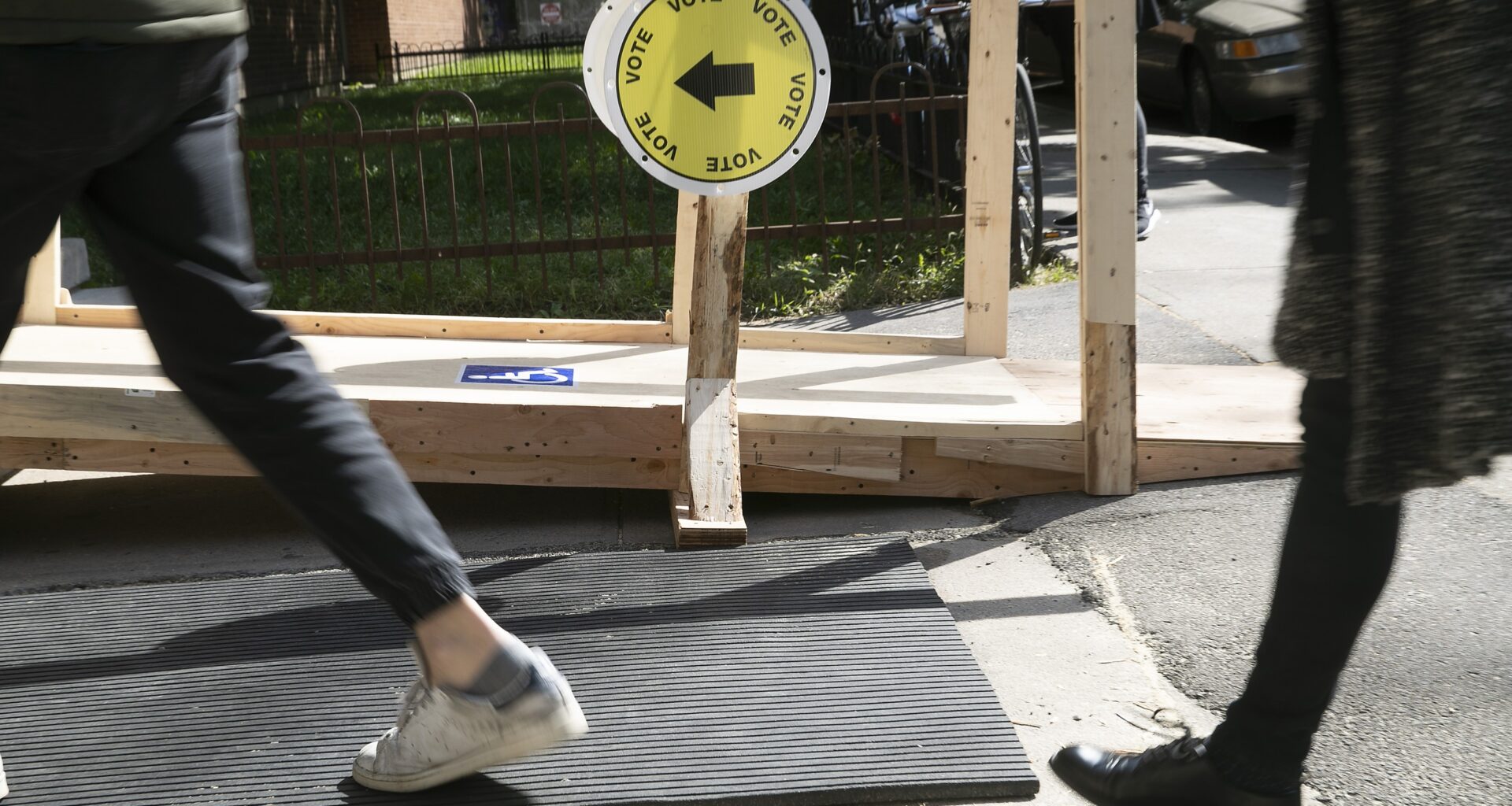
Taking the time to vote is important in any election.
It’s a sacred democratic duty, a chance to have your say and an opportunity to remind elected officials who they really work for.
High-minded prinicples aside, there are also many concrete reasons to vote: for a candidate, a leader or a party; for a policy, an idea, or a vision; for change; for stability; for a brighter future; for something or against something.
As Quebecers head to the polls Monday, the stakes are high. The outcome of the 2026 general election could set in motion a chain reaction that leads to another sovereignty referendum.
The Parti Québécois has been leading in opinion polls. PQ Leader Paul St-Pierre Plamondon has promised a referendum in a first mandate, but only once U.S. President Donald Trump is set to leave office in 2029.
However, a majority of Quebecers — roughly 70 per cent — have told pollsters they don’t want a referendum, and only about 30 per cent say they would vote Yes to separate if one were held.
More recent surveys also show nearly half of Quebecers doubt that St-Pierre Plamondon will actually hold a referendum, and only 14 per cent think the province would vote for independence.
A lot of people are making a lot of assumptions and seem willing to cast a ballot for a person promising to do something they don’t want.
So federalists who want Quebec to stay in Canada and nationalists who don’t think this is the right moment to pursue sovereignty have an interest in showing up to vote Monday. Participation is crucial for the future trajectory of both Quebec and Canada.
English-speaking Quebecers also have renewed impetus to vote as their democratic rights are being compromised under Bill 96, the law to strengthen the French language.
For the first time, Élections Québec sent out voter information cards in French only earlier in the campaign, with only a QR code pointing to instructions online in English. The independent agency said it sought an exemption to send out these details in both languages, but was denied by the government.
Members of the English-speaking community challenged the move in court, arguing the rights of anglophones were being infringed — particularly seniors who are less familiar with technology and who tend to be less at ease in French. A judge ruled Élections Québec must send out subsequent mailings in both languages. But the government is appealing the decision. Clearly this won’t be sorted till after the election.
Adding insult to injury, Élections Québec also directed polling station workers to address voters only in French, unless they are Indigenous or eligible for English education.
It’s yet another barrier to democratic participation and another example of anglos being treated as second-class citizens. But it shouldn’t be a deterrent to voting — quite the opposite, in fact.
Young Quebecers are typically less inclined to cast ballots. Less than 40 per cent of 18- to 24-year-olds participated in the 2022 Quebec election, which had an overall turnout rate of 66 per cent.
Yet younger generations will have to live with the consequences of decisions made today — about the environment, public finances, government programs, housing policy and the future of the country.
Their votes can also have an impact when they show up in great numbers.
Regardless of your age, language, priorities or political leanings, Monday is a chance for all Quebecers to be heard.
Democracy must not be taken for granted.