
Occupational therapists are health-care professionals that are in demand locally, provincially and across the country.
They help people get back to performing tasks after they’ve experienced disease, disability, or injury.
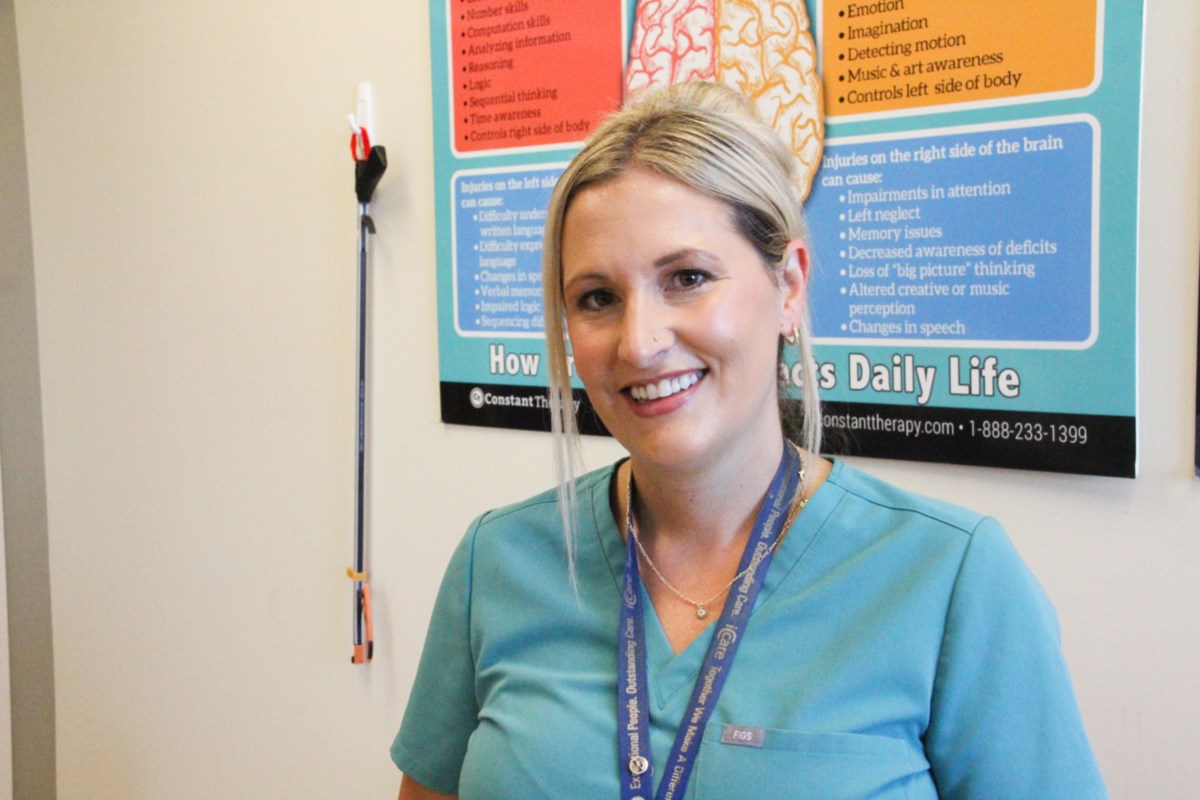
“It’s a huge field,” said Vicki Dupont, a Sault Area Hospital occupational therapist who assists patients in recovering from strokes.
“If we look at somebody that’s had a stroke for example, they may need to learn to get dressed again,” Dupont told SooToday.
“Once we master that, we look at those higher level skills like being able to manage their finances, drive a vehicle and do their grocery shopping. OTs look at people as a whole.”
Occupational therapists and physiotherapists work together.
“If your shoulder doesn’t work, a physiotherapist is going to give you exercises to do. We would too, but we focus on things like ‘can you lift your groceries onto a shelf?’ It’s a different kind of focus,” Dupont said.
“We also recommend equipment, like a raised toilet seat or a bath chair so that people can age in their homes safer and for a longer period of time without needing to move into a long-term care home.”
Home care occupational therapists visit patients in their places of residence.
OTs also visit places such as the Sault’s THRIVE Child Development Centre if a child needs help in performing certain tasks.
There are also practicing occupational therapists who care for people recovering from injuries sustained in motor vehicle collisions.
There is a wide range of occupational therapy care at SAH, Dupont said.
“We have OTs in inpatient care and they’re primarily looking at what patients need to do to be able to leave the hospital safely. They see if patients can walk to the bathroom safely. Is their thinking and memory okay? Do they need any equipment to go home safely?”
“We also have an OT here at the hospital that works in foot care and wound care specifically. We have OTs that work in the hand clinic. They fabricate splints and work very closely with plastic surgeons for resuming hand function,” Dupont said.
Apart from helping patients regain their independence after suffering a stroke, Dupont also works with patients who have had hip, knee or shoulder replacements.
“I help them get through that time after their surgery,” Dupont said.
SAH currently has 16 occupational therapists working in a variety of programs including inpatient and outpatient rehabilitation, geriatric rehabilitation and in mental health and addictions through the Assertive Community Treatment program.
That program provides support to clients living with severe mental health challenges, with the goal of preventing hospital admissions and promoting safe, independent living.
Those interested in becoming an occupational therapist must complete a four-year undergraduate bachelor’s degree followed by a master’s degree in occupational therapy.
Pay ranges from $40 to $56 per hour.
Job prospects for occupational therapists in Ontario are ‘good’ according to the Government of Canada’s Job Bank.
There are currently four open occupational therapist positions at SAH.
Dupont said it’s hard to get occupational therapists to practice in the north but there are incentives in place such as the province’s Rehabilitation Professionals Incentive Grant Program.
“It’s a grant for people to come and work here. You get $5,000 a year just to work in the north for three years, so you can get up to $15,000,” Dupont said.
“The last three students that have come here have been hired.”
An occupational therapist will never be bored.
“One thing about OT is that there is never a typical day,” Dupont said.
“After a stroke, maybe your left arm doesn’t work. So I could be working on hand exercises to try to improve that function of the arm. The next patient that comes in could be independent, can totally walk around, but they might have cognitive or visual deficits, so we help them with that.”
The SAH occupational therapy department also has a kitchen where patients recovering from disease, disability, or injury can practice making their own meals again.
“We say we’re actually going to make a meal and we do. We have limited options, like a grilled cheese sandwich, but those are things that are important to patients,” Dupont said.
It feels good to help people take care of themselves again, she said.
“It’s so rewarding to see people reach their goals, like learning how to put on makeup again.”
“I think it’s a great profession. You definitely will never be out of work. You will always be able to find a job,” Dupont said.