
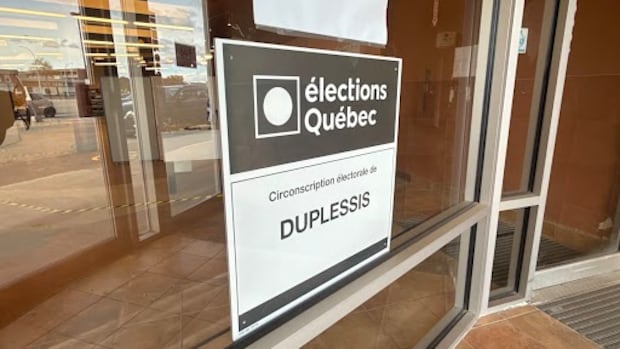
Quebec’s North Shore is a place of contrasts.
Thousands of kilometres of dense boreal forest are framed by a coastline of white sandy beaches.
Small fishing villages sit next to large, industrial cities.
These contrasts help shape a variety of people’s opinions on issues like English-language rights and health-care access.
As part of Voters’ Voice, CBC caught up with voters in the region. They shared what was on their mind heading into Monday’s vote.
Fixing problems with regionally-based solutions
Stephen Kohner has been living in Baie-Comeau for the past 35 years. He is a retired teacher and principal at Baie-Comeau High School.
He says politicians in the province focus too much on unimportant issues, describing it as “a lot of mudslinging.”
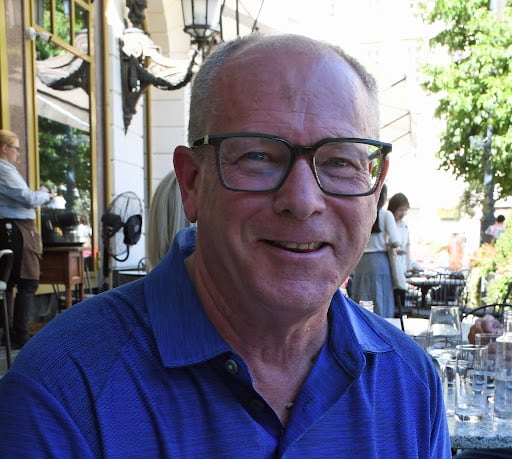 Stephen Kohner says Quebec politicians spend too much time arguing about issues ‘that just don’t have a lot of substance.’ (Submitted by Stephen Kohner)
“What I’d rather see is politicians having very concrete plans, especially with immigration, without denigrating newcomers or dissing on language issues,” he said.
“There always seems to be dissing on English language rights. We’re going to start to increase restrictions on English language CEGEPs. And it’s all very, very punitive. There has to be, in my opinion, a change in attitude amongst the politicians if they wish to understand Quebec’s role, not only in Canada, but also around the world. You cannot be increasingly repressive because at a certain point, people just don’t tolerate that anymore.”
Given the vastness of the region and how relatively small the population is, Kohner says he prioritizes issues like health-care access, lamenting the fact many residents have to travel well outside their area for medical services like cancer treatment.
Even if people do get some reimbursement for travel-related costs, he says “it’s a pittance compared to the overall cost.”
“People are paying hundreds, if not thousands of dollars out of pocket … because they cannot be served with particular health-care needs due to lack of services. That’s not their fault.
It is a systemic fault, so correct it. And how can you do that? Well, one way is to review this whole compensation. If you can’t provide health-care services in our region, at least provide sufficient funds for people to access them in other regions. Travel, accommodation, food.
We hear about this every day, that the cost of living is going up. I don’t see the per diem expenses increasing and they do not even cover the basic costs.”
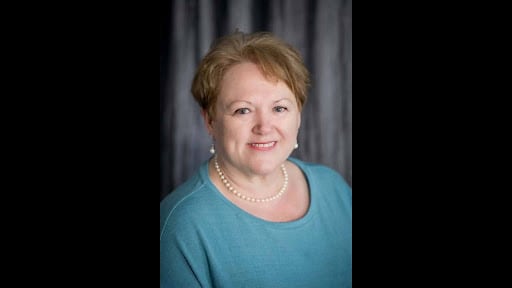 Priscilla Fequet Griffin says the discourse around language in Quebec has her feeling like ‘we’re second-class citizens.’ (Submitted by Priscilla Fequet Griffin)Addressing the English-speaking community’s needs
Priscilla Fequet Griffin is a lifelong resident of St. Paul’s River, on the Lower North Shore.
She says the discourse around language in the province has her feeling, as an English-speaking Quebecer, like “we’re second-class citizens.”
“I have no issues with the French-speaking population wanting to honour their language, keep their traditions alive. But we also have our history, we have our English language,” she said.
“I feel like our rights are really being taken away from us. I believe we should live in a world where it doesn’t matter what the colour of your skin is. It doesn’t matter what language you speak. You have respect for each other. We live in a wonderful country and a beautiful province, but it’s just that some of those politicians put a lot of things in there without thinking about the rights of others.”
As for health care, she says there are pros and cons in how services are provided in the region.
“When there’s an emergency, we get treated right away. If we need to make an appointment, we have to call a hotline,” she said.
“The majority of the population are seniors. Not many seniors know their way around technology and they feel left out in the cold because they don’t know how to book an appointment online. They have to rely on family members to help them with all this — if they have family members around.”
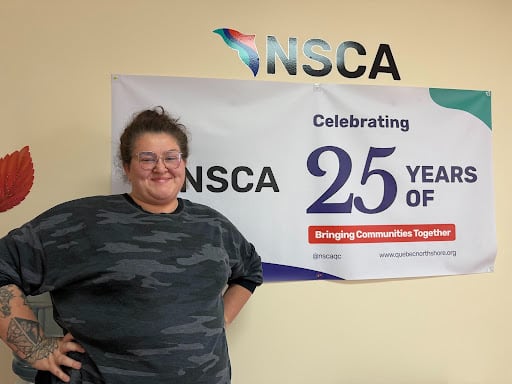 For Alicia Buffitt, housing, the cost of living and language rights are top of mind. (Brianne Fequet/CBC)Keeping young people in the region
Alicia Buffitt is a youth project co-ordinator with the North Shore Community Association, a support organization for the region’s English-speaking community. She lives in Sept-Îles and is originally from La Tabatière, on the Lower North Shore.
“I don’t follow politics that much, beyond what I see on social media. Politics is not something I’m very interested in. I’m 30 years old. My first time voting was in the last federal election.
Being a young person, I think the big things are housing, the cost of living, being an anglophone. On the North Shore, language is a big thing.
Policies and language laws affect population retention in our region, in the province. I think that English speakers and even French speakers who choose to go to CEGEP or university in English.
Another big thing I think is health, like not being able to be serviced in English even though it’s one of our rights.”
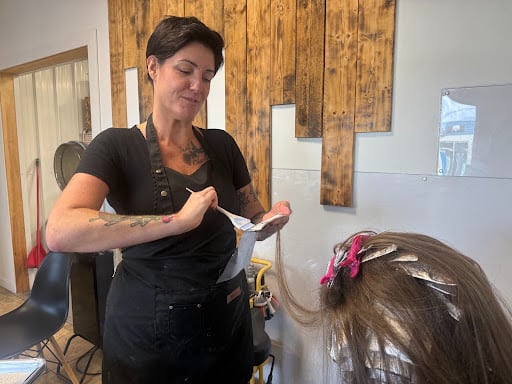 Marie-Michèle Cyr, a hairstylist, has lived in Sept-Îles for more than two decades. (Brianne Fequet/CBC)A region rich in resources, ‘but the people are forgotten’
Marie-Michèle Cyr is a hairstylist in Sept-Îles. She has been living on the North Shore since 2005.
“On the North Shore, I think that access to services and access to housing are the most pressing needs. The fact that our region is so far away from the rest of the province makes it a lot more difficult. We need better access to public transit, to lower airfares. We often hear about a bridge in Tadoussac, linking the North Shore to the Charlevoix region.
The distance holds us hostage. Our region has a lot of natural resources, but the people are forgotten.”
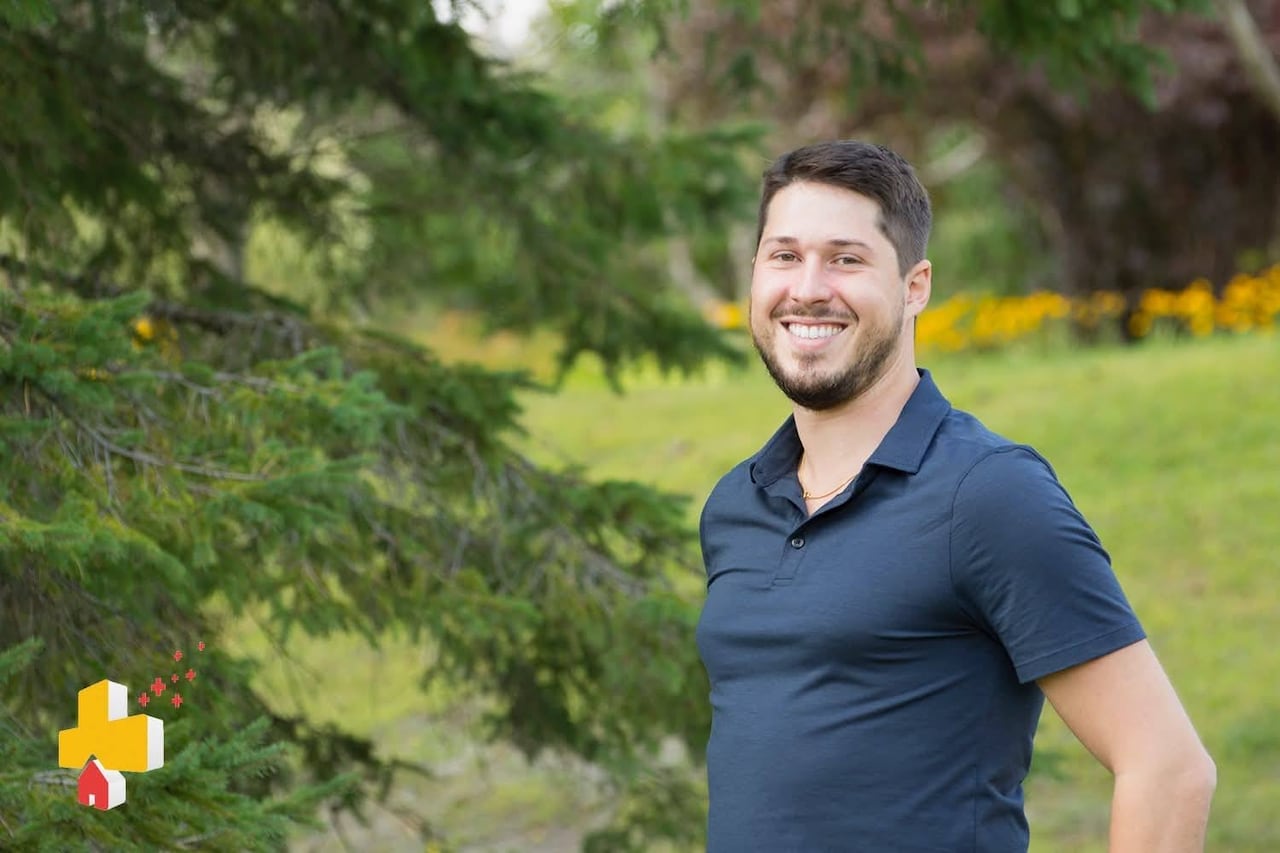 Jean-Sébastien Otis, an emergency room physician, has thoughts on how the Quebec government has handled the issue of family doctor access and how it may have made it more difficult to get doctors to work in regions like the North Shore. (Submitted by Jean-Sébastien Otis)Health care, from a local physician’s perspective
Jean-Sébastien Otis is an emergency room physician from Sept-Îles.
He says the Coalition Avenir Québec government’s efforts over the last eight years to change how family doctors were deployed “didn’t go so well” and “did a number on the recruitment of future family doctors in the region.”
“It also had some repercussions on future doctors and specialists who ended up looking outside of the province, and leaving the province entirely to do their residency. It’s been like that for a few government cycles. Every four to six years, a new government comes in and tries to wrangle up doctors because they determine that doctors are the root cause of the problems in the health system.
It takes a long time to train doctors and build their trust, especially to come to our regions that are very far away, and every single time this happens it just throws a wrench in any recruitment that we try to have. So if that could simply stop and we could start building a trusting relationship so that our doctors could stay in the region, stay in the province and come to the North Shore, that could be something that would help for the patients.”