

Listen to this article
Estimated 3 minutes
The audio version of this article is generated by AI-based technology. Mispronunciations can occur. We are working with our partners to continually review and improve the results.
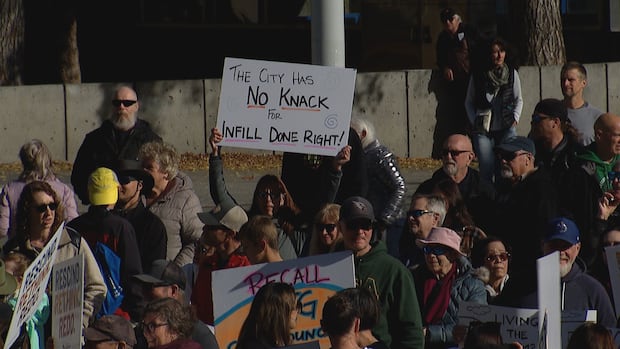
Hundreds gathered in Edmonton’s Churchill Square on Sunday afternoon to rally against the city’s infill development policies.
Dallas Moravec, an Edmonton real estate agent and chair of Edmonton Neighbourhoods United, organized Sunday’s protest. He said his organization has been advocating for stricter infill restrictions for more than a year without a meaningful response from municipal government.
Edmonton’s current zoning bylaw regulations allow up to eight-unit multiplexes on single-family lots — policies which have prompted concerns from some about the strain on local infrastructure, increasing congestion and the loss of historic character in Edmonton’s mature neighbourhoods.
During Sunday’s demonstration, Moravec said those concerns need to be heard at city hall.
“We wanted to bring everyone together to show Edmonton city council we are a united voice,” Moravec said in an interview with CBC News.
“And we’re not going away.”
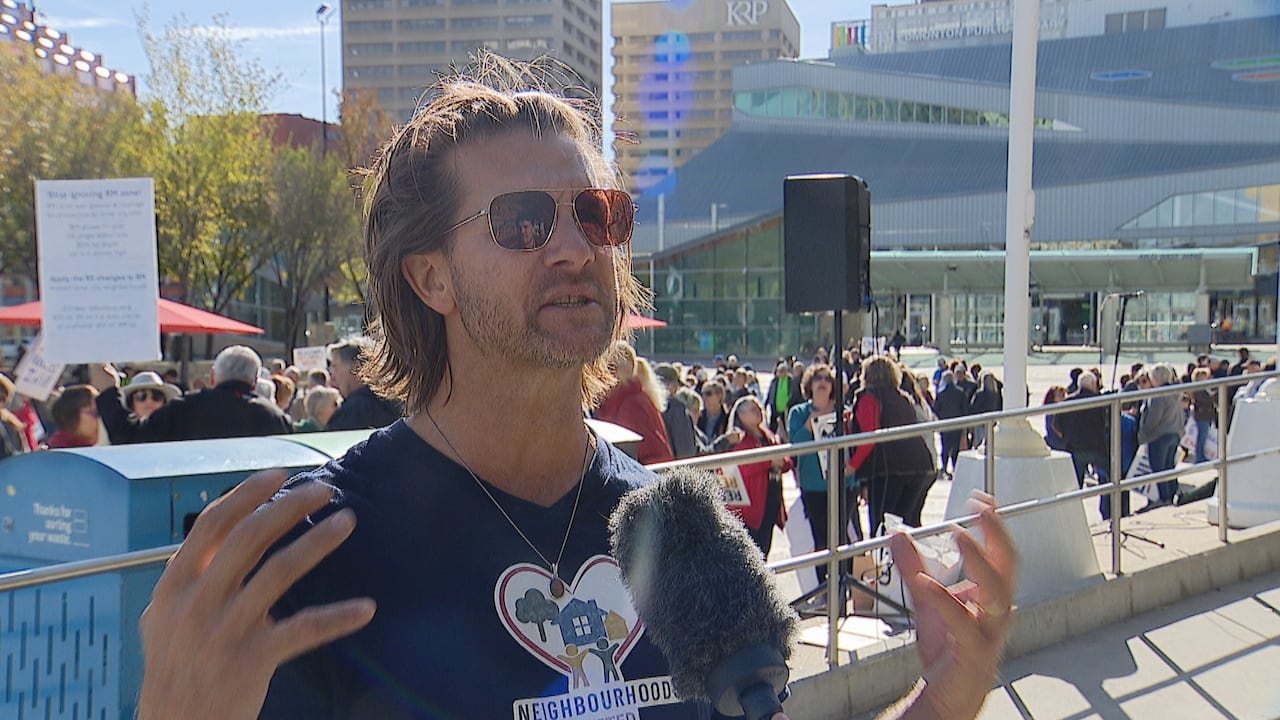 Dallas Moravec’s group Edmonton Neighbourhoods United organized Sunday’s protest. (Paul Rampersaud/CBC)
Moravec said members of his group are not against infills, they just want them done responsibly.
One of the group’s specific concerns are multiplex and large-scale housing developments. Some protesters described new infill builds that loom over their single family homes.
Jacob Dawang of Grow Together Edmonton, a group that advocates for further housing development in Edmonton, was also at Sunday’s protest.
He argued that infills keep the city affordable, increase vibrancy and allow renters to live in communities they love.
LISTEN | Impacts of changes to infill:
This is Edmonton19:04Sorting through Edmonton’s infill feelings
“It’s really responding to a demand,” Dawang told reporters on Sunday. “People of all walks of life, finally, are able to call the neighbourhoods they love home.”
Other municipalities that have stricter infill regulations leave renters with fewer options, he added.
“All that renters get to choose from is to live in a tower on a busy arterial road, or you get to move out of the city,” said Dawang. “That’s what we’ve rejected wholeheartedly in Edmonton.”
Some protesters gathered aground Dawang, waving signs and shouting, in a brief confrontation marked by pointed questions about the city’s current policies.
Dawang told the protesters they were welcome to their opinions on infill developments but they are “not the majority.”
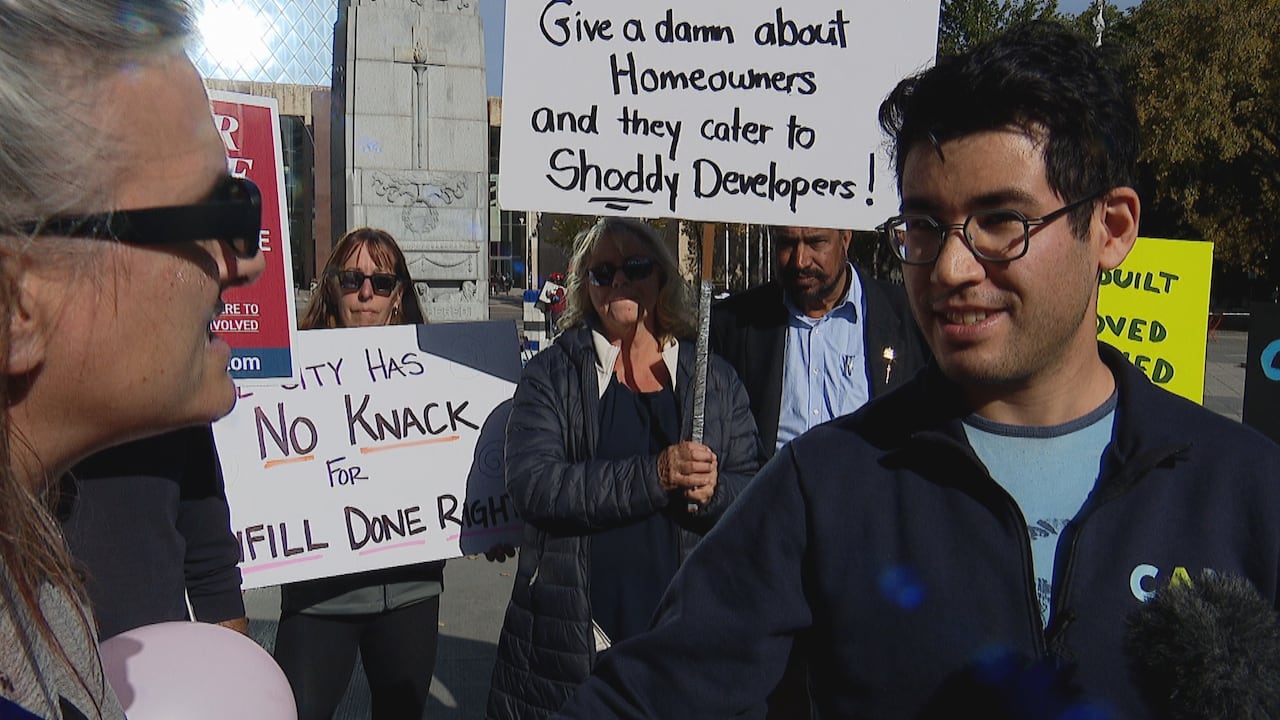 Protesters encircle Jacob Dawang (right) with signs as he spoke to reporters at the protest. (Paul Rampersaud/CBC)Changes to zoning bylaw
Edmonton’s infill restrictions have been tightened since the zoning bylaw came into effect in 2024.
Earlier this year, city council voted to amend the bylaw to shrink the allowed footprint, decrease the number of side doors a property can have and lower the maximum building height by one metre.
Moravec said he has noticed a shift in city council since his organization’s advocacy.
“They made small changes, which was a drop in the bucket,” he said. “But yes, I do believe they are starting to listen.”
Ward O-day’min Coun. Anne Stevenson told CBC News ahead of Sunday’s protest that the recent changes were a direct response to community feedback.
“Public feedback has been a really important part of how we’ve evolved the zoning bylaw,” Stevenson said.
“It serves to strengthen the regulations, make them a better fit for our neighbourhoods.”
City council’s next public hearing on Oct. 13 includes proposed small and medium-scale housing developments in the neighbourhoods of McKernan, Westmount and Kenilworth.