
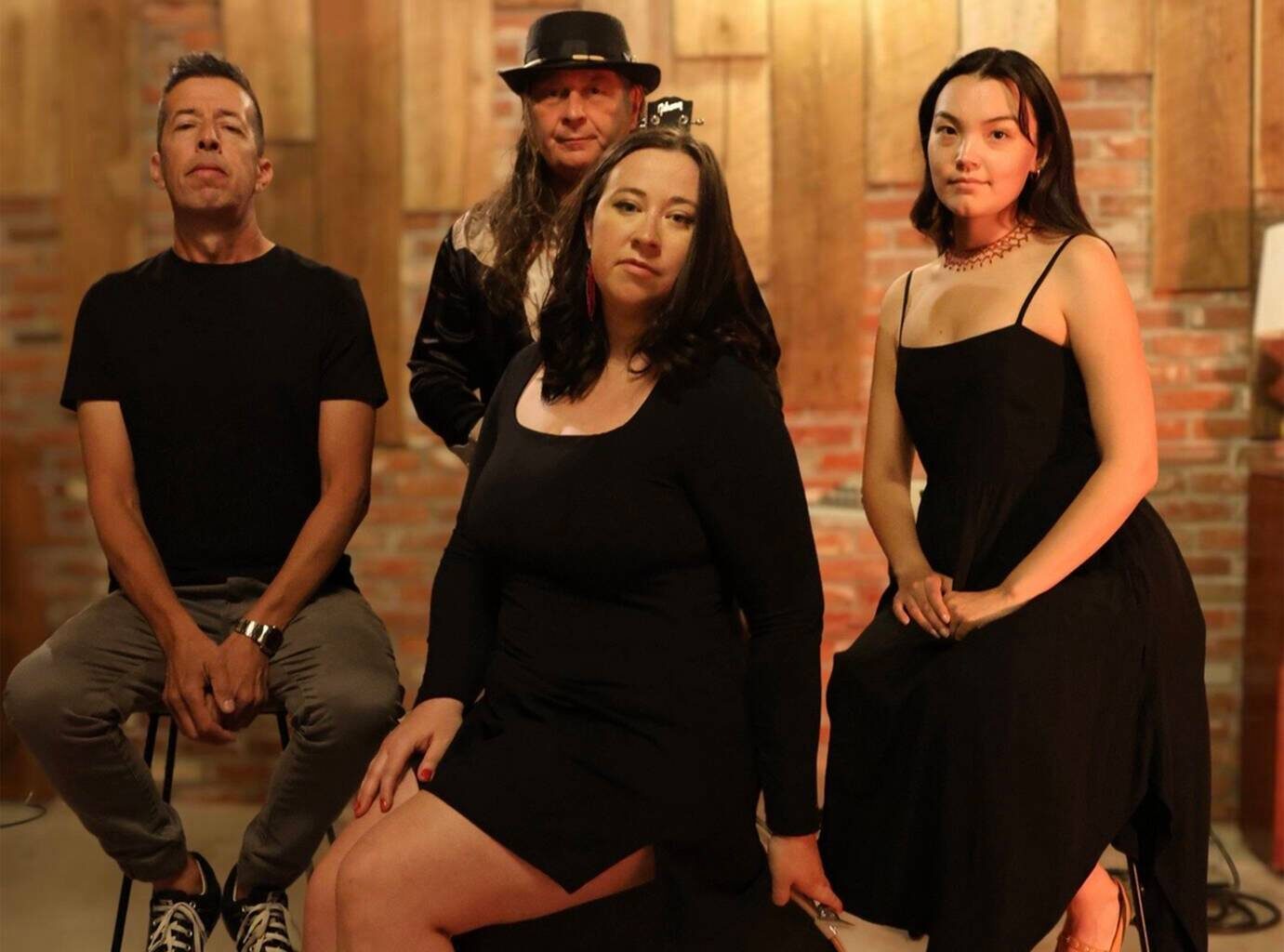
Gabrielle Fontaine won’t stop talking about them and neither will her bandmates.
As a teenager, the Winnipeg songwriter — whose late father Vince was the passionate leader of musical projects including Eagle & Hawk — would volunteer at Wiping Away the Tears, an annual gathering hosted by Ka Ni Kanichihk that offers space for healing, ceremony and support for relatives of missing and murdered Indigenous women, girls and two-spirit people.
Though Indigenous people make up less than five per cent of the Canadian population, Indigenous women make up 16 per cent of all female homicide victims and 11 per cent of missing women, according to the Assembly of First Nations.
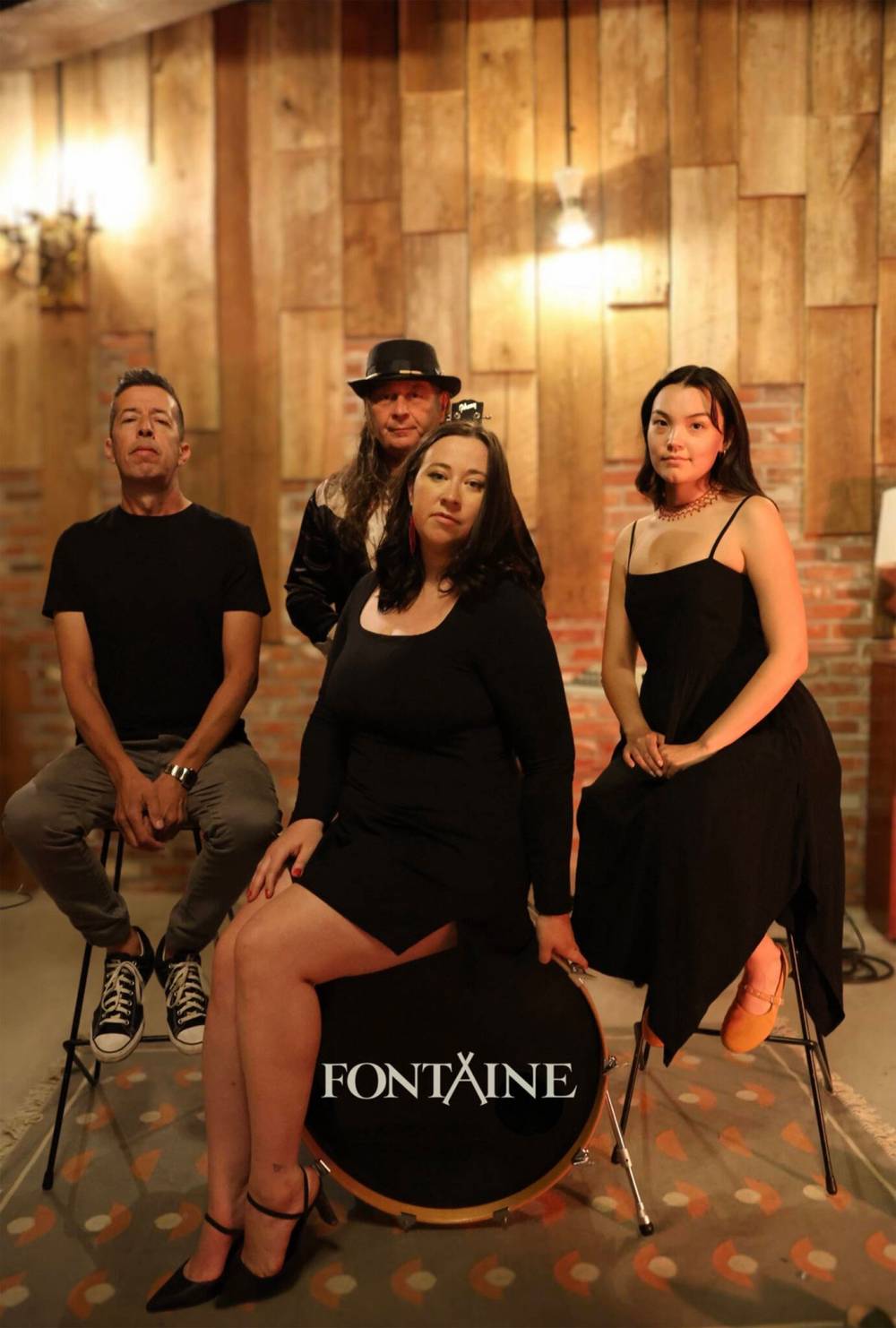
Candace Houle photo
Fontaine is named after late Indian City co-founder Vince Fontaine.
Seeking a way to help in the community, Fontaine regularly volunteered as a child-minder during memorial events, an experience she says shaped her outlook as a musical storyteller.
“I grew up around a lot of MMIWG families. I’d see their strength. I’d see how these kids still had this light and this spark because of the way that families carried on the legacy of their loved ones,” says the 29-year-old Anishinaabe woman, a PhD holder in physics whose non-musical work is focused on developing portable, low-cost breast cancer screening methods.
The power of communal memory is the spark for Unforgotten, the latest track released by Fontaine, which was announced last week as the new moniker for Indian City, a socially conscious folk-rock group founded in 2012 by Vince Fontaine.
“This name change is something we’ve been talking about with (bandmate) Jay (Bodner) for a couple of years now. Whenever I do anything with this band, I have the voice of my dad in my head. He wasn’t afraid of change. My dad loved to evolve,” says Fontaine.
When Vince Fontaine died at 62 in January 2021, Gabrielle says she was fine to be “behind the scenes.”
“But Jay was the one who gave me the push. He said, ‘This is a Fontaine band’ and that’s how the name came to be,” she says.
Fontaine considers Unforgotten to be a broadening of Through the Flood, a cut from the band’s 2017 album Here & Now that marked her vocal debut with the group.
“Dark secrets, darker light, fading heartbeat, fading cries,” sings Don Amero in the number’s opening lyrics. He’s dressed, like Vince Fontaine, in stark black and white; the only brightness comes from the fabric of the red dress worn by Gabrielle, whose voice is mostly muted and distant in the mix, an auditory metaphor made unmistakable in music-video format.
Now a national symbol of the MMIWG crisis, the red dress stems from the REDress project, started in 2010 by Winnipeg Métis artist Jaime Black-Morsette and described by the artist as “an installation art project based on an esthetic response to this critical national issue.”
Red dresses now hang on permanent exhibit at the Canadian Museum for Human Rights, have been installed at institutions around the world and are displayed in thousands of residential and commercial windows to commemorate and honour those women, their families and their communities.
Last week, Black-Morsette announced on APTN that the project had been incorporated as a non-profit, intending to “provide cultural and artistic programming for Indigenous women, girls and two-spirit people nationally, create programs ourselves, and also support existing programming that community and grassroots groups are already doing.”
Released nearly a decade ago, two years after the publication of the final report by the Truth and Reconciliation Commission, Through the Flood’s power is clear, Fontaine says, adding that Unforgotten was shaped as a response to those earlier efforts.
“This single was made to highlight the light and love of these women. Those women and girls are still alive through the voices of their loved ones,” says Fontaine, who views the song’s first verse as the past, the second as the present, and the bridge as a pathway to the future.
Unlike Through the Flood, in which Amero’s delivery and Vince Fontaine’s rhythm hooks listeners from the start, on Unforgotten, the first notes are played on piano by Gabrielle, and the first voice heard is hers.
“Her smile was a flame in the dark / her heart was a wandering spark,” she sings, soon joined by drummer Rich Reid, guitarist Bodner and vocalist Julia Davis. “She loved to sing, dance and laugh / and watch the sun set its path.”
To accompany the new song, Fontaine the band decided to shoot a music video, opting to film portions of it beneath artist Tom Andrich’s mural for MMIWG, painted on the east side of the CP Rail overpass by Polo Park.
Completed in 2011 by Andrich — an artist, muralist and courtroom sketch artist who died in 2018, aged 72 — the mural features the names and faces of 10 Indigenous women and girls who were murdered or missing.
The in-studio portions of the video are still captured in black-and-white, but outside, these stories are depicted in bright colour, with family members of Cherisse Houle, Jennifer McPherson, Jennifer Johnston and Claudette Osborne holding up photographs of their loved ones.
Winnipeg Free Press | Newsletter

Before the video finishes, a new mural painted in 2024 is shown.
Meaning “You Are Loved,” in Anishinaabemowin, Giizaagiigo by Jeannie White Bird of Rolling River First Nation is found on the side of a Manitoba Housing building at the corner of Sargent Avenue at Kennedy Street.
Giizaagiigo features flowering plants, an inukshuk, a butterfly and a woman in ceremonial garb raising a sacred eagle’s feather to the moon. It stretches 15 storeys high, making it the tallest mural in the province.
Unforgotten is available to stream now. Fontaine’s first show under its new name is on Oct. 30 at the Canada Life Centre as part of the opening night of the Manito Ahbee Festival. Tickets are available at manitoahbee.com.
ben.waldman@winnipegfreepress.com

Ben Waldman is a National Newspaper Award-nominated reporter on the Arts & Life desk at the Free Press. Born and raised in Winnipeg, Ben completed three internships with the Free Press while earning his degree at Ryerson University’s (now Toronto Metropolitan University’s) School of Journalism before joining the newsroom full-time in 2019. Read more about Ben.
Every piece of reporting Ben produces is reviewed by an editing team before it is posted online or published in print — part of the Free Press‘s tradition, since 1872, of producing reliable independent journalism. Read more about Free Press’s history and mandate, and learn how our newsroom operates.
Our newsroom depends on a growing audience of readers to power our journalism. If you are not a paid reader, please consider becoming a subscriber.
Our newsroom depends on its audience of readers to power our journalism. Thank you for your support.