

Listen to this article
Estimated 3 minutes
The audio version of this article is generated by AI-based technology. Mispronunciations can occur. We are working with our partners to continually review and improve the results.
Three years later, memories of Oct. 7, 2023, — and everything that followed — continue to resonate in the streets of Montreal.
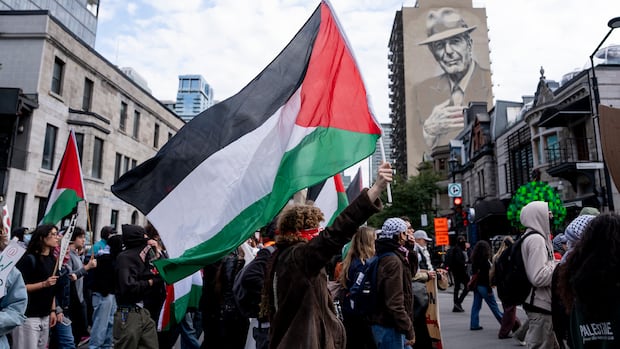
There were several gatherings in Montreal Wednesday, many of which were on and around McGill’s downtown campus.
Some protesters were denounced what they describe as a genocide against Palestinian people, while others said such gatherings shouldn’t take place on the same day Hamas executed its murderous attack against Israel.
Those attacks killed 1,200 people and led to the kidnapping of 251 others, according to Israeli tallies.
Israel’s retaliatory attacks killed about 74,245 people, according to the local health ministry in Gaza. A ceasefire, though fragile, has been in place since Oct. 2025.
“Stay together, show solidarity and be proud to still have a conscience in 2026!” a pro-Palestinian protester told the crowd through a loudspeaker on Wednesday.
In speeches and in interviews with journalists, protesters levied criticism at various entities: Israel for its actions in Gaza, McGill University for its investments in companies with Israeli ties, and Canada for what they say is its inaction in the face of what has transpired in Gaza.
There was a late-afternoon gathering that continued well after sunset and temporarily halted car traffic near the McGill campus before protesters marched towards Ste-Catherine Street West, with Montreal police standing by and monitoring.
“Stop the genocide, free Palestine” was among the more common chants from the crowd.
Ghassan Boubez, a physician who is part of a group called Médecins du Québec contre le génocide à Gaza, which means “Quebec doctors against the genocide in Gaza,” has taken part in many protests in recent years.
He says it’s important to continue to speak up about what’s going in Gaza and the West Bank and for people, including journalists, to describe things as they are.
“We need you to properly define things,” he told a Radio-Canada reporter in an interview. “It is not a war against Hamas, it’s really an act of aggression to erase Palestinian people.
Since the Oct. 11 ceasefire last year, the health ministry in says 1,462 Palestinians have been killed.
Amnesty International and the United Nations Human Rights Council are among the organizations that have accused Israel of committing genocide. Israel has repeated rejected the allegation.
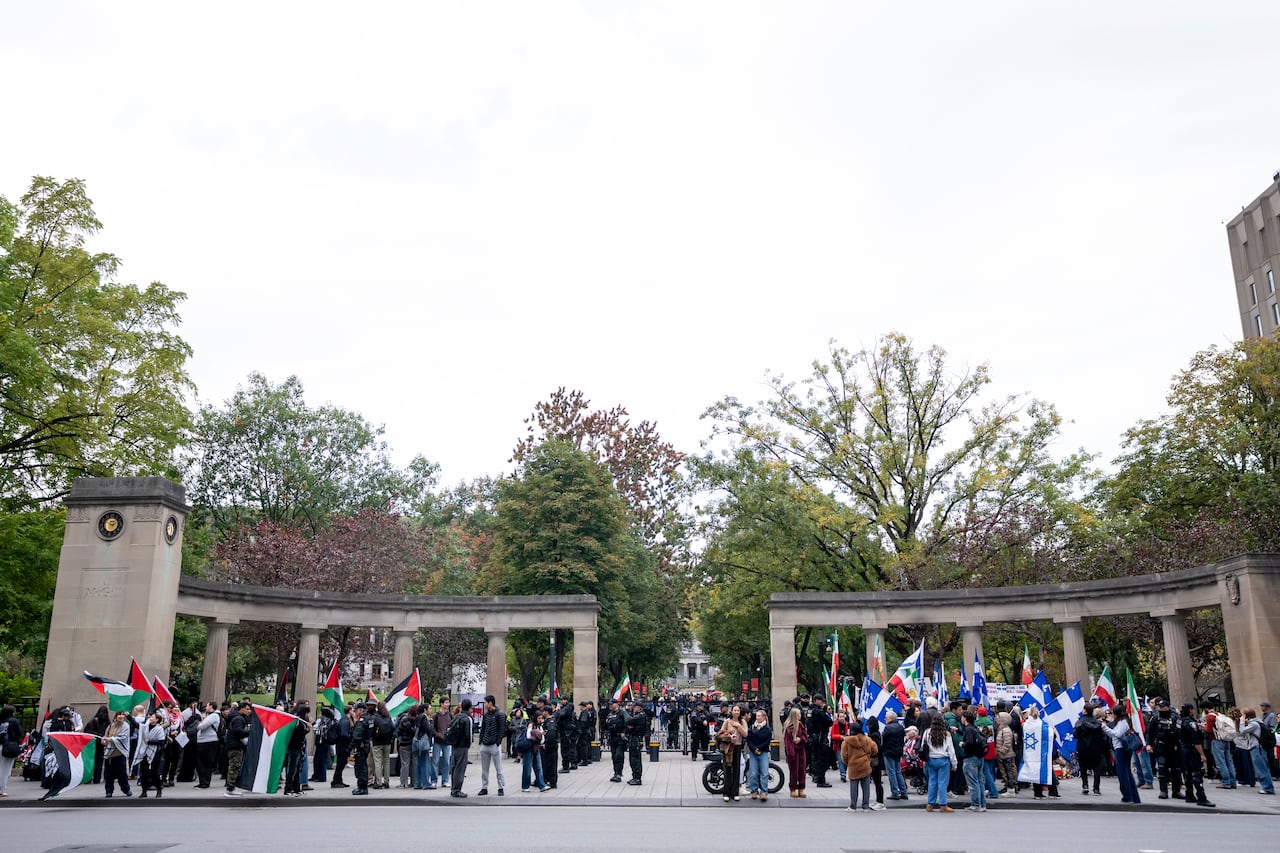
Pro-Palestinian and pro-Israel demonstrators are seperated by police in Montreal, on Wednesday, Oct. 7, 2026. (Christopher Katsarov/The Canadian Press)
‘They can’t even give us one day to grieve’
Earlier in the day, Montreal police stood between a group of protesters near McGill, with one side featuring several Palestinian flags, the other side with several Israeli flags and Iranian-Canadians who say they were there to show support the Jewish community.
In the lead up to Wednesday, B’Nai Brith Canada issued a statement warning that many rallies on Oct. 7 around Canada would be “revisionist” in nature and normalize hatred against Jewish people.
Paola Samuel, B’Nai Brith’s regional director for the Quebec and Atlantic regions, was near McGill as the earlier protest unfolded, and described it as “horrible.”
“They can’t even give us one day to grieve,” she told Radio-Canada.
Boubez, the member of the group of doctors, scoffs at such statements.
“First of all, for three years now we’ve been protesting almost every Saturday,” he said. “So it’s not just Oct. 7.”