
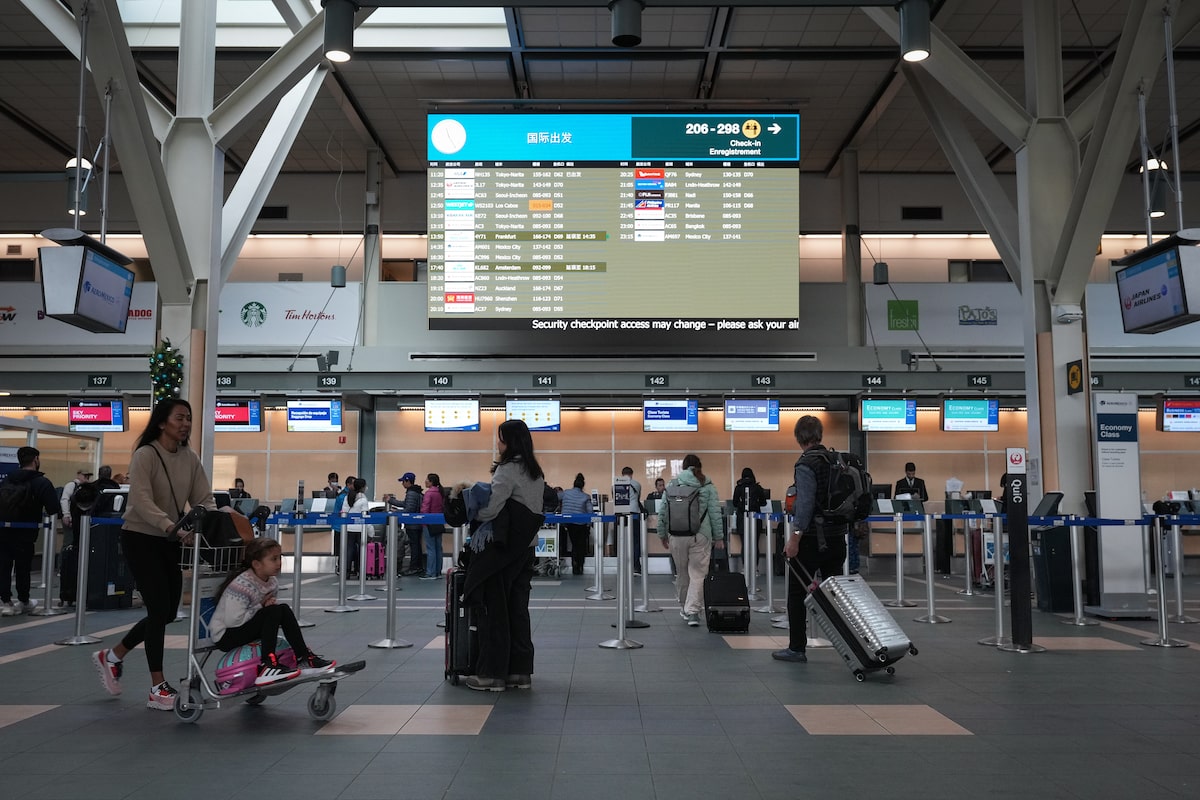
Vancouver International Airport is among four Canadian airports that will be opened up for private investment.DARRYL DYCK/The Canadian Press
Transport Minister Steven MacKinnon said Thursday that Ottawa is in talks with First Nations about partnerships as it seeks to privatize Canada’s four largest airports.
However, he said, no decisions have been made on which airport will go through the process first.
The Globe and Mail reported Wednesday, citing sources, that bankers and lawyers advising Ottawa have decided that Vancouver International Airport should be the first of the four airports privatized by the federal government. Further, Ottawa’s advisers are offering British Columbia Indigenous groups an opportunity to be minority investors.
Vancouver airport first candidate for private investment, sources say
Advisers view Vancouver Airport, or YVR, as the priority because they expect it to draw First Nations investment.
The Globe report said the government’s airport privatization process is in its early stages, and the timing and structure of investments could change, according to four sources.
The Globe is not naming the sources because they are not permitted to speak for their employers.
Indigenous investors listening to pitches for stakes in the Vancouver Airport include the Musqueam First Nation, The Globe reported. The airport is on the Musqueam’s unceded territory.
Opinion: A private airport concession need not be the bogeyman some think it is
In a speech to a gathering of the International Air Transport Association in Ottawa Thursday, Mr. MacKinnon told industry representatives that the government is seeking their ideas on the best way to proceed with the plan.
Speaking with reporters after the speech, Mr. MacKinnon did not dispute that talks have been held with the Musqueam First Nation as part of broader consultations.
“I certainly acknowledge that there have been fulsome discussions, as you can imagine, whether it be major projects, reconciliation writ large, or this initiative. We’re in constant communication with relevant First Nations,” he said.
Mr. MacKinnon said Ottawa is relying on advisers for technical expertise but cautioned that talk of which airport will go through the process first is speculative.
“These are large and complicated transactions. They require expertise,” he said. “So that creates a number of people who are involved in this, and a number of people who speculate, but I want to be clear that no decisions have been made.”
What could airport privatization mean for travellers in Canada?
Prime Minister Mark Carney first announced the airport plan at an investment summit held last month in Toronto.
At the time, the government said the plan would see Ottawa retain ownership of the underlying land and assets but seek private investment through long-term agreements that will bring in new capital and expertise for airport operations and growth.
In his speech, Mr. MacKinnon described the plan as an effort at “unlocking” new investment in Canada’s airports.
The minister has previously said that some of the revenue raised through the process will be redirected to support improvements for Canada’s smaller, regional airports.
“We’re looking for ideas around innovation, ideas around taking risks and being entrepreneurial with many of our airport assets,” he said in his speech Thursday.
“So, beyond the four identified facilities, we’re looking to all of you – airlines, airports, and all the players in the system – for ideas about how we can make our system more affordable, work more fluidly, and take better care of the people who entrust their travel to us,” he said.