
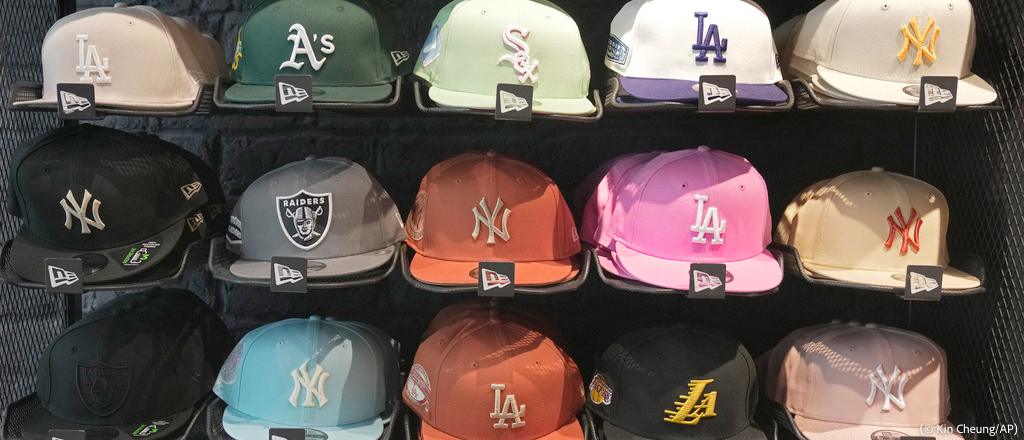
As Major League Baseball wins new fans at home and from Asia to Latin America, replicas of player jerseys, caps and warm-up jackets are being worn by trendsetters worldwide.
U.S. baseball fans have long sought out merchandise that advertises their favorite players and teams. Increasingly, baseball-themed apparel is purchased worldwide, according to the data aggregator Statista, based in Germany. The sporty look of a baseball jersey is now popular on the streets of London and Tokyo and even on Milan’s fashion runways.
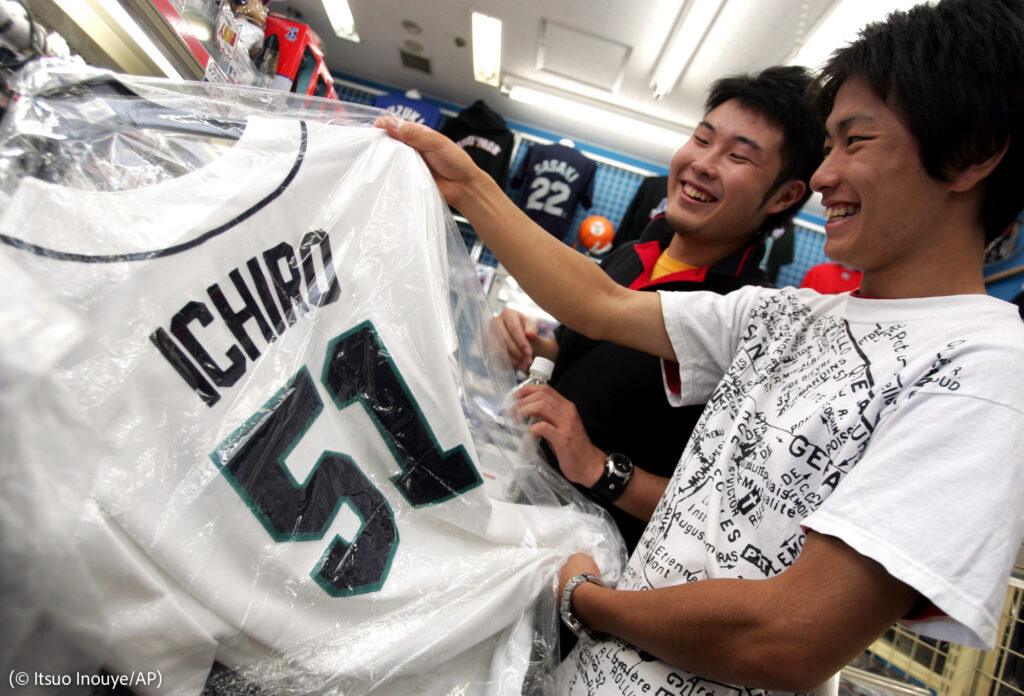 At Tokyo’s Baseball Café souvenir shop, customers look at a replica of former Seattle Mariners outfielder Ichiro Suzuki’s jersey. (© Itsuo Inouye/AP)
Demand stems partly from the growth in international fans — Japanese baseball enthusiasts, for instance, take great pride in the Los Angeles Dodgers’ Shohei Ohtani and the San Diego Padres’ Yu Darvish. But demand is also driven by fashion-conscious youth, who might know little about the game but like the look.
A feeling of connection
Hall of Famer Ken Griffey Jr. says baseball apparel forges a connection among players and fans. He says that, during his own 22-season career (with the Seattle Mariners, the Cincinnati Reds and the Chicago White Sox), he always appreciated spotting fans wearing his jersey.
“When you see your jersey outside of your home ballpark, on the road, it’s special,” Griffey says. “You want to do something special because of those people … who support, not only you, but the organization and the city.”
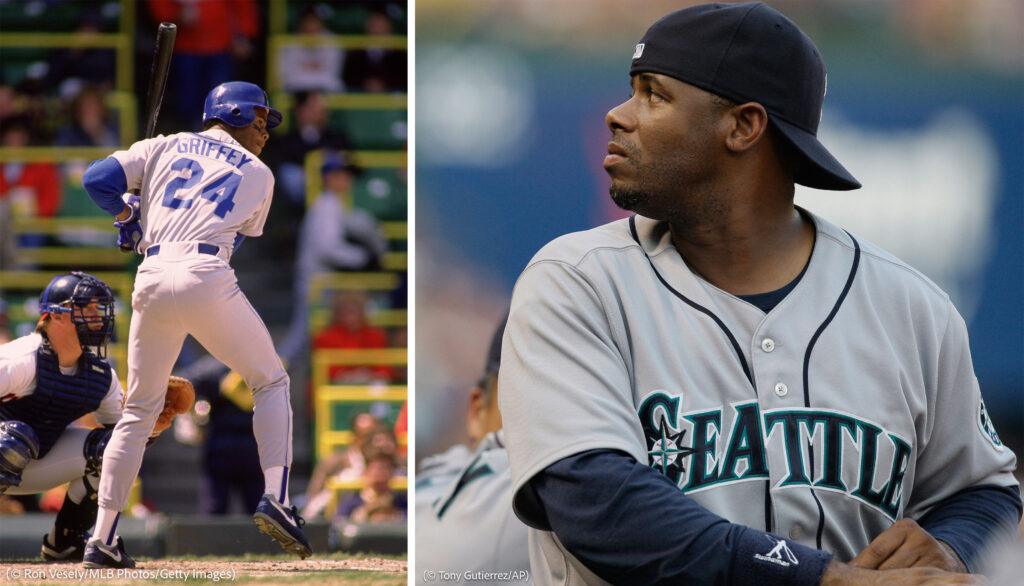 From left: Ken Griffey Jr. goes to bat for the Seattle Mariners in 1990. Griffey, seen in 2009, often wore his cap backward and was imitated by legions of fans. (© Ron Vesely/MLB Photos/Getty Images, © Tony Gutierrez/AP)
The former outfielder, who ranks seventh all-time on Major League Baseball’s home-run list, influenced today’s “baseball style” by popularizing the cap worn backward. Griffey’s is not a passing interest. Though retired from the league, he partners with Baseballism and Nike to help design baseball-themed clothing and shoes.
Baseball’s influence on fashion
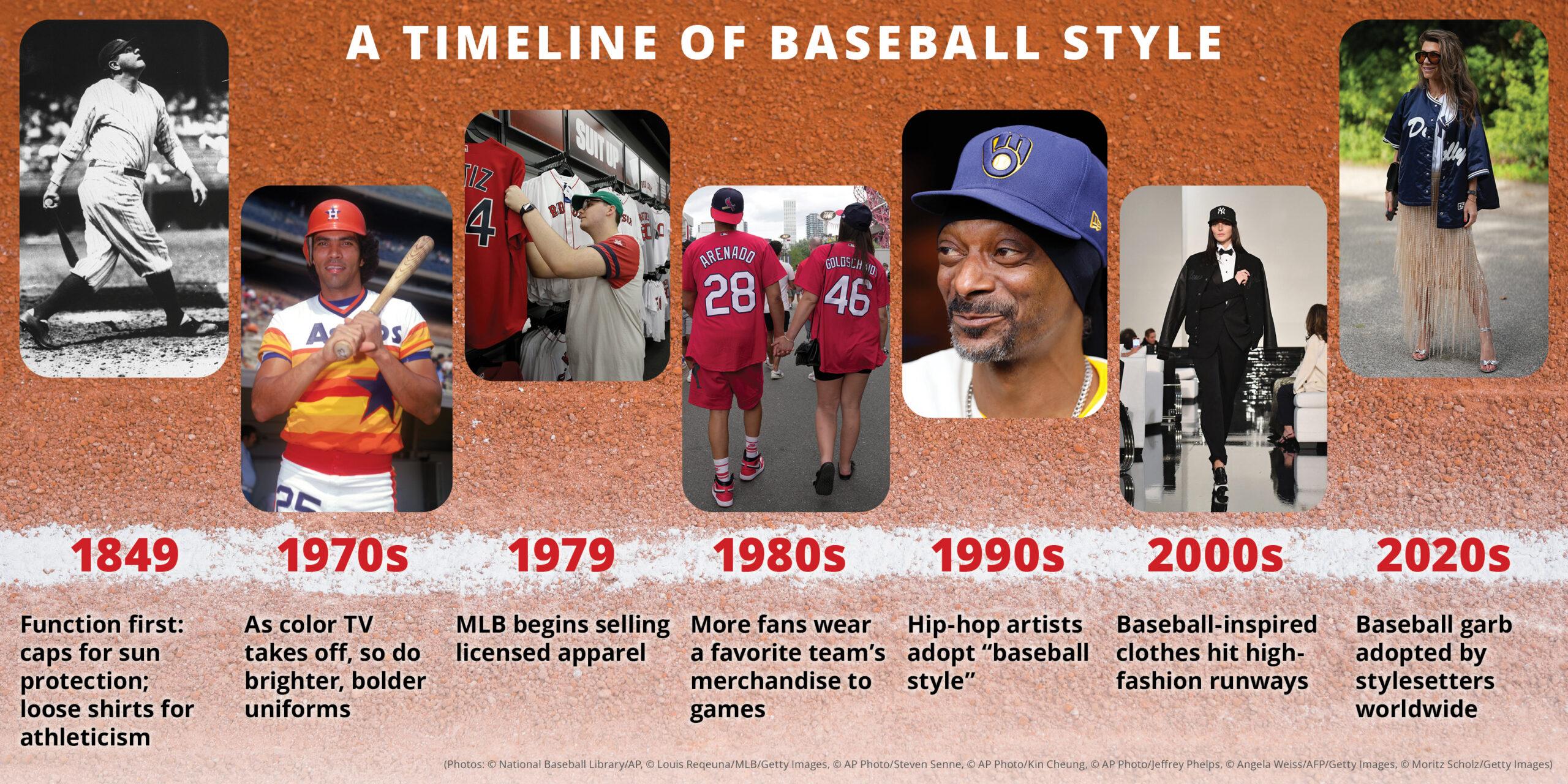
Baseball historian Todd Radom, author of Winning Ugly: A Visual History of the Most Bizarre Baseball Uniforms Ever Worn, notes that what the players wear on the field has shifted over the decades, moving from conservative to brighter, bolder uniforms in the 1970s, and back to classic color schemes in the 1980s.
 (State Dept.)
While uniforms today are largely designed with red, blue or black lettering set against a white or gray background, the league sells merchandise in a range of popular colors. It also engages in creative collaborations with casual clothing lines like Mitchell & Ness and Goat USA and high-fashion brands like Italy’s Gucci and Moschino, and U.S.-based Ralph Lauren.
Baseball-themed runway collections combine luxury materials (leather, cashmere or silk) and expressive overlays (crystals or floral and cartoon-character appliqués).
Moschino, for example, routinely blends oversized baseball jersey dresses with cartoon figures. And sportswear lines integrate stylized ballpark logos, team mascots and Looney Tunes, Sesame Street or Scooby-Doo characters.
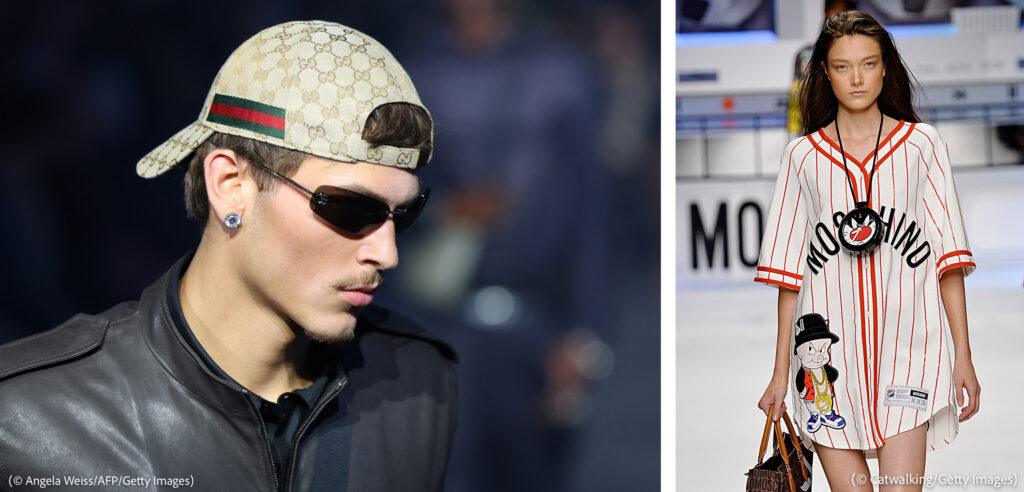 From left: A model sports a Gucci-branded cap at a New York fashion show. A model walks the runway at a Moschino show in Milan. (© Angela Weiss/AFP/Getty Images, © Pietro D’Aprano/Getty Images)
Baseball’s comfortable jerseys and brimmed caps easily “adapt to whatever purpose you like,” playing sports or looking stylish, says Erin Corrales-Diaz, a curator at the Toledo Museum of Art and author of The Iconic Jersey: Baseball x Fashion.
The Philadelphia-based Mitchell & Ness Nostalgia Company reproduces historic jerseys for customers who want to recapture their childhood sports memories, says Lynn Bloom, a company director. Superstars’ jerseys are always popular, she says, and Griffey’s consistently ranks among the company’s top-10 sellers.
He’s thrilled. “I always like seeing my stuff out there,” he says. And when fans wear a player’s jersey, “you know they feel that they’re a part of the team.”