

Listen to this article
Estimated 4 minutes
The audio version of this article is generated by AI-based technology. Mispronunciations can occur. We are working with our partners to continually review and improve the results.
A Mi’kmaw community in Cape Breton is placing a big bet on new technology that it says can turn seawater into environmentally friendly jet fuel.
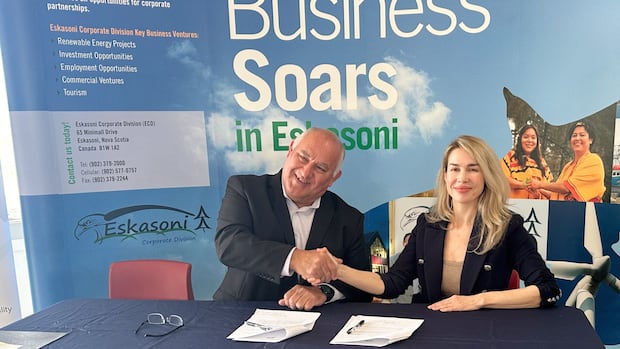
Eskasoni First Nation has invested $1.5 million and is the majority owner in a joint venture called eFuels Mi’kmaq Limited that plans to build a pilot project on band-owned land in Cape Breton Regional Municipality’s industrial park in Sydney harbour.
Bertram Bernard, a band councillor and chair of Eskasoni Corporate Services, said the investment will create local jobs for band members and is an important step in taking a meaningful role in a growing industry.
“For us, this is about creating long-term economic opportunities, while continuing to be responsible stewards of our land and waters,” he said during an announcement Thursday at the Sarah Denny Cultural Centre in Eskasoni.
The newly formed eFuels Mi’kmaq plans to extract hydrogen from seawater and draw carbon dioxide from the air to create what is known as drop-in fuel, meaning it can be burned like any other fuel without any engine modifications.
The process is expected to be powered by wind energy from onshore and offshore sources as they become available.
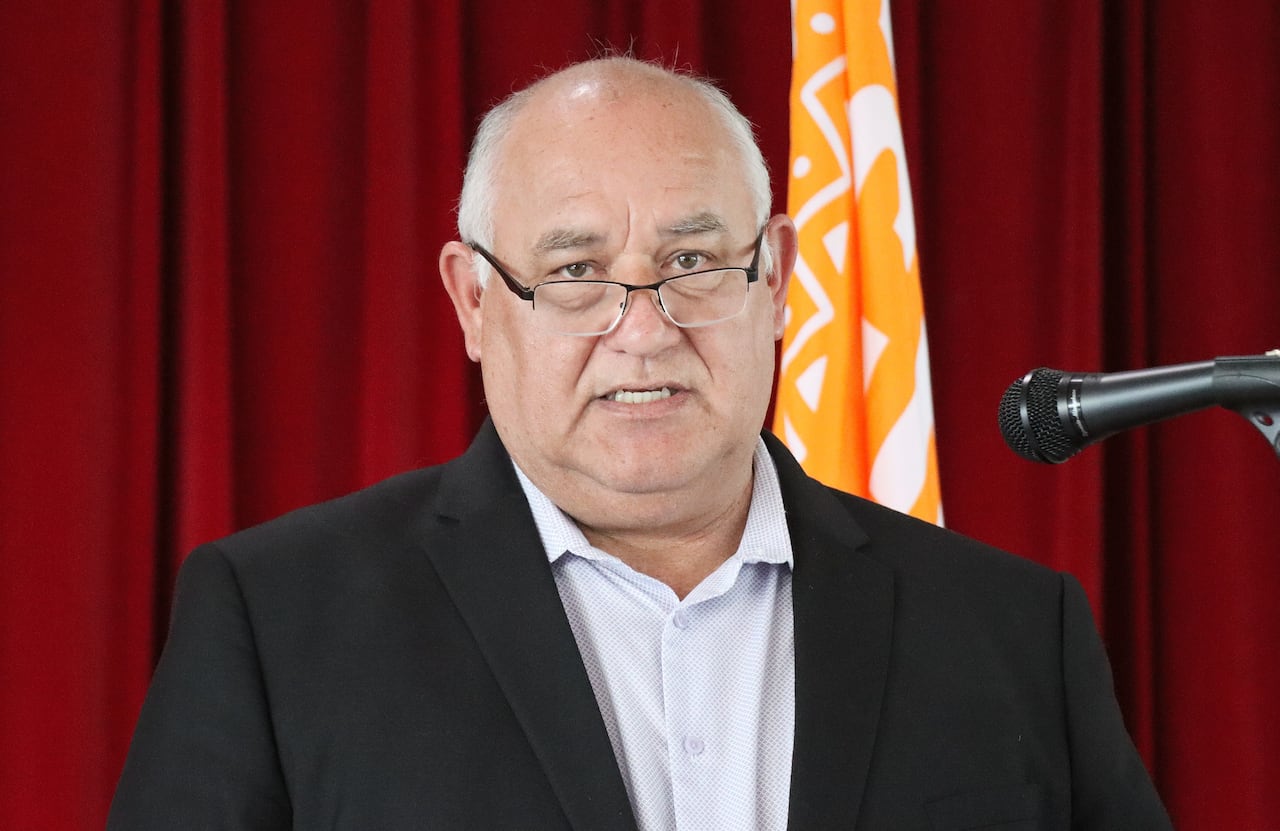
Eskasoni band councillor Bertram Bernard says the joint venture will create lasting economic benefits while ensuring stewardship of resources. (Tom Ayers/CBC)
The joint venture is with Aeon Blue, a company that started in the United States but moved to Sydney to take advantage of federal government incentives and the research facilities at the Verschuren Centre on Cape Breton University’s campus.
Lark Meadow, a co-founder and CEO of Aeon Blue, said it was important to her and her brother, co-founder Deois Ua Cearnaigh, to have Indigenous participation.
“We are partnering all the way from piloting to commercialization, so we are going to grow our partnership and the facilities together,” she said.
Ua Cearnaigh, who is an electrochemist, said the technology to separate hydrogen from seawater and combine it with carbon dioxide to make all kinds of fuels has been around for decades.

Aeon Blue CEO Lark Meadow says although the process can produce a wide range of fuel types, jet fuel was chosen because of growing demand. (Tom Ayers/CBC)
But he said his patented process improves on the technology and makes it economical on a commercial scale.
“It’s kind of like saying the cart, four-wheeled vehicles, are thousands of years old, but the car only came around in the 1910s,” he said.
It also draws more carbon from the air than it uses, with the excess carbon dioxide being sequestered.
Meadow said that may be in the ground or in other ways that have yet to be decided.
Although the process can produce a wide range of fuel types, Meadow said jet fuel was chosen because there’s a growing demand for green fuel in air travel.
Officials say the joint venture is expected to produce 12 jobs next year and up to 80 when the efuel process reaches full commercialization. (Tom Ayers/CBC)
Ua Cearnaigh said the move from their home in Texas not only made sense because of the government’s financial incentives, but he said the Verschuren Centre’s laboratories are superior to others and the geography means all of the components needed for the process are readily available.
“Cape Breton has sort of this magical location where it is as close to the southern extent of winter sea ice as you can go and still have ice-free ports in the winter, and yet also the wind howls like nobody’s business,” he said.
“It really is an X marks the spot. If you were going to do an efuels project, doesn’t matter who you are, you would pick this island.”
Meadow said a pilot project will be located on Eskasoni’s land in Sydport and is expected to start making fuel next year.
It is expected to scale up the following year, with full commercialization to follow by 2030.
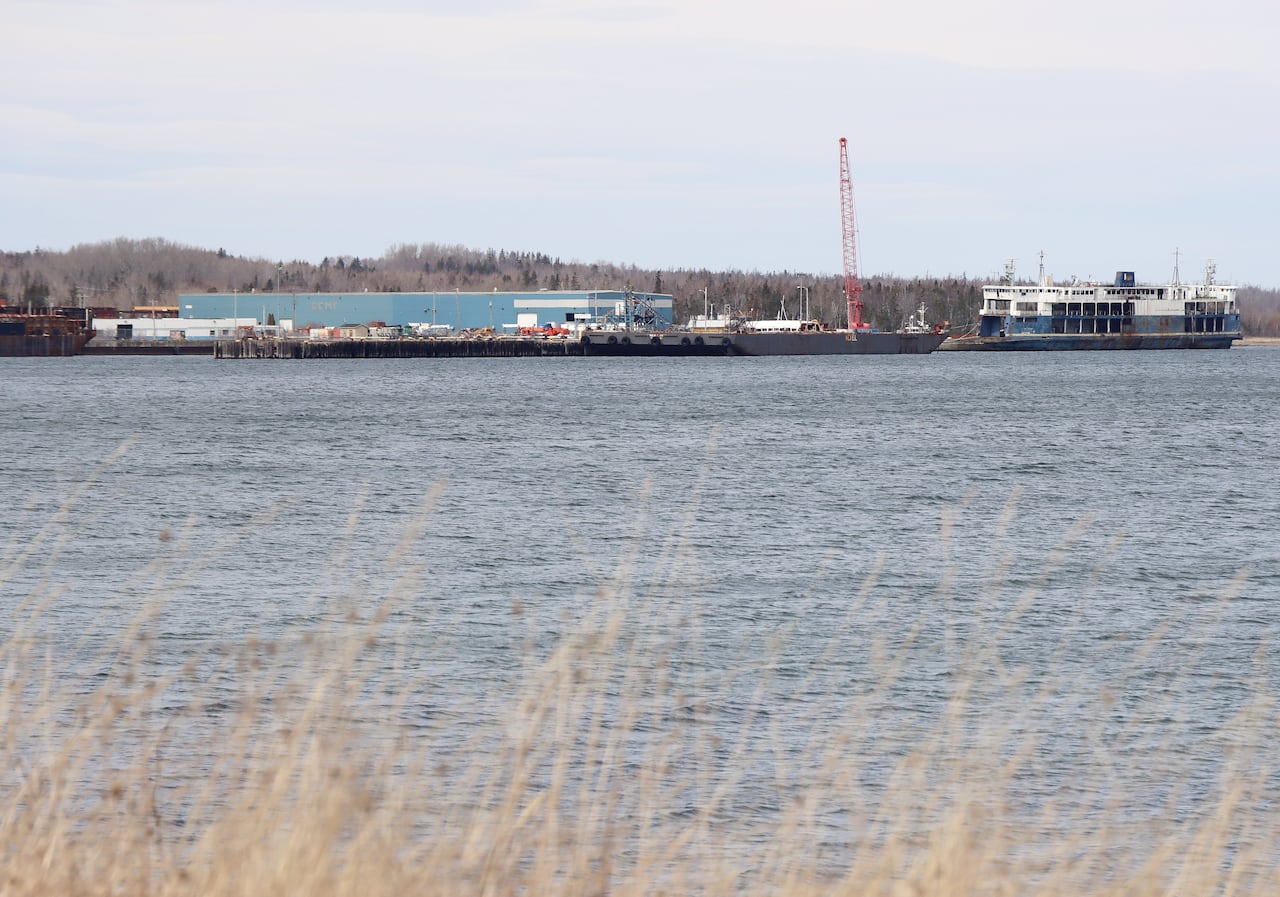
eFuels Mi’kmaq Ltd. plans to build a pilot project on Eskasoni land in Sydport industrial park to make jet fuel from seawater. (Tom Ayers/CBC)
Meadow said large-scale commercialization will require more land, but the manufacturing site will still be located along the coast of Cape Breton.
The joint venture is expected to start training up to 12 Eskasoni band members in engineering, operations and management next year, and could create up to 80 full-time jobs when full commercialization is achieved.
Steve Parsons, CEO of Eskasoni’s corporate division, said the deal has been in the works for about 18 months.
“We’re very excited,” he said. “This is a great opportunity for the community.”
MORE TOP STORIES