
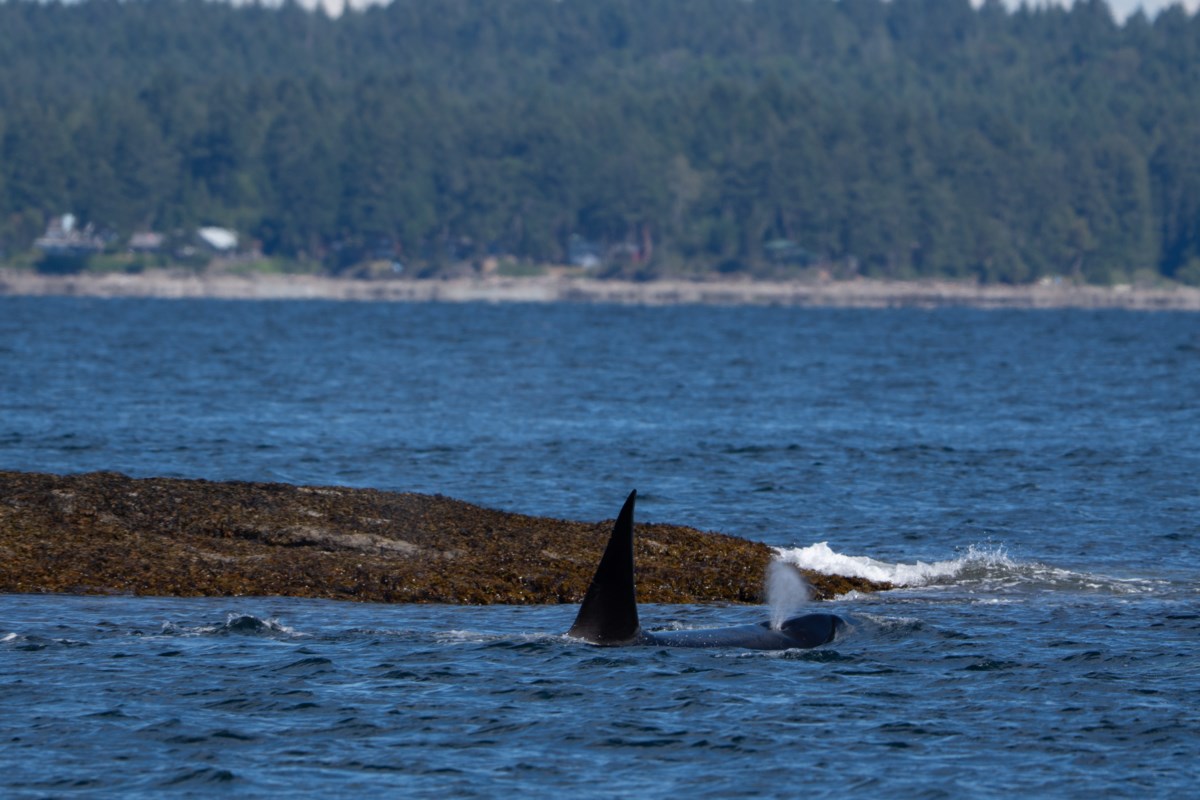
He’s created a guide to land-based whale watching.
When imagining whale watching in B.C., visions of orange zodiacs bouncing off waves and tickets costing a couple hundred dollars probably come to mind.
It’s not for everyone.
But Vancouver’s Orca Man Fred DeNisco has created a free guide for land-based whale watching in Southern B.C. and Washington State, knitting together resources from both Canada and the U.S.
“This guide is intended to provide people greater affordable opportunities to engage with their local ecosystems. It’s supplemental to whale watches for those who want to optimize their time seeing the species,” he tells Vancouver Is Awesome.
Wait, Vancouver has an Orca Man?
Yeah, DeNisco has gained hundreds of thousands of followers on social media talking about orcas, one of the most widespread cetaceans in the seas.
“My self-proclaimed job is to introduce people to who they are and the people working around them,” he says.
Inspired by the movie Free Willy (which serendipitously came to his family when they bought a minivan with a DVD player), he pursued his interest in orcas from Massachusetts to UBC, where he got a geography degree and a deeper understanding of our wild neighbours.
On social media, he created The Orca Man, an account focused on “connecting you to orcas & those around them.”
The land-based whale watching guide
DeNisco started his free land-based whale watching guide in 2023, but it’s a living document which is constantly being updated.
“It was as much about creating a guide for myself and understanding there was a gap in knowledge people didn’t know about,” he says.
His guide isn’t so much a classic guidebook as it is a collection of resources that he’s gone through, vetted and learned from. He says there are many groups in the region that collect original information and observe the whales (one is actually having a fundraiser next month).
“It’s more aggregation than invention,” he says. “The goal is to say, ‘Hey, here are all the resources I use. They’re useful.'”
That said, there is a map with specific spots in four different regions, like Lighthouse Park in West Vancouver, Gospel Rock near Gibsons and the Campbell River pier.
But the guide goes beyond that, with links to the different local groups and tips. The guide also helps advise where to go if orcas are spotted going past one place, as they often take the same routes.
DeNisco says one difference between his guide and the Whale Trail, which has existed for several years, is the additional information about how to spot whales.
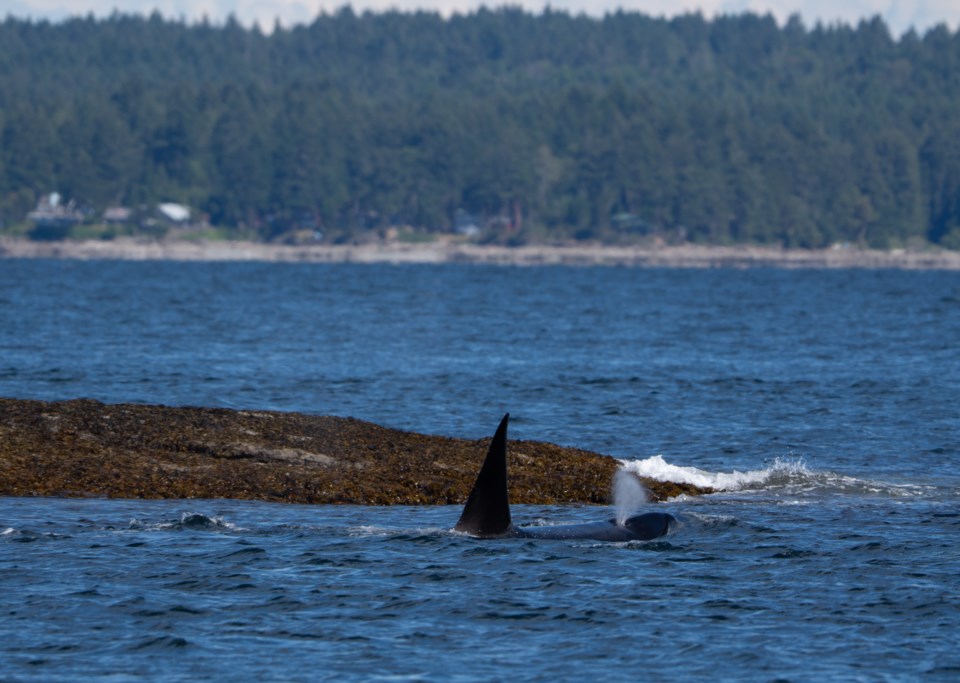
Best spot to see orcas from land in Greater Vancouver
For those who aren’t able to leave the city, Lighthouse Park in West Vancouver offers the best opportunity to see orcas from land.
There are a couple of reasons, DeNisco says. One is the angle it looks out over the ocean, with a wide view out across the Burrard Inlet and Strait of Georgia. This means any whales heading south should be visible, though they might be a ways away.
At the same time, they do come close to shore at the park.
“I’ve gone to Lighthouse Park for picnics, and I can hear the whales before I can see the water,” says DeNisco.
He figures if someone were to spend 90 minutes looking out from the park’s point three times in a summer, they’d see whales at least once.
“It’s the everyman’s whale watching spot,” he adds.
Other good spots to spot killer whales
While Saturna Island isn’t currently in the guide, DeNisco has heard good things.
He also suggests Mudge Island for a unique viewing opportunity, if you’re lucky.
“It’s one of the premier land-based whale watching spots in all of B.C.,” he says.
Located just south of Nanaimo, Mudge and Vancouver Islands create a geographic pinch point, forcing the whales through a small strait called Dodd Narrows.
It’s only 71 metres wide.
“When you think about it, they’re closer than the legal regulations for whale watching boats,” DeNisco says.
At the same time, the narrows can be quite active, which means the orcas will come to the surface to make their way through, sometimes playing in the rushing water.
Mostly locals using whale guide
While boat-based whale watching is a common tourist activity, DeNisto says he wants to get locals out to the shore.
“My goal is getting people locally to go and experience our neighbours,” he says.
He says that people living in Metro Vancouver might not be that far from an orca. Many may not realize what is just below the waves, be it orcas or other sea life.
“When you’re looking at the water, they’re there even if you can’t see them,” he adds.
While land-based whale watching may reduce the number of people out in boats a little bit, he doesn’t think it’d have much effect on noise pollution or other human issues orcas face.
“As far as noise pollution goes, the less the better of course,” he says. “However, large ships, like containers, tankers, cruise ships, and ferries, are exponentially worse for the whales than whale-watching vessels.”
Along with the guide, DeNisto has a monthly zine he publishes and has limited-edition T-shirts with art inspired by land-based whale watching, referencing specific locations (the current one is of a whale in Dodd Narrows).