
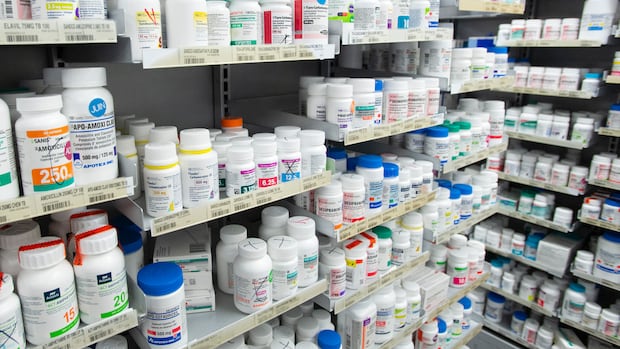
A doctor’s prescription can be the simplest part of getting access to medication. Figuring out what happens next can be much more complicated.
Whether a drug is covered by a public plan, how much a patient pays and what conditions apply can depend on a series of decisions made by federal and provincial governments.
“Pharmaceuticals are a really interesting aspect of Canadian Medicare, largely because they are left out of it for the most part,” said Katherine Fierlbeck, a political science professor at Dalhousie University whose work focuses on health policy.
That gap is part of why Prince Edward Island’s drug formulary — the list of medications covered by public drug plans — is back in focus.
The federal government recently announced $32 million over three years for P.E.I. to renew the Improving Affordable Access to Prescription Drugs program, or IAAPD.
The program has helped the province add more than 100 medications to its public formulary since IAAPD launched as a pilot in 2021, while also reducing some costs for Islanders.
But deciding which drugs make the list is a much bigger process.
Health Canada approval ‘only the start’
Health Canada first reviews a medication and authorizes it for sale. That approval does not mean a public drug plan will pay for it.
“Once a drug is approved by Health Canada … that’s only the start of the whole process,” Fierlbeck said.
Next, the Patented Medicine Prices Review Board assesses whether the price a drug company is asking is fair. Fierlbeck said the board was established to help keep Canadian prices from rising to U.S. levels.
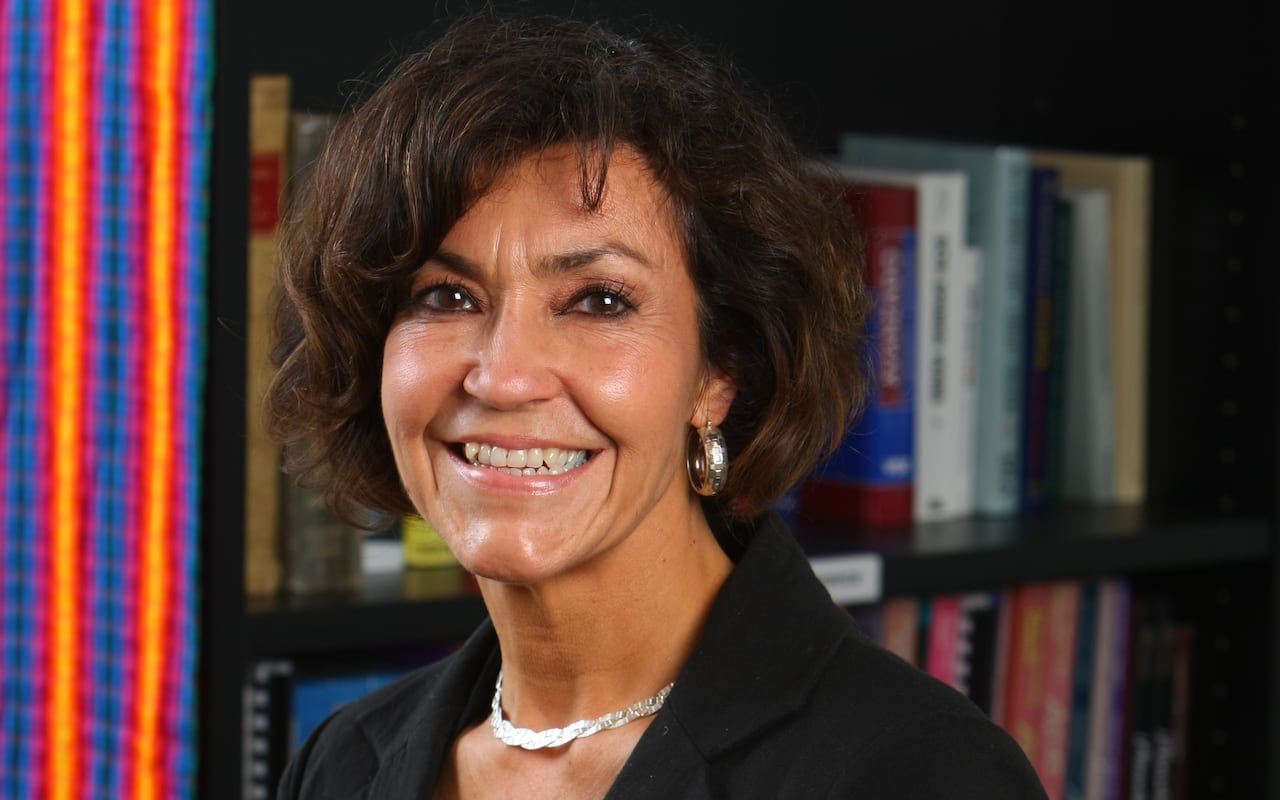
Katherine Fierlbeck, a political science professor at Dalhousie University, says P.E.I. is one of only four jurisdictions participating in the federal pharmacare program and also has the separate IAAPD, which supports a broader provincial formulary and lower patient costs. (Contributed/Dalhousie University)
After that, Canada’s Drug Agency evaluates the cost-effectiveness of approved drugs. It considers a drug’s efficacy, safety and price, then advises whether it should be included in provincial formularies.
The agency’s recommendations are not binding, Fierlbeck said.
“Each province can determine for itself whether it wants to take the advice,” she said.
The Pan-Canadian Pharmaceutical Alliance then acts as a collective bargaining organization for public drug plans, negotiating prices with manufacturers.
“You buy in bulk and you get cheaper prices,” Fierlbeck said.
The provincial government still has the final say on whether a drug is covered.
Fiona Clement, a professor in the University of Calgary’s department of community health sciences and director of its Centre for Health Policy, said governments weigh several considerations — whether a drug meets an unmet need, whether other effective treatments are available, how much the drug costs and whether doctors have the expertise and resources to use it.
“There’s only so much money to go around,” Clement said.
Health economics can help governments compare the cost of a treatment with the benefits it provides.
Those benefits can include medical outcomes, Clement said, but also whether someone can return to work or take part in the activities they enjoy.
Prices — and coverage rules — can change
A drug’s cost — and a province’s willingness to cover it — may shift when a generic version becomes available.
“When a generic entry comes on, that is often a game-changing point,” Clement said, adding that the first generic can be priced significantly lower than the brand-name drug.
Provinces may then add the drug to their formularies or ease restrictions, such as requiring patients to try less expensive treatments first.
WATCH | As P.E.I. signs another pharmacare deal with Ottawa, federal minister calls province ‘ground zero’: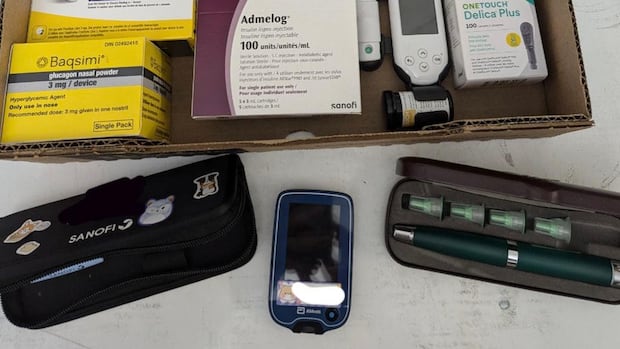
As P.E.I. signs another pharmacare deal with Ottawa, federal minister calls province ‘ground zero’
With a change in the federal Liberal leadership just days away, the Trudeau government has announced a last-minute pharmacare deal with P.E.I. The new deal will provide coverage for diabetes supplies and contraceptives, and it puts P.E.I. in a unique position among all provinces, when it comes to plans for universal drug coverage. CBC’s Kerry Campbell reports.
For Islanders, coverage also depends on which public program applies.
P.E.I. participates in the federal pharmacare program, which covers contraceptives as well as diabetes medications and supplies.
Fierlbeck noted that the Improving Affordable Access to Prescription Drugs program is separate.
“The IAAPD is much broader, and what it does is to support the expansion of the whole provincial formulary, as well as reduced patient charges for these drugs,” she said.
Fierlbeck added that the program was designed in part to address P.E.I.’s smaller formulary and its high deductibles and copayments. It lowers copayments to $5 for many eligible medications.
A system shaped by history
Fierlbeck said prescription drugs were largely left outside of Canada’s universal health-care system because, at its inception, the system was designed around hospital and physician care.
“Back in the day, most people had acute conditions rather than chronic conditions,” she said, pointing to things like farm injuries and heart attacks that were typically treated in hospitals.
Today, she said, many people live with chronic conditions such as diabetes and COPD that are managed at home, often with medication.
WATCH | Why doesn’t universal health care include prescription drugs?: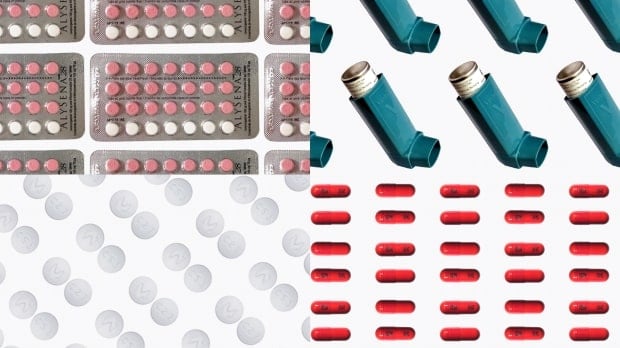
Pharmacare: Why doesn’t universal health care include prescription drugs?
Universal health care usually includes prescription drugs — but not in Canada.
Fierlbeck said a landmark report that helped shape Canada’s health-care system envisioned drug coverage being added after hospital and physician services.
“If you read the whole report, they’re saying, ‘Well, let’s start with hospital care. Let’s start with GPs, and then let’s add on drugs down the road.’”
That next step never fully happened.
“It was too expensive with the initial setup,” Fierlbeck said. “And once the initial setup proved itself to be quite expensive, there was not a lot of interest in adding pharmaceuticals into the mix.”