

Listen to this article
Estimated 3 minutes
The audio version of this article is generated by AI-based technology. Mispronunciations can occur. We are working with our partners to continually review and improve the results.
A project named Whispers from the Wetlands at Nova Scotia’s Shubenacadie Wildlife Park gives visitors a chance to hear the names of species in the Mi’kmaw language and learn about their importance to Indigenous culture.
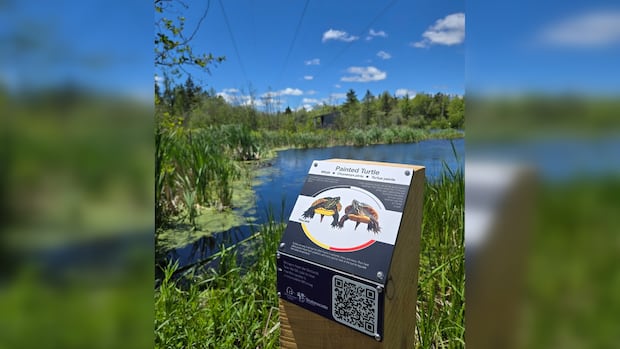
In May, the park installed sign posts across the trails for 15 wetland species with their Mi’kmaw names.
By scanning the QR code, visitors will be directed to a page where they can listen to the Mi’kmaw pronunciation of the species and read the Indigenous history of the species. A section on the signage also provides relevant Western science.
The project represents a partnership between Ducks Unlimited Atlantic and Nova Scotia Department of Natural Resources and is financed by the park’s gift shop revenues, according to Kateri Dorey, an outreach co-ordinator for Indigenous engagement with Ducks Unlimited Canada.
Dorey said the project was inspired by a proposal from local elementary school students, who also recorded the Mi’kmaw pronunciations of the species.
She said the knowledge holders in the Mi’kmaw community helped her team develop the signage, and the stories about what the species mean to the history and culture of the Mi’kmaq.
“Like our eagle, we talked about the teachings that holds because it’s one of the seven sacred teachings,” she said.
The sign delivers the philosophy of “two-eyed seeing,” or Etuaptmumk, an approach of viewing the world through both Western and Indigenous knowledge, according to Dorey.
“It kind of ties everybody back down to ‘this species is important and it has been important for a while,'” she said. “It just connects people with a species.”
Currently the signs are only installed around the wetland centre in the park, which Dorey thinks might help draw more people to visit this area while they’re in the wildlife section. She hopes to add more signs in the future and upgrade the signs for visitors who lack internet access.
Dorey said the signs will help carry forward Mi’kmaw language and culture. The name of the project, Whispers from the Wetlands, reflects the Mi’kmaw tradition of using oral storytelling to pass down history and culture.
“I really wanted that idea of listening to be part of the project,” she said. “In a way, the project is about capturing those whispers and making sure they aren’t lost.”
MORE TOP STORIES