
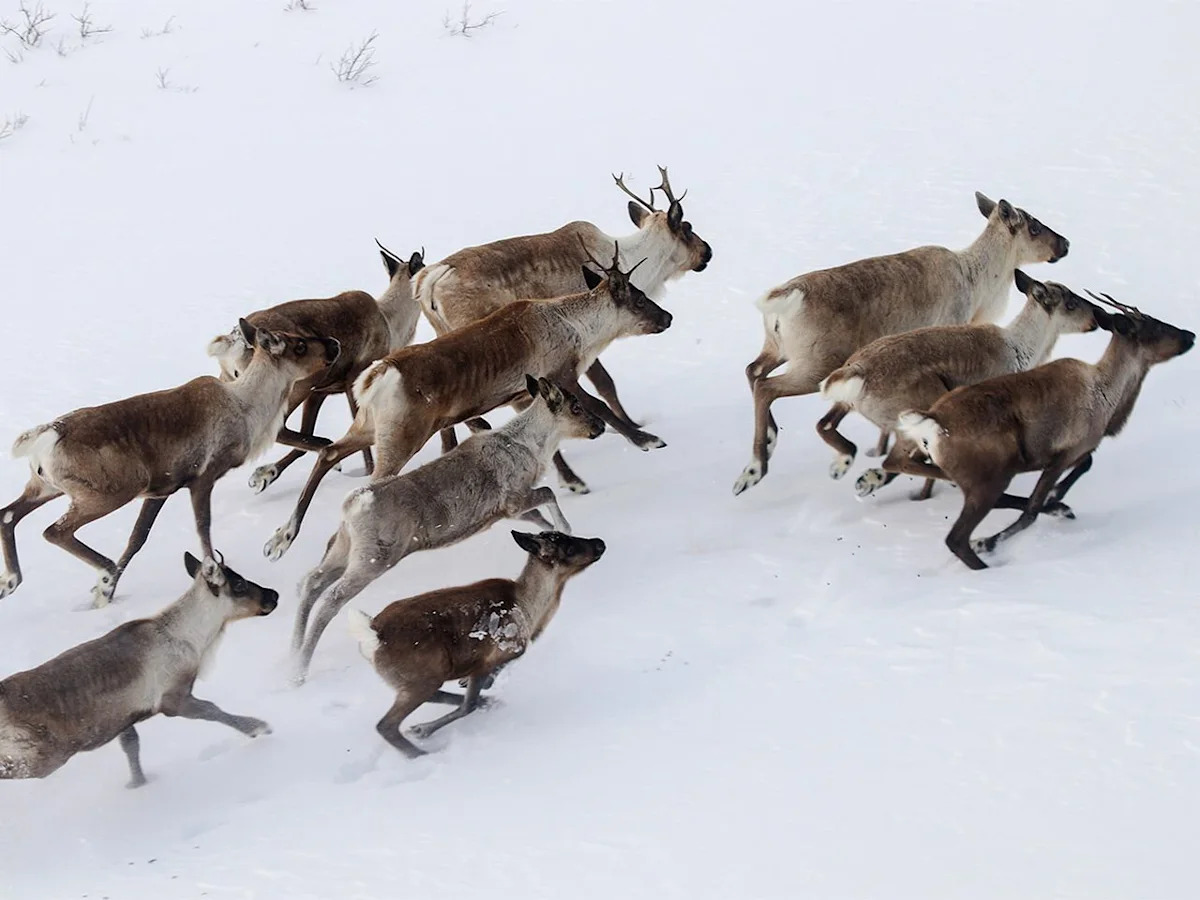
A University of Calgary study aims to get better insight into how inbreeding is contributing to the decline of caribou populations in Alberta and B.C.
The study — which took place over a year, working alongside the Government of British Columbia — served as a good way to learn more about caribou genetics, said PhD candidate for UCalgary Veterinary School of Medicine Charlotte Bourbon.
It examined 759 caribou from 45 populations near the Rocky Mountains, Bourbon said.
“Caribou is the same species as reindeer in Europe and in Western Canada we have the woodland caribou,” she said. “This subspecies of caribou is really interesting because they have really different behaviour than others. For example, they don’t migrate; they have some elevation migration, but they don’t move a lot. Because of that, they are really sensitive to habitat change and habitat deterioration because they cannot really move somewhere else.”
Caribou were chosen because of their economic and cultural importance for communities — but they are also a charismatic and iconic animal species, she said.
Her study was done through genomics, the study of an organism’s DNA.
“We used a mini-marker across the genome, and through this number and the reflection of this marker, we can estimate inbreeding,” Bourbon said.
Threatened south B.C. caribou population ‘really inbred,’ says researcher
Inbreeding is a phenomenon that impacts many species, including humans, which creates a decrease in genetic diversity.
It’s a problem because it can impact a caribou’s survival, reproduction and evolutionary process in what is called “inbreeding depression,” she said.
“We found that most of the (caribou) population in south B.C. are really inbred and we know they’re endangered or threatened,” Bourbon said. “So, it’s true that this habitat destruction, habitat change, also impacts the genetics of individuals, so smaller populations tend to be highly inbred.”

Caribou are shown in an undated file photo from Boreal Caribou, in British Columbia, Canada.
Inbreeding affects the number of offspring Caribou can have, as well as their body conditions, such as size and fat content for the winter.
It will create negative cumulative effects on future generations of caribou, alongside other challenges they face in nature, Bourbon said.
“High inbreeding just adds another layer of problems for caribou, because even if we protect their habitat, but they don’t have enough genetics to adapt or to survive over the long term, it will not help this population,” she said.
Historically, the decline could be traced back over 200 years, with a decline in B.C. from 1700 to 1780, followed by 1780 to 1860 and then 1860 to 1940.
Research to continue, with aim to advocate for government help
Bourbon’s end goal for the study is to highlight the importance of genetics for caribou and advocate to the government when conducting population restoration or relocation projects, believing they are all part of an important puzzle to save their population.
One example is a caribou conservation breeding program taking place in Jasper.
“They’re capturing caribou from the wild and they’re looking into inbreeding to avoid inbreeding,” Bourbon said. “There is a way to do good conservation and demographic action by taking into account inbreeding, and I believe this is something that should be done every time if we can do inbreeding control.”

Caribou are shown in an undated file photo from Boreal Caribou, in British Columbia, Canada.
Bourbon will continue research on caribou and work on more specific populations that can be traced.
They still don’t fully understand the genetic pattern, so there is more genetic work to be done on caribou in B.C. and Alberta, she said.
Catch up with the day’s headlines, curated by our editors and delivered to your email inbox at lunchtime on every business day. Sign up now for the Calgary Herald Noon News Roundup.