

Liberal MP Angelo Iacono’s second job as a strategic adviser at a Montreal law firm is raising questions about perceived conflict of interest among some of his colleagues and a leading expert on the machinery of government, but the four-term MP from Quebec says that the House of Commons rules allow outside employment to backbenchers, and that he accepted his new position after consulting with the Ethics Commissioner’s Office.
“Regarding my role as strategic adviser in the law firm of Gattuso Bouchard Mazzone, the House of Commons Procedure and Practice states that ‘nothing in this code prevents members who are not ministers of the Crown or parliamentary secretaries from any of the following,’ which includes, ‘engaging in employment or in the practice of a profession,’” wrote Iacono (Alfred-Pellan, Que.), in an emailed statement to The Hill Times.
“This advisory role is compliant with the House of Commons Procedure and Practice and in full accordance with my role as the Member of Parliament for Alfred-Pellan. The Office of the Conflict of Interest and Ethics Commissioner found that there was no indicated conflict of interest of ethical concern, and with this finding, I agreed to take on this advisory role,” wrote Iacono.
As a standard practice, the Ethics Commissioner’s Office neither confirms or denies if an MP received approval for any issue involving conflict of interest for privacy and confidentiality reasons.
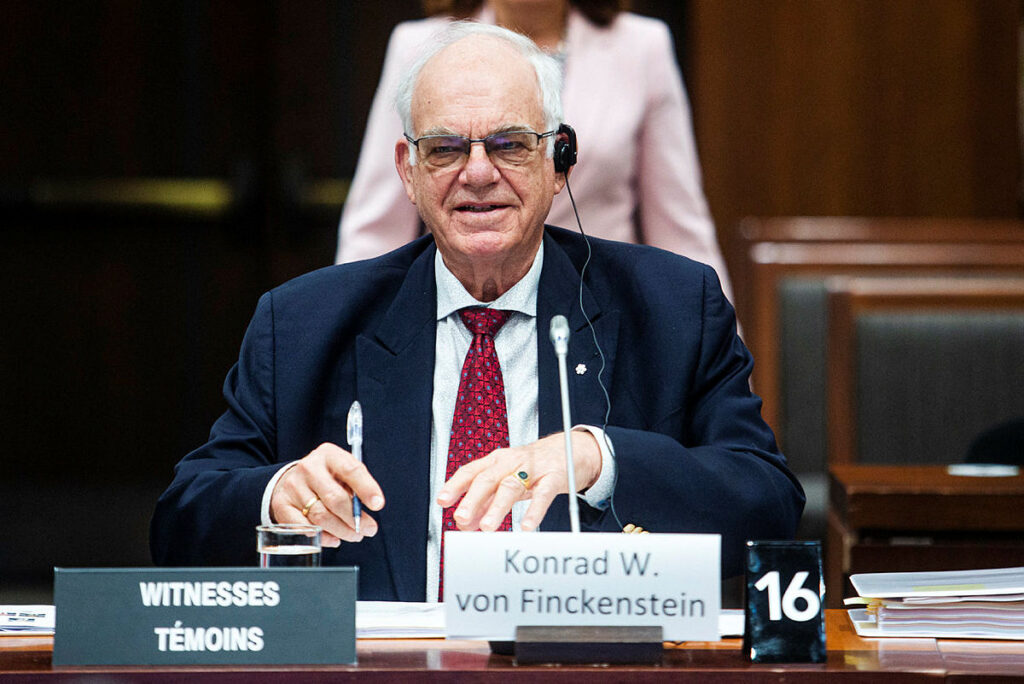 Ethics Commissioner Konrad von Finckenstein’s office says backbench MPs can accept a second job as long as it does not conflict with their MP duties. The Hill Times photograph by Andrew Meade
“Because of strict confidentiality requirements, we cannot comment on individual cases, including any dealings the Commissioner’s Office may have with an elected or appointed official,” wrote Melanie Rushworth, director, communications, outreach and planning in the Ethics Commissioner’s Office, in an email to The Hill Times.
However, she said the government and opposition backbench MPs are allowed to undertake a second employment as long as it does not conflict with their duties as a Member of Parliament.
“The code does not prohibit MPs who are not ministers and parliamentary secretaries from participating in outside activities (activities that are not part of their official duties) as long as they can fulfil their obligations under it,” Rushworth wrote referring to Sec. 7 of the Ethics Code, which identifies outside activities as “engaging in employment or in the practice of a profession, carrying on a business; being a director or officer in a corporation, association, trade union or non profit organization; and being a partner in a partnership.”
The Prime Minister’s Office referred all questions on this subject to Iacono, who was not available for a phone or an in-person interview. The specifics about Iacono’s new position at the Montreal law firm are unclear, including whether this role is full-time, part-time, or contractual, and how much he earns.
The law firm’s website lists Iacono as a strategic adviser and features his picture and a biographical note. The biographical information says that he earned his law degree from the University of Ottawa, and that he’s an MP and a member of the House Transport and Infrastructure Committee. The biographical writeup includes his membership in the Inter-Parliamentary groups for Italy, France, the United Kingdom, Japan and Germany. It also says that the MP “contributes to the development” of the law firm’s client base.
“Iacono has recognized expertise in the business community and contributes to the development of our client base as well as providing strategic guidance to our clients and lawyers,” states the biographical note.
Sec. 4.47 of the House of Commons’ Conflict of Interest Prevention and Resolution states that MPs are “trustees of public confidence” and “must place the public interest over their own private interests and derive no personal benefit or gain from their position.”
In late August, Iacono put out a LinkedIn post announcing his new position, but it was taken down shortly after. It’s unknown why the post was removed.
In the LinkedIn post, Iacono wrote: “I look forward to this new chapter with Gattuso Bouchard Mazzone and to working alongside a team that shares a strong belief in collaboration, entrepreneurship and meaningful relationships,” wrote Iacono.
“Bringing together business, expertise and international connections can help Canadian companies identify new opportunities, strengthen their presence abroad and build lasting partnerships—while also attracting new relationships and opportunities here at home. Different roles, but a common objective: creating connections that help our businesses and our communities grow.”
Iacono’s post was accompanied by some photographs that appeared to look like a welcome cocktail party at the law firm.
Strategic adviser in a law firm is ‘not quite … arm’s length from government’: Savoie
Donald Savoie, Canada Research Chair in Public Administration and Governance at the University of Moncton in New Brunswick, said that an MP’s job is a full-time position, adding that he has known a number of MPs who have had to work seven days a week. Savoie said he found it “very unusual” that Iacono has been able to find time to work as a strategic adviser. Moreover, Savoie said that members of the government caucus have access to confidential information in closed-door caucus meetings and in informal conversations with cabinet ministers and parliamentary secretaries, which raises questions whether an MP should accept such a position.
“It’s questionable,” said Savoie, an award-winning author, editor and co-editor of more than 28 books.
“When you’re a member of caucus of the government, particularly in government, you have access to key policymakers every week, and you have access to debriefs every week, and you have access to information that others do not. At caucus meetings, a lot of things are said, a lot of things are transcribed, and a lot of justifications are made, about certain policies,” he told The Hill Times.
Had Iacono’s second gig been totally unrelated to government, there would be no issue, Savoie said, but a strategic adviser in a law firm is “not quite the job that is arm’s length from the government.”
First elected in the 2015 Liberal red wave, Iacono represents a safe Montreal area riding where he won the last election by a margin of 33.5 percentage points.
Savoie said that being an MP is a full-time job, and anyone who does not want to commit to accept it as such on behalf of their constituents should join another line of work.
An MP’s current base salary is $217,700. Each year, the base salary automatically goes up by about $7,000. MPs who hold additional responsibilities such as a cabinet minister, speaker, deputy speaker, assistant deputy speaker, whip, deputy whip, parliamentary secretary, and opposition House leader receive added pay on top of their base salaries. Iacono does not have any additional responsibilities.
When the House is sitting, all national caucuses meet on Wednesday mornings from 10 a.m. to noon. During these meetings, regional caucus chairs provide a summary of discussions within their sub-caucuses, and highlight the important issues for MPs in their respective geographical regions.
Party leaders, including the prime minister, attend national caucus meetings, and hear what MPs have to say about their conversations with their constituents regarding different policy and political issues. During caucus meetings, MPs have direct access to their leaders, and can raise any question they like. Depending on the significance of issues, cabinet ministers sometimes hold special caucus meetings from time to time to brief and discuss a specific legislation or government policy. As an example, Transport Minister and Government House Leader Steven MacKinnon (Gatineau, Que.) last month held a special virtual caucus meeting with all Liberal MPs to discuss the government’s plan to privatize airports in major urban centres.
In addition to weekly caucus meetings, MPs meet with cabinet ministers, top ministerial and PMO officials, and the prime minister at social gatherings on the Hill or when the prime minister or ministers are visiting different regions of the country. Prior to the start of each parliamentary sitting, each parliamentary caucus holds a retreat in which they discuss parliamentary strategy, political strategy, election readiness, among other subjects.
Similarly, prior to the start of every committee meeting, each party’s MPs coordinate strategy, especially when they are discussing any politically sensitive legislation or a political issue.
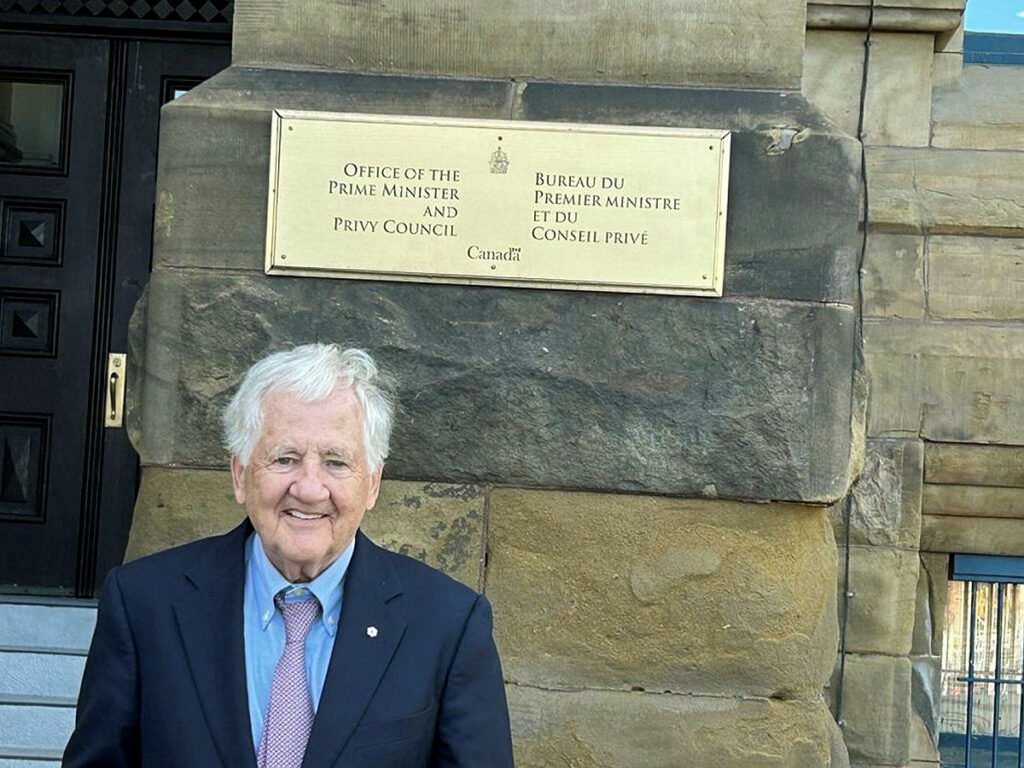 Donald Savoie says that government caucus members get confidential information in national caucus meetings and in informal conversations with senior government officials, including cabinet ministers and parliamentary secretaries, which raises questions whether an MP should accept a position like strategic adviser in a law firm. The Hill Times photograph by Abbas Rana
MPs have busy schedules whether or not the House is sitting. During parliamentary sittings, the House sits from 10 a.m. to 7 p.m. Sometimes, the House proceedings go on until midnight. During this time, MPs have House duties, votes on legislations that could go on for a few minutes to hours, and attend daily Question Period. Most MPs are also members of informal issue-based caucuses, like immigration, health, trade, economy, among others. During constituency weeks, MPs attend community events, meet with constituents, sometimes makes announcements on behalf of cabinet ministers. Sometimes, ministers and the prime minister comes to their ridings for different funding or project announcements.
A Liberal MP told The Hill Times last week that they, too, received a job offer when they were first elected, but declined to accept it because of perception issues.
“The perception is awful, it’s a sticky situation,” said the MP who spoke on a no-for-attribution basis to share their candid views.
“It doesn’t look good. You are getting paid $217,700. What the hell do you need to do private work for? My constituents will say ‘we sent you to Ottawa to do work for us.’ The question is when is $217,000 is not enough? He’s not doing anything illegal, but perception wise it may cause some concerns from Canadians.”
Get Today’s Headlines Newsletter
Your quick scan of the news you need each weekday to be the smartest person in the room.
By entering your email address you consent to receive email from The Hill Times containing news, analysis, updates and offers. You may unsubscribe at any time. See our privacy policy
A second Liberal MP said that licensing requirements in certain professions, like medical professionals, could demand MPs to practise for a few hours each month to maintain their credentials. But, without more disclosure about what the strategic adviser’s role means, the MP said, they were unsure if it’s appropriate for Iacono to do a second job.
“He needs some Chinese wall, so to speak, if there’s any conflict of interest emerging,” said the second MP, who also did not want to be identified for this story.
A former senior Liberal interviewed for this article said that without any clarity about the Montreal MP’s job description, there is an “appearance of conflict.”
“What’s he strategically advising on?” asked the former senior Liberal, who did not want to be identified.
“It [a second job] doesn’t pass the smell test for me. We just have one brain: he can’t shut off part of his brain saying ‘Oh, this information for example I got in my role as an MP and I will not use that information for my clients to advance their interests’.”
arana@hilltimes.com
The Hill Times

Abbas Rana is the assistant deputy editor at The Hill Times. He reports on parliamentary caucuses, nomination contests, party leadership campaigns, the Prime Minister’s Office, and cabinet. Rana won the 2025 Ontario Community Newspaper Award for Best News Story (circ. over 8,000) for his story on Conservative nominations in that year’s election. Contact him at arana@hilltimes.com. See all stories BY ABBAS RANA