
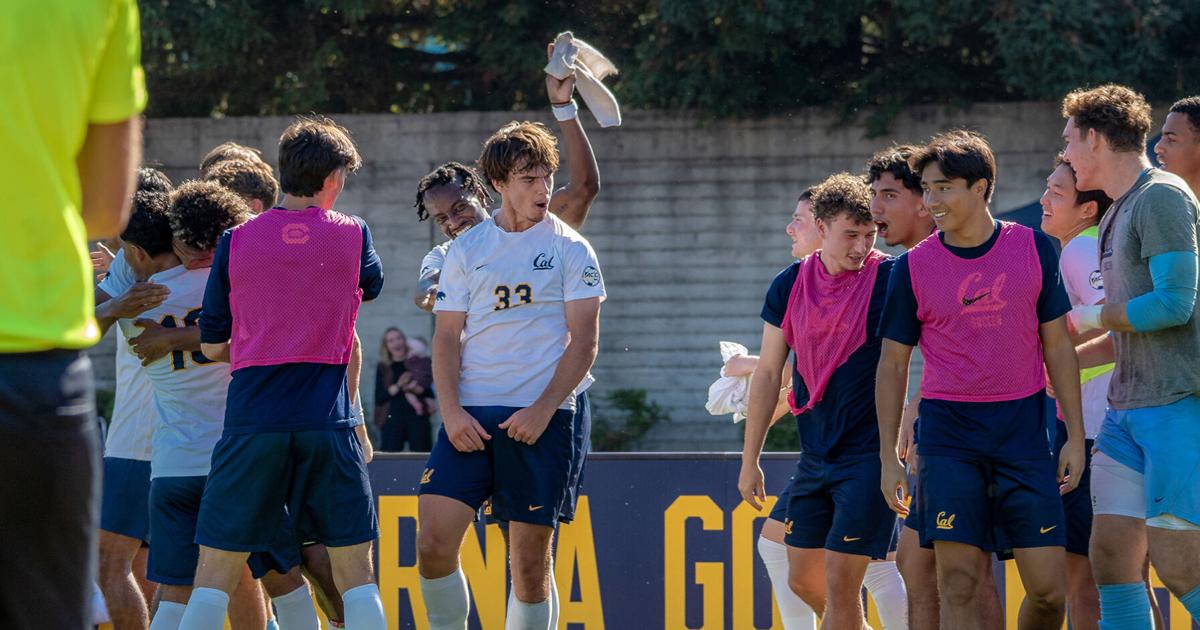
The NCAA Division I Cabinet narrowly approved a proposal from the Division I Men’s Soccer Oversight Committee on Oct. 7 that will transition the men’s collegiate soccer season into a year-round model. As the vote failed to reach the 75% approval benchmark, the proposal will now go to a 30-day rescission period where eligible DI schools and conferences can vote on whether to defeat it.
The new season format would span across two semesters. It would feature a fall season starting in late August to run until the week before Thanksgiving, and a spring season beginning in mid-February.
“College soccer is a uniquely American institution,” said CEO and Secretary General of U.S. Soccer JT Batson in a post on X in response to the Cabinet’s decision. “This is another proof point of the big things we can go do for the future of our sport when we work together. Of course there is lots more to do, but today’s a day for a huge congrats.”
Under the new schedule, teams would still be limited to a total of 25 games per year, but the season would be distributed across two semesters. Schools would have the ability to schedule up to 18 games in the fall semester and up to 10 games in the spring semester, with a break during the winter.
The transfer portal window would occur following the national tournament at the end of the spring season.
Before implementation of the year-round season, the proposal still has one final obstacle to overcome.
If at the end of the 30-day rescission period there is not a two-thirds majority to defeat the rule change — at least 241 schools voting against it — the new schedule will take effect at the start of the 2027-28 academic year.
When asked for a statement, Cal Athletics spokesperson Jonathan Okanes said to the Daily Californian in an email, “We are aware of the NCAA Division I Cabinet’s vote and will be monitoring any further developments moving forward.”
The proposal comes at a tricky time as the college sports and name, image and likeness, or NIL, landscapes are constantly transforming. The vote has been a long time coming, with deliberations on a two-semester season dating back many years.
Because of Batson’s efforts, however, things have picked up steam during the past year.
In early June 2025, the U.S. Soccer CEO created a 17-person committee, the NextGen College Soccer Committee, that was tasked with finding solutions and offering recommendations in order to improve the college environment as well as better prepare athletes to play professionally and internationally.
“The recommendations were designed to be able to deliver a better student athlete experience, to be able to provide financial stability, and to provide player development opportunities — which are the three things that everyone in college sports said they wanted,” Batson said in a statement to ESPN.
With that goal in mind, the committee — led by Dan Helfrich, a principal at Deloitte Consulting and a part of U.S. Soccer’s leadership advisory group — pitched the initial recommendation to shift the soccer season from a fall sport to one that spans across one full academic year.
While the recommendation received significant support from club and league leaders that were a part of the committee from Major League Soccer, National Women’s Soccer League and United Soccer League, the proposal still needed to cross the major hurdle of garnering the NCAA’s approval.
“I will tell you confidently that neither the conferences nor the NCAA will be surprised by this release, because we’ve been collaborative,” Helfrich said to ESPN when the committee first announced its recommendation in October of last year. “Part of the reason we’ve done that is to create a smoother on-ramp to governance conversations.”
In May 2026, the NCAA Division I Men’s Soccer Oversight Committee adopted the legislation that would split the college men’s soccer season into a fall and spring season with a subsequent national tournament occurring in the spring. In order to become official, the legislation was subject to review by the Division I Cabinet in June.
After the review in June, the Cabinet remanded the proposal, citing concerns from 20 Division I conferences about the duration of the season and ambiguity around the regulations of championship selections and the eligibility of midseason enrollees.
The Cabinet largely acknowledged the broad support for change, but requested the committee to revisit the proposal in order to offer more clarity.
On Oct. 7, the Cabinet reviewed alterations and affirmed the oversight committee’s proposal with a slim majority. The Cabinet stated they were “generally satisfied” with the adjustments and that the new schedule would be manageable.
Advocates for the year-round college season have argued that the new model will better develop talent for the sport and create a smoother pipeline. With the MLS adjusting its schedule to fit the more European-style format, the new college schedule will better line up with professional leagues and windows.
The extra time, supporters argue, will spread games out and help athletes rest and recover. In addition to the reduced travel time, athletes will have a more balanced academic and athlete experience due to fewer time demands.
However, some schools and fans are concerned about the financial strain and scheduling conflicts that might arise with a season spanning across two semesters.
While a conclusion won’t arrive until the end of the 30-day rescission period, the year-round college season has fans and schools split amid the Cabinet’s vote. It remains to be seen how the eligible schools will vote, but what is certain is that their decision will mark a new era for college men’s soccer in the United States.