
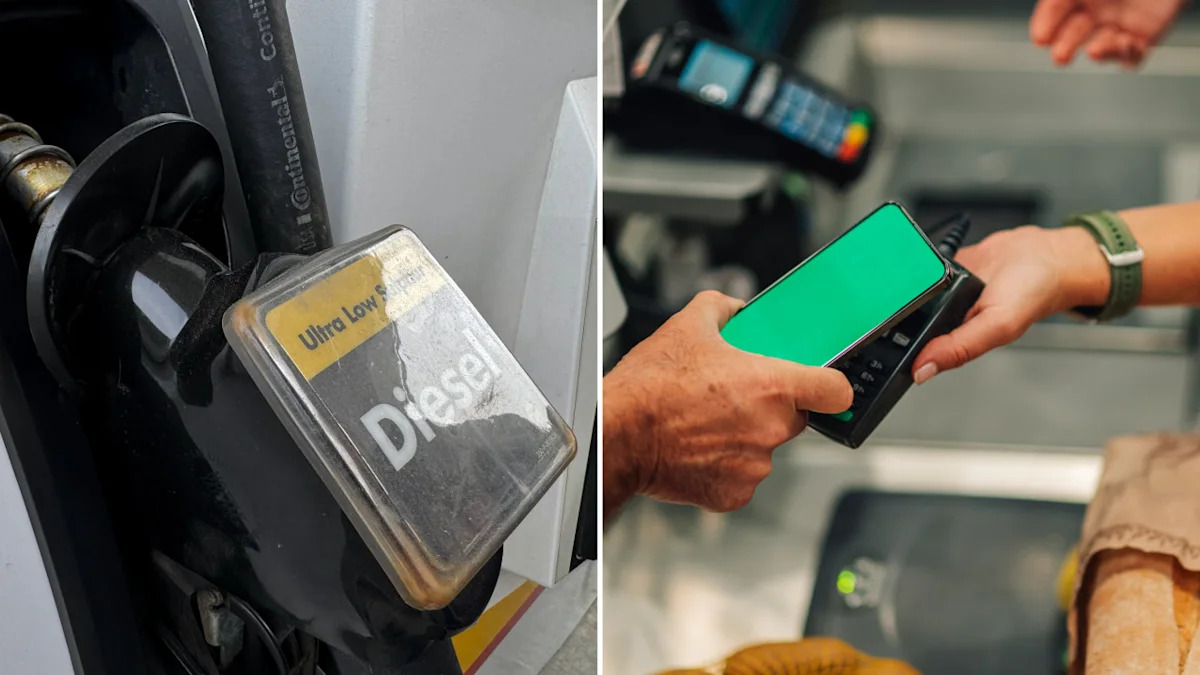
 Diesel prices
If you don’t drive a diesel truck, it’s easy to tune out the latest fuel-price headlines. But the fuel that hauls your groceries, clothes and building supplies just hit a record high, and that bill tends to show up at the checkout.
Retail diesel now costs roughly 59% more than it did before the war in Iran began. Truckers, railways and independent grocers are all scrambling to cover the jump.
The catch is that even if supply eased tomorrow, shelf prices likely wouldn’t respond immediately. Knowing how these costs travel, and who they hit hardest, can help you get ahead of them.
Don’t Miss Why are diesel prices so high right now?
The average retail price of diesel topped $2.64 per litre for the week ended Sept. 29, according to Natural Resources Canada, the federal department that tracks fuel prices. That’s 15% above the previous record set in November 2022. On a daily basis, the national average hit $2.751 on Sept. 17, according to data from Kalibrate, a fuel-pricing analytics firm.
Several shocks are simultaneously converging on supply. The Strait of Hormuz has been effectively closed for seven months, many refineries have cut production, Ukrainian strikes have damaged Russian energy infrastructure and the threat of Houthi attacks is keeping tankers away from the Red Sea. The International Energy Agency warned that refineries are already stretched, leaving little room to stop prices from climbing even more.
Read More: How financially stable am I? You’re doing better than most if you check off just 1 of these 3 boxes
How does diesel end up on your grocery bill?
Diesel moves almost everything you buy by truck and rail, and it powers farming, mining and manufacturing.
Mike Millian, president of the Private Motor Truck Council of Canada, which represents about 200 companies with in-house fleets including Loblaw and Home Hardware, says a round-trip semi haul between Montreal and Toronto cost roughly $850 on Jan. 1 and now costs $1,400. “A fleet’s No. 1 expense outside of wages was always fuel. Now it’s probably fuel,” Millian told The Canadian Press (CP).
Rail is following the same path. October fuel surcharges at Canadian National Railway (CN) and Canadian Pacific Kansas City (CPKC) sit up to 73% above early-August levels.
Story Continues
Those surcharges then land on retailers, and ultimately, consumers. Gary Sands of the Canadian Federation of Independent Grocers, which represents about 6,900 stores, told CP that grocers working on margins of about 2% find it very hard not to pass the charges along. Gas analyst Dan McTeague, head of Canadians for Affordable Energy, told CP24 he expects higher fees to start showing up within 30 to 60 days.
Why won’t prices drop as soon as the crisis ends?
Prices at the pump can move multiple times in a day, but supply chains can’t. Reopening wells, shipping crude and restarting refinery output all take time, so shoppers would likely wait months for relief even if the strait reopened. Diesel demand also typically increases as winter approaches.
There’s a timing wrinkle in the data, too. Grocery inflation actually cooled to 2.8% in August, according to StatCan. That data predates September’s spike, though, so the full effect hasn’t shown up in official numbers yet.
Who will feel the diesel squeeze the most?
Northern and rural residents are among the hardest hit, especially northern communities that rely on diesel generators for power. Prices also vary widely by region. For the week ended Sept. 29, NRCan’s average retail price ranged from $2.94 per litre in Gaspé, Quebec, to $2.47 per litre in Grande Prairie, Alberta.
Farmers are also feeling the pinch because harvest is one of the most fuel-intensive times of year, and Grain Growers of Canada has asked Ottawa for a targeted, temporary per-litre rebate. Households that heat with oil, a diesel-type fuel, should watch closely as cold weather sets in.
What to do now
Some relief is already available. Ottawa extended its fuel excise tax suspension through Jan. 31, which saves four cents per litre on diesel and 10 cents per litre on gasoline. That’s about $5 off a 50-litre fill-up of gas, and it’s money your budget will need to absorb once the suspension ends.
To soften the impact:
Stock up on shelf-stable staples you already use when they go on sale, before new surcharges filter through, but skip perishables
Switch to store brands and use coupons and flyer and price-matching apps
Bundle online orders to cut down on delivery and shipping fees
If you heat with oil, ask your supplier about fixed-price or equal-payment plans before winter demand spikes
Build a small buffer into your grocery budget for the coming months
The disruption won’t last forever, but the cost of moving goods is already climbing, and it reaches consumers faster than they expect. As McTeague puts it, “it’s real and it’s almost immediate.”
What To Read Next
The most expensive financial mistakes are often the ones you don’t see coming. Join 19,000+ Canadians who get the money moves, risks and opportunities shaping their finances — delivered free each week. Subscribe now.
This article provides information only and should not be construed as advice. It is provided without warranty of any kind.