
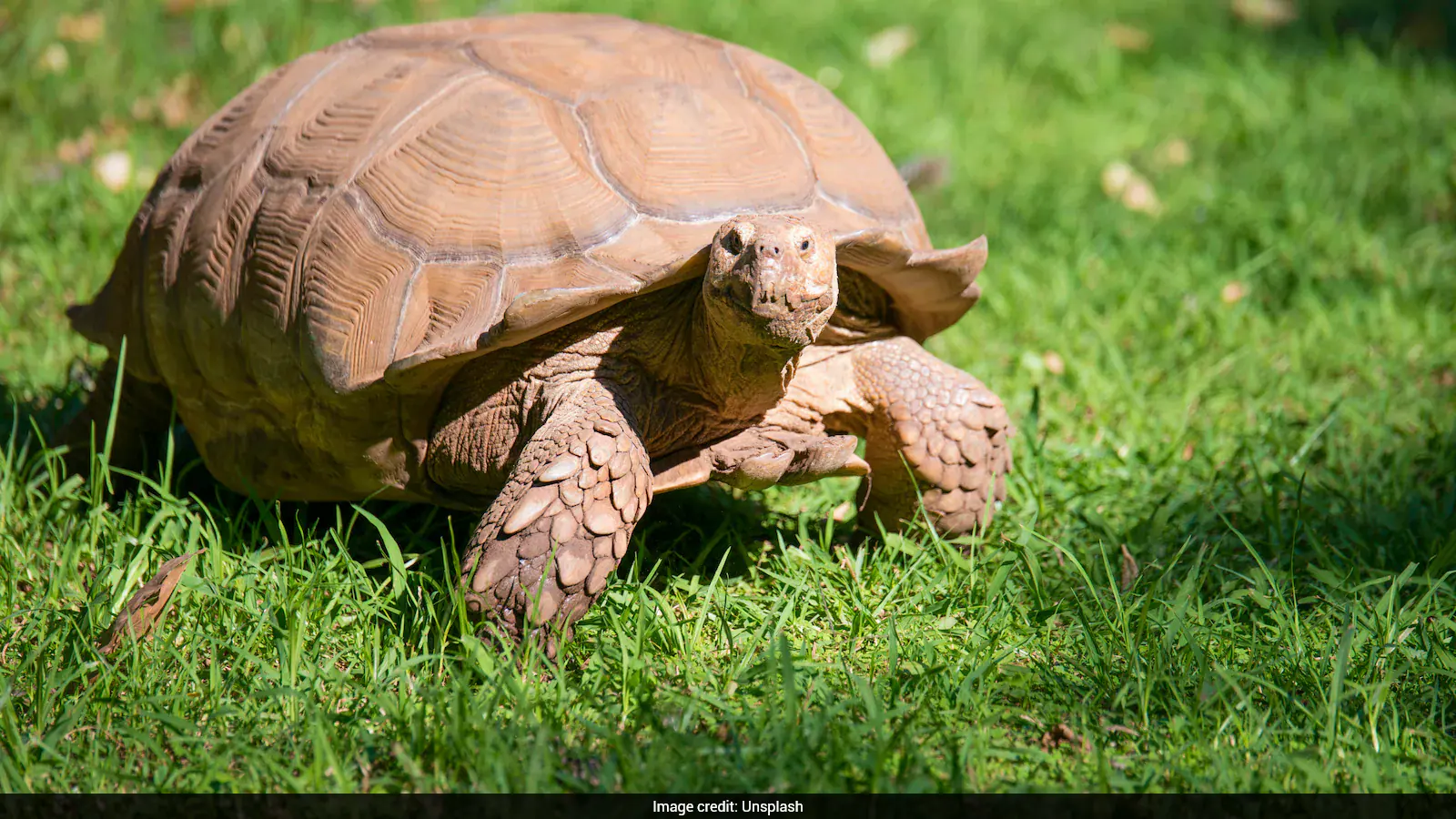
Giant tortoises were pushed to the brink of extinction by human exploitation decades ago, but a recent survey revealed that they have managed to pull off an incredible recovery, officially outnumbering the human population in the island nation of Seychelles, CNN reported. According to a survey conducted by the Seychelles Islands Foundation (SIF) and the University of Exeter in the UK, around 180,000 Aldabra giant tortoises now roam freely across the remote Aldabra Atoll, an Indian Ocean island group off the east coast of mainland Africa.
If we compare it with the entire human population of the Seychelles, there are around 122,000 people, which means there are significantly more of these massive reptiles than citizens living in the country.
Also read | US Man Finds Rare 6-Carat Yellow Diamond At Famous Arkansas Park
The numbers weren’t always like this. The Aldabra giant tortoises were hunted heavily back in the 19th century. Experts began taking necessary steps to save them when they noticed their population, but by the time conservationists stepped in to sound the alarm, fewer than 1,000 of these creatures remained on the island.
To tackle the situation, authorities turned the atoll into a strict nature reserve in 1981, which was followed by a UNESCO World Heritage site designation a year later.
“The monitoring data in this study were collected by SIF staff living and working on the atoll, year after year,” Dr Frauke Fleischer-Dogley, CEO of SIF, said as quoted by phys.org. “More than 180,000 giant tortoises roaming freely on our atoll is proof of what long-term commitment to conservation can achieve. This is wonderful news for Seychelles, for the world and for everyone who has worked to protect Aldabra.”
After decades of careful monitoring and dedicated conservation work, the animals are now breeding and thriving safely in their natural habitat.
Also read | US Woman ‘Wrongfully’ Jailed Over Miscarriage Wins Over Rs 15 Crore, Reclaims Child’s Ashes
“Aldabra’s giant tortoise monitoring program is one of the longest-running in the region, but the atoll’s dense vegetation makes counting tortoises genuinely difficult in places,” Dr Nancy Bunbury, one of the study’s co-authors said as quoted.
“By modelling what we didn’t see, as well as what we did, we’ve produced the most reliable baseline yet for this iconic Seychelles species, establishing a benchmark we can use to track the population for decades to come.”
While scientists are celebrating the milestone, they warn that the work is far from over. Climate change poses a growing threat to the low-lying coral atoll.