
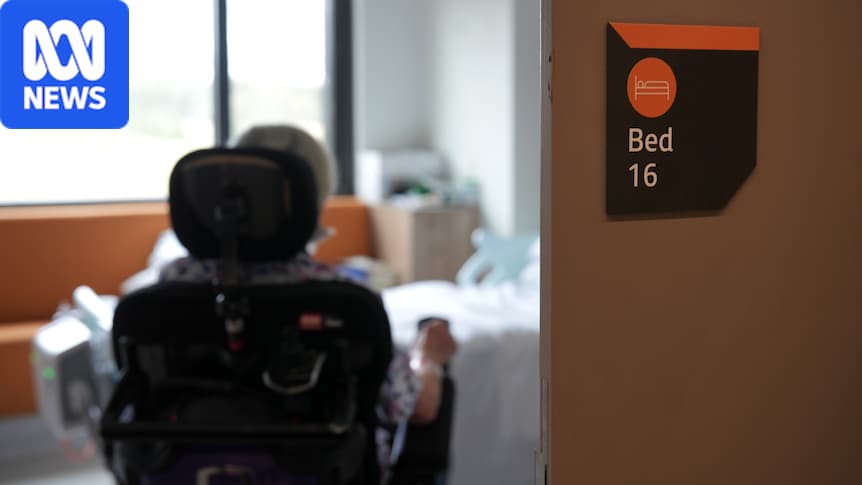
Hospital corridors filled with patients in pain and lengthy emergency department waits are becoming common as Australia struggles with an aging population, the nation’s peak body for emergency doctors has warned.
The Australasian College for Emergency Medicine (ACEM) has released its third annual State of Emergency report focusing on the implications of an aging population and the looming health system crisis that could come with it.
Nationally, only 54 per cent of older people who presented at emergency departments in 2023–24 were given an inpatient bed within eight hours, a decline from 75 per cent in 2018–19, according to data collated by the ACEM.
The figures mark a worrying trend which the college said was ongoing.
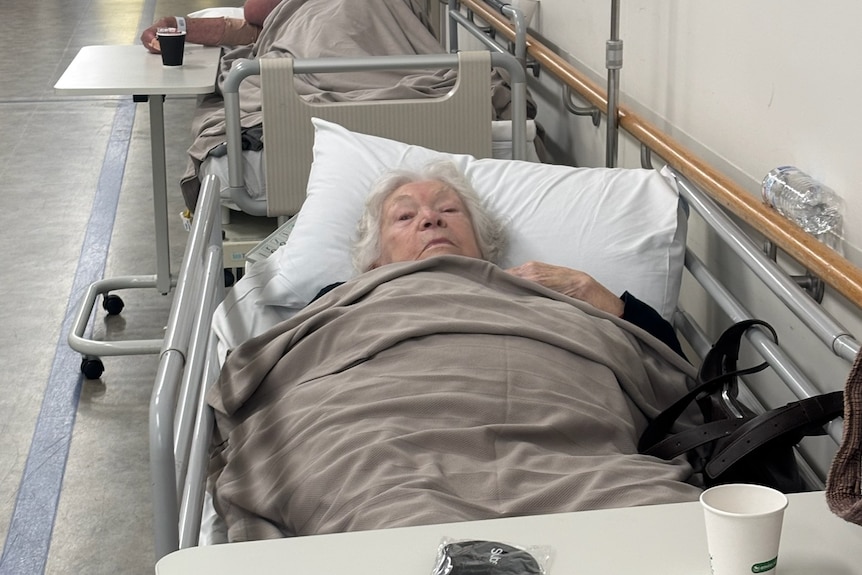
Perth grandmother Elsie Gribben, 89, in the hallway of the St John of God Midland hospital in March. (Supplied)
Perth grandmother Elsie Gribben waited almost 48 hours in the corridors of the St John of God Midland Hospital in March, her daughter Susan Chapman told the ABC.
“She couldn’t walk, she was left unsupervised at times in a corridor. She was given wet wipes to wipe herself and wasn’t able to get access to the toilet,” Ms Chapman said.
“It was something you expect in a world war.”
Susan Chapman says her mother Elsie waited 48 hours in the corridor in March. (Supplied)
Ms Chapman said she had visited various hospitals since and the situation had not improved.
“It’s not just one hospital, it’s across the board. All the nurses I speak to are pretty much fed up with the way that they’re being treated,” she said.
‘Not adequately equipped’
The crux of the issue, according to the ACEM, is that most hospitals and emergency departments are not adequately equipped to deal with the surging demand caused by Australia’s aging population.
In 2023–24 the number of older people presenting at EDs increased by 16 per cent from five years earlier, compared to four per cent for younger patients, according to the ACEM’s report.
Every jurisdiction except the ACT has seen an increase in the number of older patients waiting in EDs for more than eight hours. (ABC News: Ebony ten Broeke)
Comparing the same periods, the number of older people who waited longer than 24 hours in EDs jumped from 15,084 to 53,510, a 3.5-fold increase.
The report highlights Australian Bureau of Statistics modelling which projects a 411 per cent increase in people aged 85 and over presenting to EDs from 2010 to 2050.
The ACEM found that while younger patients were waiting longer in EDs, a much larger proportion of older people had lengthy stays, and the gap was widening.
Every jurisdiction except the Australian Capital Territory saw an increase in the number of older patients waiting in EDs for more than eight hours, when comparing 2018–19 data to 2023–24.
ACEM president Peter Allely said pressures on the aged care system are spilling into emergency departments.

Peter Allely says the aged care system is overwhelming emergency departments. (Supplied: ACEM)
“Unless these serious issues are addressed as a matter of urgency, emergency care will come too late for many Australians,” he said.
Loading…
Dr Allely said an aging population was proof of progress in medicine, but warned Australia’s health system was not ready to cope.
“By 2030 it is projected that nearly one in five Australians will be aged 65 and over,” he said.
“Australia’s health system and its health workforce are just not equipped for this demographic change.”
Ministers point finger
Federal Health and Aging Minister Mark Butler said the responsibility of improving the health system lay with state and territory governments.
“Australia is at a tipping point right now, as the oldest baby boomers start to enter their 80s, their need for good quality aged care and health services is skyrocketing frankly,” he said.
“And that’s a challenge for all governments, not just the Commonwealth government.”
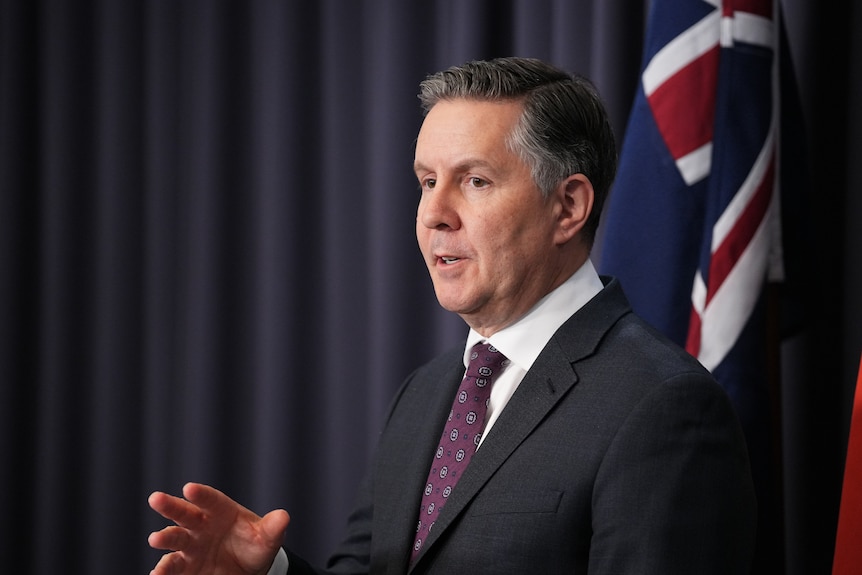
Mark Butler says state and territory governments are responsible for improving the health system. (ABC News: Matt Roberts)
Mr Butler said his highest priority was improving healthcare accessibility and affordability, and the federal government had already made “historic investments to take pressure off state and territory hospitals”.
NSW Health Minister Ryan Park said the federal government was responsible for addressing pressures in aged care.
“The number of patients waiting for Commonwealth Government aged care placements stranded in public hospitals represents one of the most significant public health crises facing state health systems around Australia,” he said.
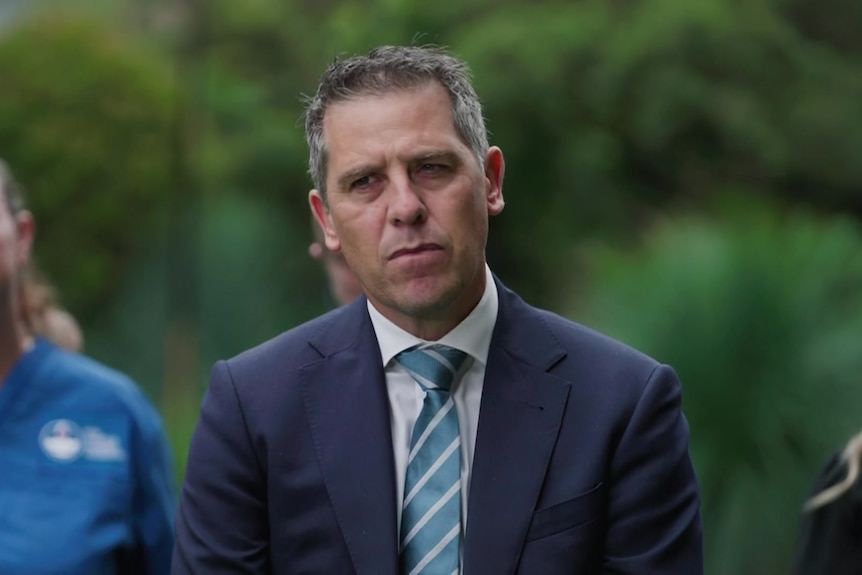
Ryan Park says too many patients are waiting for federal government aged care placements. (ABC News)
Similarly, WA Health Minister Meredith Hammat said many older patients in WA hospitals were medically cleared for discharge but did not have a placement in aged care.
“Our emergency departments are full because our hospitals are full, and our hospitals are full because we don’t have enough aged care … It’s the responsibility of the federal government.”
The ACEM has made recommendations to state and federal governments, including to improve integration between hospitals and aged care, funding, access to general practitioners, data, and research.