
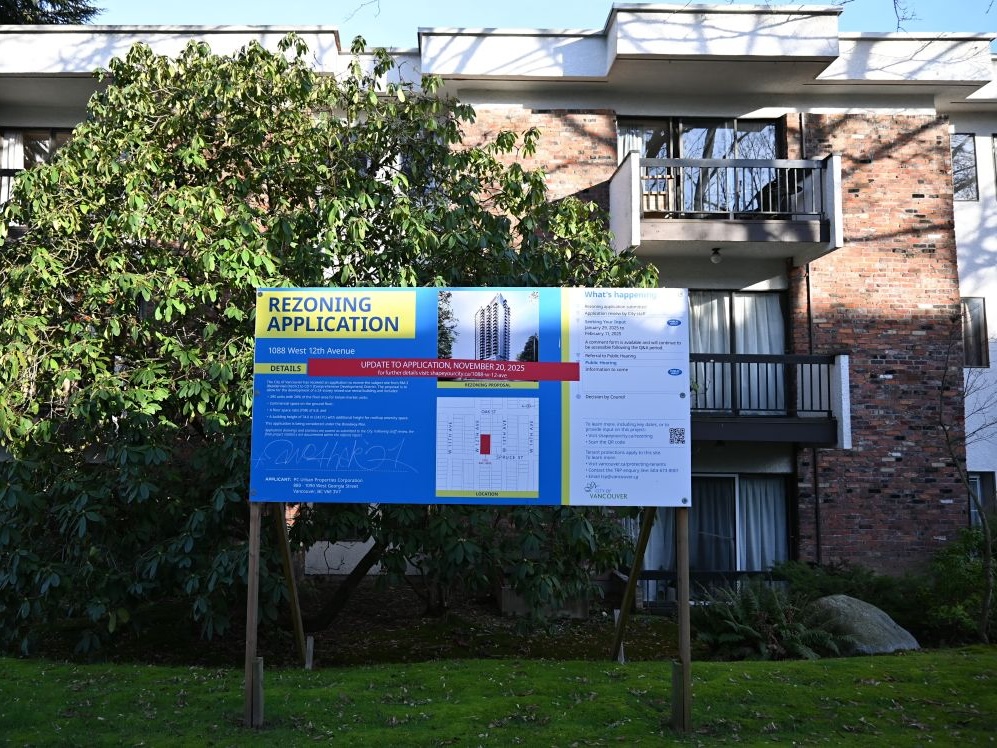
Four years ago, Vancouver elected a new council — led by an ABC Vancouver supermajority — with housing being one of the top election issues. Did council accomplish what it set out to do?
Announcements, Events & more from Tyee and select partners
CONTEST: Win a Book to Celebrate World Teachers’ Day

One lucky Tyee reader will get to choose from six great reads for kids and teens.
ABC’s campaign was primarily focused on public safety, with a signature campaign promise of “100 police officers, 100 nurses.” But their biggest housing promise was the “3-3-3-1 permitting framework” that aimed to speed up approvals to three days for renovations, three weeks for detached homes, three months for multi-family and mid-rise projects and one year for highrise and large-scale projects.
Led by Ken Sim, ABC Vancouver won a supermajority with Rebecca Bligh, Lisa Dominato, Sarah Kirby-Yung, Mike Klassen, Peter Meiszner, Brian Montague and Lenny Zhou joining Sim. The rest of council was then rounded out by Adriane Carr and Pete Fry of the Green Party of Vancouver and Christine Boyle of OneCity.
Council, of course, has changed. Boyle departed in October 2024 to join provincial politics and Carr resigned a few months later. In April 2025, a byelection was held and the two seats were filled by Lucy Maloney of OneCity and Sean Orr of the Coalition of Progressive Electors, or COPE.
Along the way, Vancouver also changed general managers of planning, with Theresa O’Donnell being replaced by Josh White in 2024. City manager Paul Mochrie was replaced by Donny van Dyk, and chief building official Saul Schwebs was let go earlier this year.
As it relates to housing, development and urban issues, this past term also brought numerous policy changes, although the effects of both have been greatly tempered as a result of economic conditions.
What an ABC-led council did on the housing file
Beginning in early 2023 and through 2024, Vancouver city council introduced its multiplex policy (based on a motion by previous mayor Kennedy Stewart), eliminated minimum parking requirements, updated the Broadway Plan, implemented provincial legislation that introduced minimum housing targets, relaxed the view cones policy and approved a new Seniors Housing Strategy.
In 2025, council pre-zoned portions of the Broadway Plan area, introduced the Hotel Development Policy, approved the Granville Street Plan, approved the Rupert and Renfrew Station Area Plan, initiated a review of five major industrial sites, unveiled the Vancouver Housing Development Office and introduced a suite of changes to address development charges and project feasibility.
This year, they adopted the Vancouver Official Development Plan, initiated a review of the Higher Buildings Policy and approved a new amenity cost charges policy.
ABC councillors also voted to eliminate the city’s renters office, rejected a staff proposal to allow 20-storey heights for social housing towers and voted for Sim’s motion to freeze new construction of supportive housing.
The ABC-proposed Vancouver Housing Development Office was voted down by opponent councillors (the motion required a two-thirds vote) who didn’t agree with ABC’s proposal to create an arm’s-length corporation to develop city-owned land into rental housing.
The Villages Plan, which would have seen denser development in many Vancouver neighbourhoods and the development of new commercial streets, also failed to pass after many residents showed up at city hall to oppose the plan.
The development projects that were greenlighted this term include the Jericho Lands project, the Heather Lands project, the Commercial-Broadway Safeway redevelopment, the Vancouver General Hospital campus redevelopment and the trio of sky-scraping towers proposed by Holborn, many of which were scrutinized and debated as thoroughly as policies.
ABC’s focus on ‘speed and supply’
Asked to summarize their efforts on housing this past term, ABC Vancouver told The Tyee in an email response: “This term was about turning Vancouver’s housing system from one built on delay into one built on speed and supply, cutting the red tape that was adding years and dollars to every project.”
ABC told The Tyee that 92 per cent of renovation permits are now being issued within three days, applications for laneway houses have been cut in half since 2022 and approvals for detached homes have improved by 36 per cent, while approvals for multi-family and mid-rise developments have improved by 46 per cent.
Asked to identify policy changes they are proudest of, ABC pointed to the multiplex program approved in 2023, saying that 896 multiplex homes had been approved by the end of 2025. (This year, two ABC councillors introduced a motion calling for a review of the multiplex policies.)
“The objective was not simply to add density for its own sake, but to give Vancouver more housing choices, including rental, family-sized, ground-oriented and middle-income housing,” the party told The Tyee via email.
While ABC Vancouver’s focus on speed is a point of pride for the party, others see it as the problem.
“I think the bigger theme is the adaptation of fast urbanism as opposed to deep urbanism,” said Andy Yan, director of the City Program at Simon Fraser University. “The intent was to make things faster, but that doesn’t necessarily bring a deeper understanding of the city, much less consultation and community engagement — not just showing up for a meeting, but also building social trust and social licence.”
Admitted disappointments
Asked to identify an area of improvement or policy that missed the mark, ABC again pointed to the “ambitious” 3-3-3-1 permitting framework, saying that while permitting is faster now than it was before, “we have not consistently reached the service standards we set for ourselves.”
ABC also pointed to below-market and non-profit housing as an area that needs further work, but added that the city can’t build that kind of housing at scale on its own without support from higher government.
OneCity’s Lucy Maloney told The Tyee she was unhappy that council was unable to pass the Social Housing Initiative — the staff proposal to allow 20-storey social housing buildings — and the Villages Plan.
“I’m particularly disappointed about the Villages Plan falling over, because part of OneCity’s vision for the city is more affordable and accessible housing choices in every neighbourhood — particularly low-rise. There’s been surveys showing that a high percentage of Vancouverites want low-rise apartment buildings, yet they’re illegal in 70 per cent of our city. The Villages Plan would’ve gone some way towards addressing that, so that’s disappointing.”
Asked to reflect on the term, COPE Coun. Sean Orr said he was proud to have helped defeat the plan to establish a housing development corporation, as the plan included no requirement to build affordable housing. The lack of progress on affordable housing is also what stood out to him from this term.
“We simply have not built enough deeply affordable and shelter-rate housing. We can approve thousands of homes, but if the people most affected by the housing crisis can’t afford them, we aren’t solving the problem, Orr said. “Vancouver needs far more social, co-op and shelter-rate housing, and delivering it requires every level of government to step up.”
Both Orr and Maloney are running for re-election.
Experts offer mixed grades
Architect and real estate consultant Michael Geller says he leans more towards a negative grade than a positive grade for council this past term. He likes the multiplex policies, agrees with removing some view cones while keeping most of them, questions whether council has pushed for new hotels too much, believes all the city-initiated pre-zoning should occur more incrementally and calls the (defeated) Social Housing Initiative “one of the most ill-conceived things” proposed this term.
Like Yan, Geller also worries about the things that get lost when such a heavy emphasis is placed on speed, although both acknowledge that many of the approved changes and projects have yet to physically occur or be constructed due to a downturn in the real estate market.
Both are also concerned about the state of existing developed parts of the city. Geller says he’s spoken to renters with stories about how their buildings aren’t being maintained anymore because they’re set to be redeveloped. Yan points to the state of recreational facilities. An audit published last year found that 72 per cent of recreation facilities in Vancouver were in poor or very poor condition.
“So much of this term was about growth,” said Yan. “What about maintenance?”
Yan says he’s concerned about what gets lost when the city outlines a version of Vancouver on paper — in policies — that doesn’t match up with the lived version of the city that Vancouverites know and value.
“How do neighbourhoods fit into this conversation? I’m talking about the general practice and the interfacing with social geography of neighbourhoods, whether it be Grandview-Woodland or Kitsilano or Killarney. They talked about the villages, but they never talked about how it interfaces with the historic network of neighbourhoods that I think a lot of Vancouverites identify with. I think not seeing that interface really brought up the frustration with some of the policies.”
That frustration was evident during the public hearing for the aforementioned Villages Plan. Geller was not a fan. He questioned whether Vancouver needs 17 new high streets and whether they can even be supported, among other concerns.
What the parties are promising this time
As Sim runs for re-election as mayor, ABC is pledging to continue to speed up permitting processes to help developers and homeowners build faster. The party also wants to use city-owned land to develop rental housing for middle-income earners.
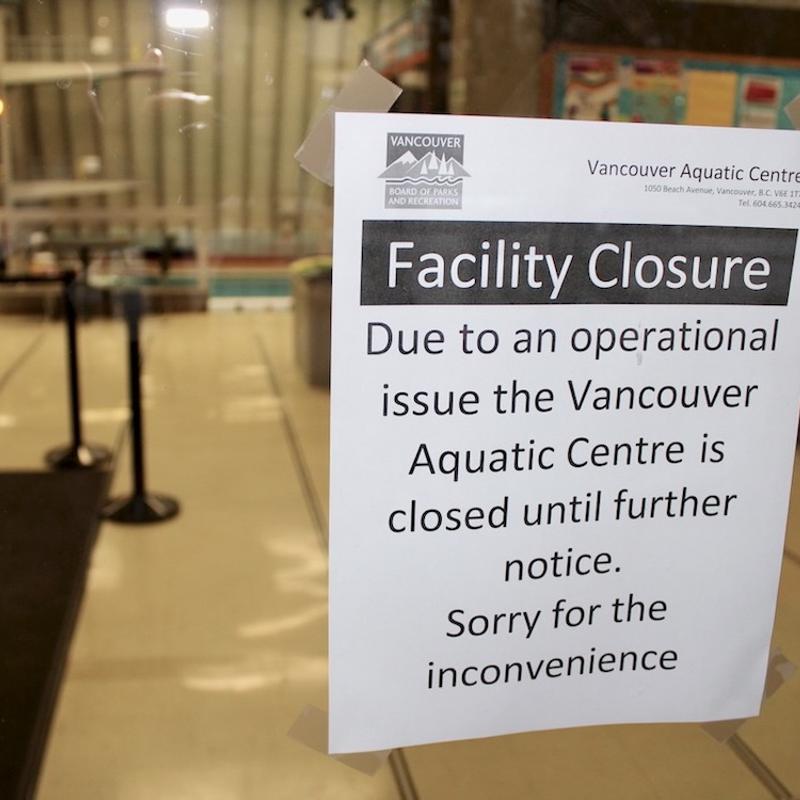
Who Will Fix Vancouver’s Broken Pools and Crumbling Community Centres?
ABC is promising to make townhomes, row houses, multiplexes and “family-sized apartments” easier to build and is promising to “explore a temporary Start Building Vancouver program that reduces or defers eligible City fees for approved housing projects that begin construction within a defined period.” ABC is also promising to lobby the province to stop funding single-room occupancy hotels, the century-old buildings that provide housing to the city’s poorest people, and instead focus on housing for low- and middle-income families. The party’s platform doesn’t mention supportive housing.
Current Coun. Pete Fry is running for mayor with the Green Party of Vancouver, and two other progressive parties — OneCity and COPE — agreed to not field mayoral candidates in hopes of unifying the progressive vote behind Fry. But that doesn’t mean their housing platforms are the same, although all three parties are promising to reverse ABC’s supportive-housing freeze and bring back the city’s renters office.
The Greens are promising to create an “affordable housing czar” position that would focus on delivering affordable housing. They’re also committing to develop city land for affordable housing, speed up non-profit, co-op and other forms of affordable housing, strengthen relocation protections for tenants who lose their housing due to development, and streamline permitting for all housing development.
OneCity wants the city to acquire existing affordable rental buildings to protect them from redevelopment and is championing a “four storeys and a corner store” approach to allow more density and commercial uses in neighbourhoods that are primarily made up of single-family homes. The party includes promises to strengthen renter protections and is promising to “construct 4,000 affordable homes on city-owned land, leveraging federal funding, innovative construction methods, and reinvestment for ongoing benefit.”
COPE is promising to triple the empty homes tax, lobby the province to introduce vacancy control (meaning rents cannot be raised an unlimited amount between tenancies), wants to support the development of community land trusts to build and protect affordable housing, and is also promising to purchase currently affordable rental buildings.
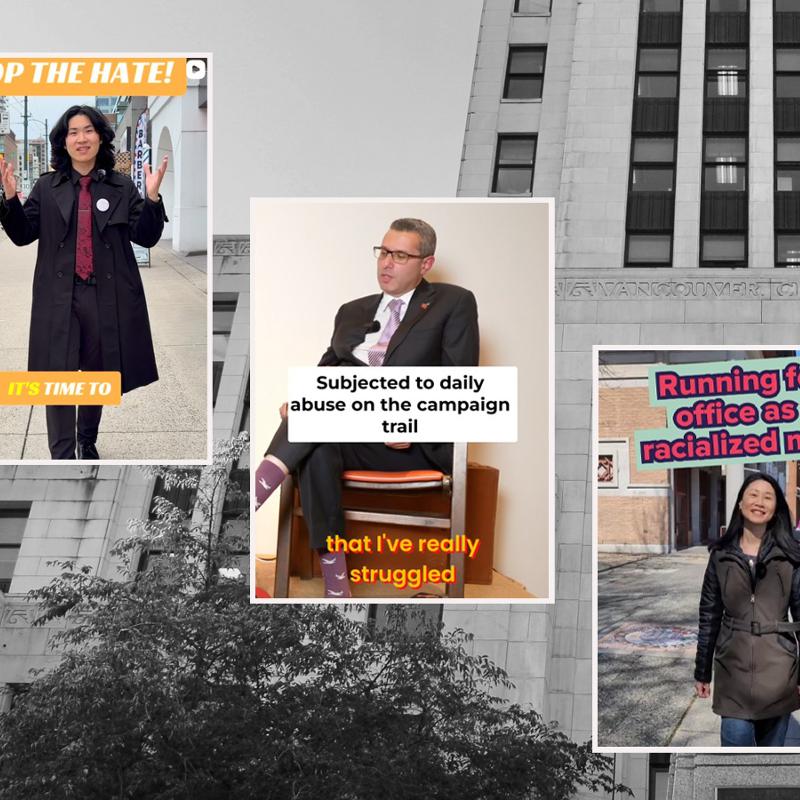
Harassment and Hate on the Municipal Campaign Trail
Vote Vancouver, with mayoral candidate (and current councillor) Rebecca Bligh, is promising to “build more co-op and community housing while keeping public land in community ownership,” simplify and speed up the housing development process, use publicly owned land to build housing for middle-income earners that includes child care, and make sure new developments include amenities such as community centres, schools and health-care services. Bligh is promising to support supportive housing that includes mental health, health care and social supports.
The Vancouver Liberals, with mayoral candidate Kareem Allam, say they would replace Vancouver’s separate building code with the B.C. Building Code in order to streamline housing development. Allam is promising to lift the ban on new supportive housing and lobby the province for more extensive supports for residents. The party is promising to support co-op and non-market housing, “extend[ing] every co-op and non-profit lease on City land at once, with automatic renewals.”
TEAM for a Livable Vancouver, which is running former city councillor Colleen Hardwick for mayor, is promising to repeal official development plans that have already been approved for the city as a whole as well as the Broadway Plan, the Jericho Lands plan and the Rupert and Renfrew plan. TEAM says there is already enough housing development planned to meet population growth until 2050. TEAM is also promising to reform current multiplex zoning regulations to require setbacks, reduce the number of units allowed and design changes to ensure new buildings are “a better fit” with existing neighbourhoods. ![[Tyee]](https://www.newsbeep.com/ca/wp-content/uploads/2026/10/1791876013_670_yellowblob.png)