

Listen to this article
Estimated 3 minutes
The audio version of this article is generated by AI-based technology. Mispronunciations can occur. We are working with our partners to continually review and improve the results.
Charlottetown’s Victoria Park trail system will be closed this week to allow heavy equipment to remove a number of invasive species.
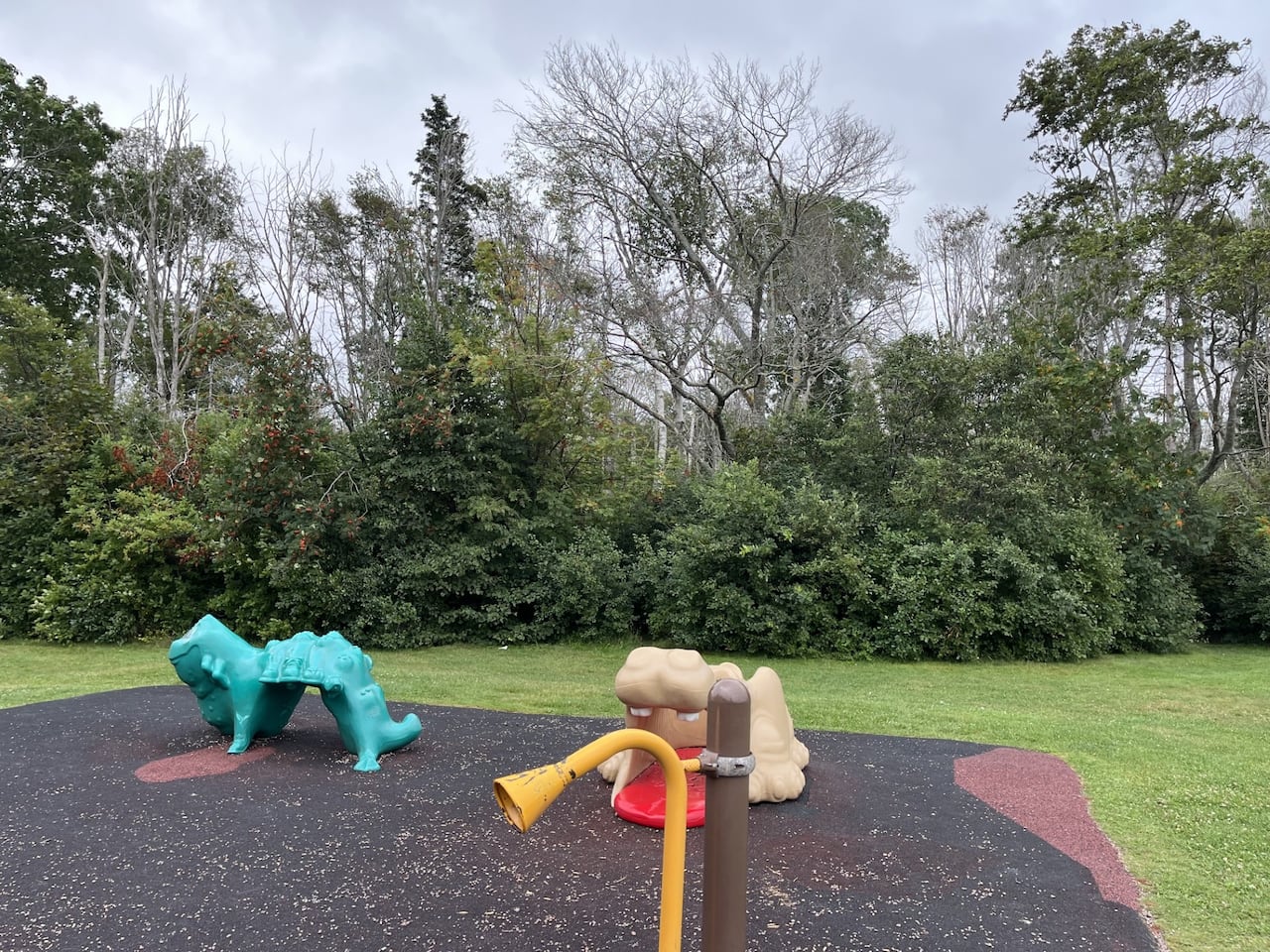
Simon Wilmot, the city’s forest and environmental officer, said parts of the woods in Victoria Park have been hit hard by multiple factors, the first of which being post-tropical storm Fiona back in 2022.
After that, many of the surviving trees were devastated by disease and insects — beech trees were affected by bark disease and beech leaf-mining weevil — while invasive species attacked glossy buckthorns, Norway maples and Asiatic bittersweets.
“The combination of all of those different factors means that the canopy is removed, so now there’s a lot more sunlight getting to the ground, which has really allowed some of these invasive species to really get going and occupy a greater area,” Wilmot said.
“That southern section in particular has really become increasingly infested.”
Simon Wilmot, Charlottetown’s forest and environmental officer, says the city will attempt to plant a ‘complete ecosystem’ at Victoria Park. (City of Charlottetown)
Wilmot said the goal is to keep the area forested and maintained as a Wabanaki-Acadian forest, a mix of hardwood and softwood species as well as shrubs, ferns and forest flowers.
“The history of Victoria Park is that it was fields for a while and it was used for agricultural purposes, and then it was an area that was used for recreation and the forest area grew up over that time,” he said.
“If you go into Victoria Park, one of the characteristics that you will notice is there aren’t many big trees … so when we’re replanting, we’re trying to replant species that have longer life cycles.”
Wilmot said the city is using “every trick in the book” to speed up the process, adding crews will attempt to plant a “complete ecosystem.”
Results are expected to start taking shape in about a decade, which Wilmot described as “really quite quick” for establishing a forest.
“Trees will still take a long time to grow, but the time it will take to get to a canopy closure where most of their light coming down is in that dappled kind of range … that’s what we’re aiming for as quickly as we possibly can,” he said.
“You’ll see some large trees going in and we’ve already started doing that in some sections, so we’re really repeating a process that’s already been taking part in that lower section of the park.”