
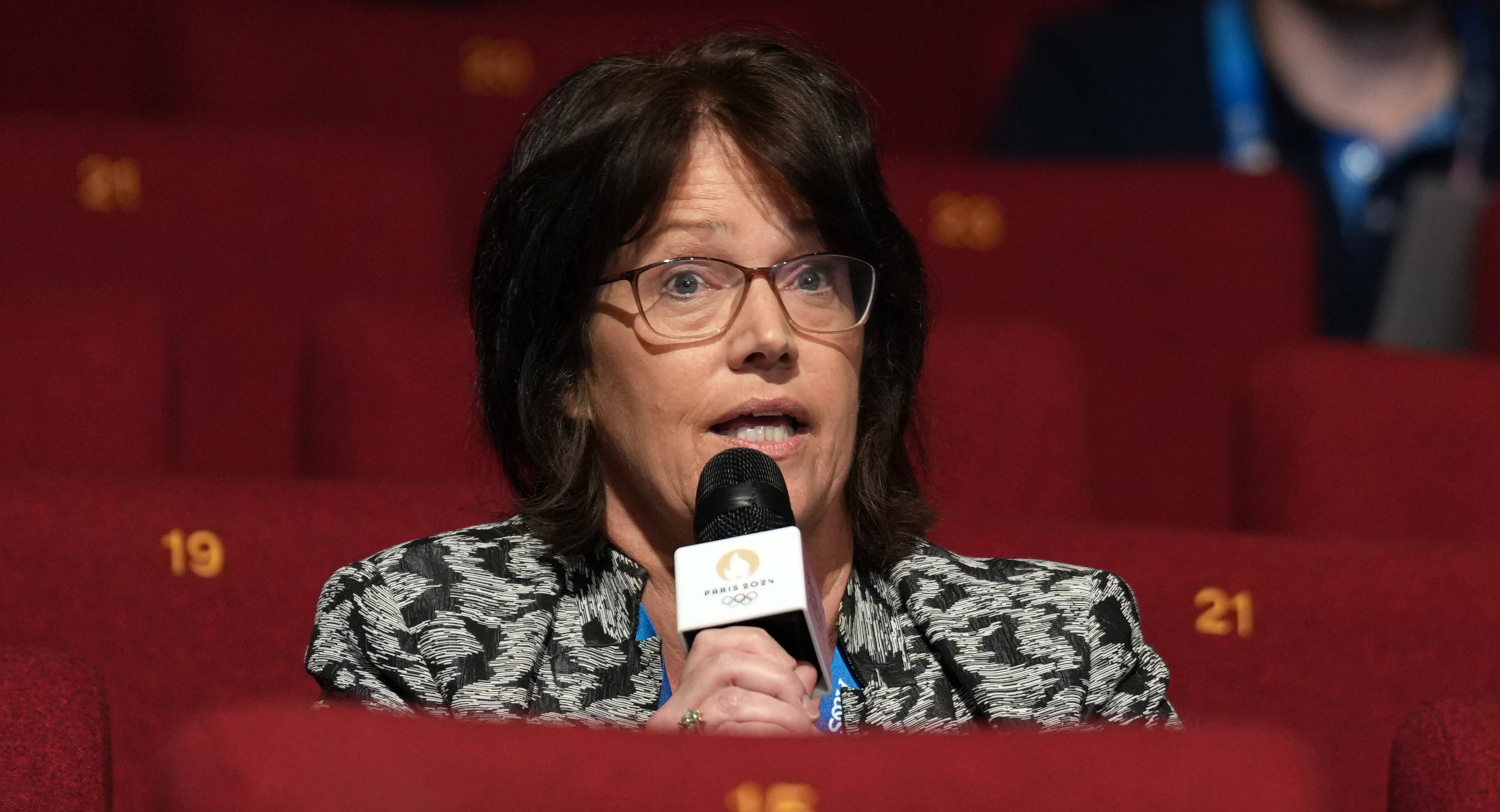
As USA Today columnist Christine Brennan continues her tirade over the WNBA’s handling of Caitlin Clark and the new generation of fans she brought to the league, she has increasingly made herself more central to the story.
Last week, the independent sports outlet Defector published a column titled “Christine Brennan Has Fully Lost It Over Caitlin Clark.” In the piece, writer Giri Nathan criticized Brennan’s insistence on centering all coverage of the WNBA’s current moment on Clark, a perspective he said was flawed and “warped.” Brennan has, mostly on X, recently offered vaguely sourced claims — about A’ja Wilson, the Atlanta Dream’s attendance numbers, and the league’s search for a new commissioner — all centering around Clark. Much of the time, Brennan’s critiques are based on an idea that the WNBA is insufficiently appreciative or publicly celebratory about Clark’s impact.
Brennan apparently did not appreciate the column. She reportedly emailed Nathan and challenged two of Defector’s editors, including Editor-In-Chief Tom Ley, over the phone. Nathan apparently emailed Brennan before his column went up, asking the famed sportswriter what her “five-point plan” would be for “running a league that has Caitlin Clark in it.”
Though Brennan originally did not respond, she did so after the column was published. As Ley and Samer Kalaf explained in a follow-up post on Tuesday, Brennan did not ever actually answer the question of how she would run the league, despite telling them that outgoing commissioner Cathy Engelbert’s “rudderless ‘leadership’” is what inspires her to continue putting out so much WNBA commentary.
“There were times during Friday’s phone call in which I felt Brennan was telling me something about herself and waiting for me to be struck with awe or deference,” Kalaf wrote.
“For the record, I know who Christine Brennan is, I stand by the headline, and I never expected her to like an article critical of her. I wanted to give her a chance to tell me how she felt, but the long-time columnist thought that this particular opinion about her work demanded a correction, specifically the headline.”
According to both Kalaf and Ley, Brennan repeatedly referenced Black sports figures who she had covered, including Colin Kaepernick, Brittney Griner, Maya Moore, and Dr. Harry Edwards, the sports sociologist who she has cited frequently of late. Brennan spoke to Edwards for her book about Clark, and has suggested that he aligns with her view that the WNBA has mishandled the moment provided by its golden goose, Clark.
“Neither of us came away from our conversations with Brennan feeling like we had a better understanding of her critiques of the WNBA,” Ley wrote.
“The information we did receive was mostly biographical: Christine Brennan has been a journalist for several decades and sometimes appears on TV, she wrote a bestselling book about Caitlin Clark, and she knows Dr. Harry Edwards. We already knew all that, thanks to her many tweets on the subject. Also, we published a review of her book last year.”
This isn’t the first time a fellow reporter has confronted Brennan. Last year, Sarah Spain hosted Brennan on her podcast and held her feet to the fire specifically around the way she has covered Black opponents of Clark’s. Brennan was called out by name by multiple Connecticut Sun players in 2024 for repeatedly asking them about whether former Sun forward Dijonai Carrington had intentionally struck Clark during a shot attempt in the playoffs.
Left unsaid by Brennan in all her commentary is what potential financial windfall and cultural capital the WNBA is missing out on by supposedly botching Clark’s early years. After all, the league increased its broadcast rights revenue by more than 500 percent and regularly rivals the NHL, MLB, and even the NBA in attention and viewership. Enough pressure mounted for Engelbert to step down.
Engelbert’s successor certainly has their work cut out to make a stand against right-wing culture warriors who use the league to advance their flawed narratives. Yet an equally significant downside of these fans entering the WNBA conversation has been the real hate and threats faced by players in the league, including Clark’s teammates — a pattern that Brennan has arguably intensified in her commentary.