
On a clear evening, the wonders of the night sky shine and sparkle across the state of Arizona, offering views of endless stars, constellations, planets, the Milky Way, and even the glow of the Andromeda galaxy.
For years, Canadian travel advisors have highlighted all of Arizona’s quintessential draws – its scenic hiking trails, abundant wellness offerings, world-class golf courses, and the famed Grand Canyon – but astrotourism offers another appeal for clients seeking truly memorable experiences once the sun sets.
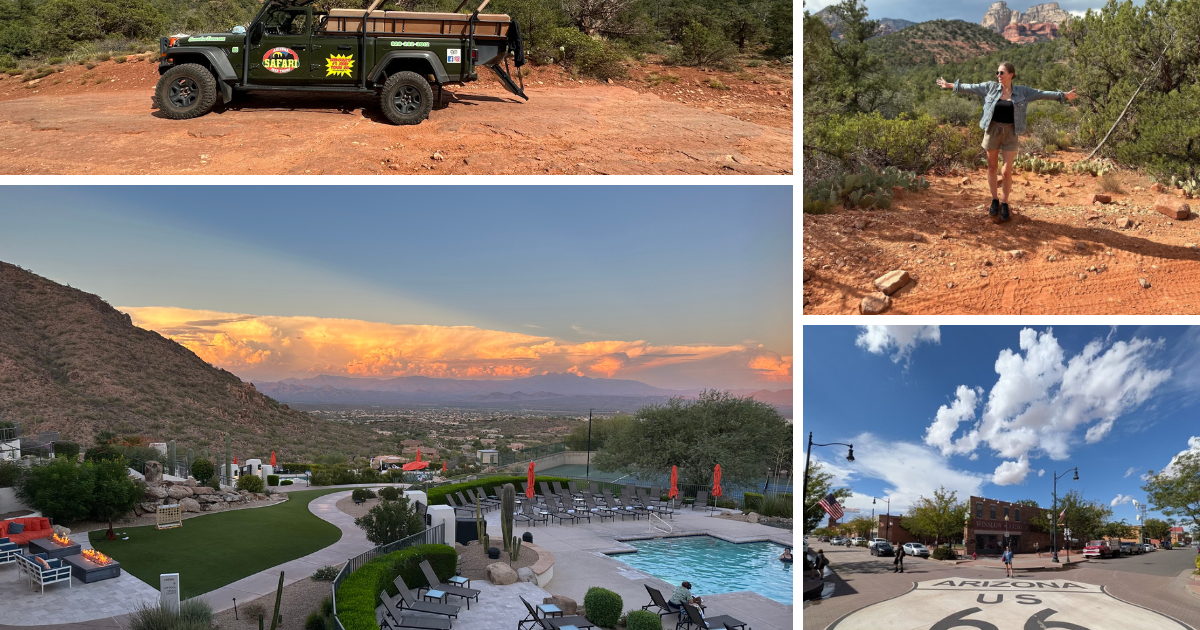
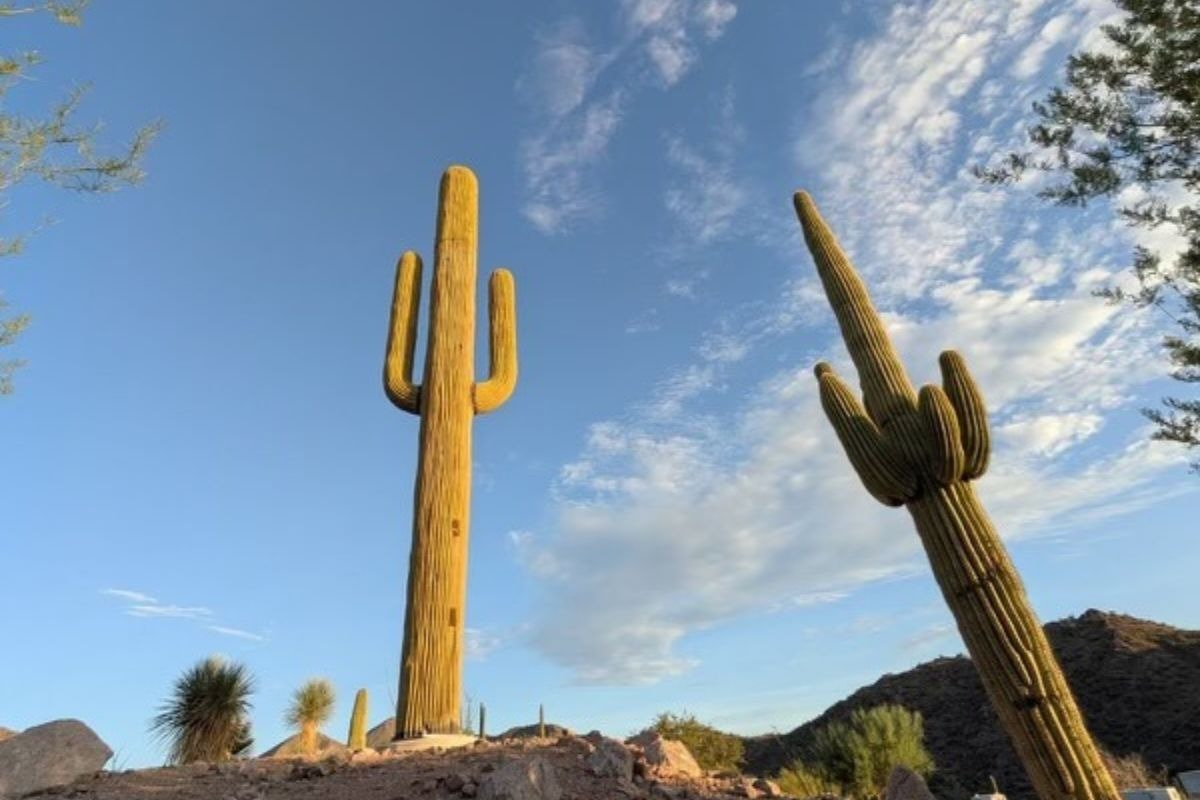
PAX was invited on an astronomy-themed FAM trip that took us from the desert and cacti of Scottsdale up the famous Route 66 highway to Winslow, then to the red rocks of Sedona and to Flagstaff, where Pluto was first discovered.
A Dark Sky leader
Astrotourism may have become more popular in recent years, but it’s nothing new in Arizona, says Laura McMurchie, Vice President of Communications at Experience Scottsdale.
In Arizona, 23 communities have earned Dark Sky status from DarkSky International. This means special efforts are taken to preserve the night sky and protect it from artificial light pollution, resulting in optimal stargazing.
Flagstaff, Sedona, Camp Verde, Oak Creek, Cottonwood, Fountain Hills, Bisbee, and Tubac are among the state’s Dark Sky communities.
“It’s become more of a trend since the pandemic, but Arizona has always leaned heavily into Dark Sky communities and astronomy, with Flagstaff being the first International Dark Sky community,” says McMurchie.
Fountain Hills: A “Dark Sky oasis in the Valley of the Sun”
Its location in the Salt River Valley and its near constant sunshine (over 300 days a year) gives Arizona’s Greater Phoenix Metropolitan Area its nickname, Valley of the Sun. But there’s also a (very) dark side to the region.
Located 30 kilometres east of Scottsdale – and about a 30-minute drive from the Phoenix airport – the suburb of Fountain Hills is the world’s seventeenth Dark Sky community.
“We refer to Fountain Hills as a ‘Dark Sky Oasis in the Valley of the Sun,’” said Joe Bill, president of the soon-to-open International Dark Sky Discovery Centre (IDSDC) in Fountain Hills. Bill and IDSDC’s CEO, Dr. Cain Jagodzinski, joined us for dinner at the ADERO Scottsdale Resort in Fountain Hills to kick off the FAM.
Set to launch in early 2027, the 23,000-square-foot IDSDC science facility is dedicated to global dark sky preservation and will house a world-class star-gazing observatory, planetarium, and theatre to inspire STEM education and combat light pollution.
“We said, ‘Let’s go big or go home,” says Bill of the $29-million-dollar donor-funded project.
In the meantime, McMurchie says stargazing experiences in the Phoenix/Scottsdale area include everything from night kayaking on the Salt River to Jeep excursions in the desert with an astronomer.
With its abundance of activities, it’s a misconception that the Scottsdale region is predominantly for Canadian snowbirds, says McMurchie.
For the past 10 years, Scottsdale has actually seen more younger guests and families visit, she says. “If you go to the Four Seasons Resort Scottsdale during a school break, it’s filled with Canadian families and kids.”
That doesn’t mean visitors need to spend luxury prices. “There’s a price point for everyone,” says McMurchie. “If you’re staying in the heart of Scottsdale, you can opt for a limited-service hotel downtown and spend your time exploring.”
A starry homebase: ADERO Scottsdale
Dinner at ADERO Scottsdale Resort’s CIELO restaurant comes with sprawling views of the Four Peaks and McDowell Mountain Range basked in the last of the sunset’s glow. Once the sun disappears, this gives way to an endlessly starry sky.
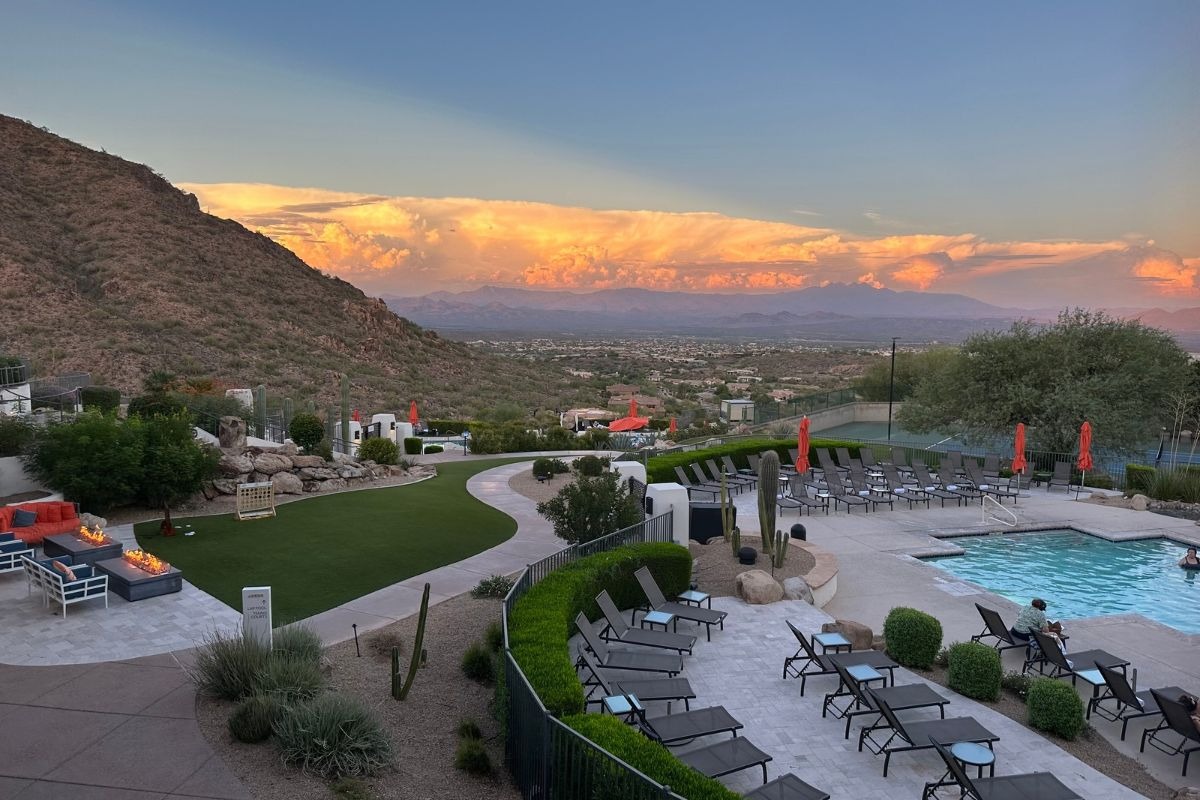
The 177-room, 2020-rebranded hotel was strategically chosen for our first night in Arizona: It’s the only Autograph Collection resort in a designated Dark Sky Zone in the Scottsdale region and hosts a stargazing experience with The Star Dudes on its lawn each Friday night.
Guests explore the night sky through high-powered telescopes as they learn more about constellations, planets, and galaxies.
Unfortunately for us, the weather had other plans and cloudy skies prevented us from seeing the moon and planets. On the bright side (no pun intended), the evening’s lightning provided a magical show, illuminating the sky and surrounding mountains with its dramatic bolts.
The ADERO Scottsdale Resort doubles as a members club – something that’s reflected in the extensive amenities and programming. The massive fitness facility houses Peloton bikes, a Pilates reformer, state-of-the-art equipment, and dedicated yoga and spinning rooms.
The property also features two tennis courts and four pickleball courts and hosts classes like guided sunrise yoga. These offerings, along with a pristine spa, make the hotel an ideal homebase for wellness-conscious clients.
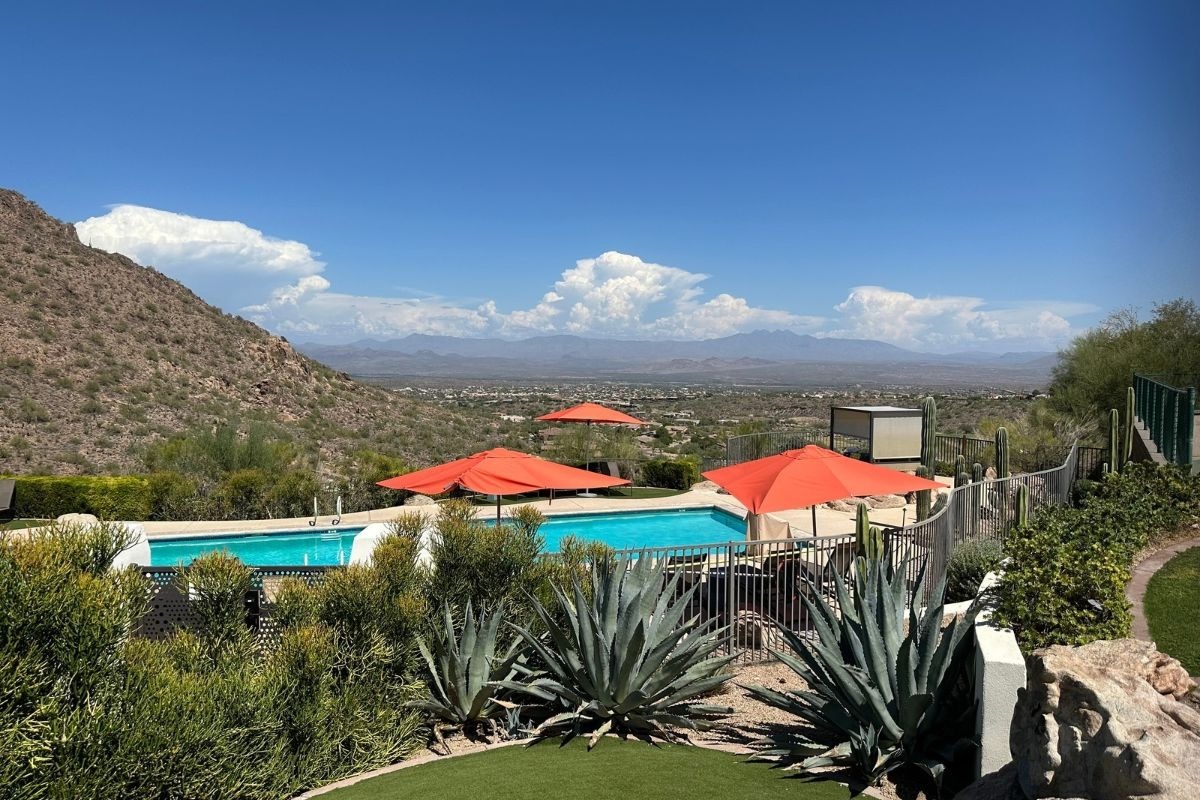
ADERO Scottsdale’s layout is designed around its sweeping views, whether enjoyed from one of the property’s two pools – a larger one for everyone and a smaller adults-only lap pool – the outdoor cocktail lounge, or a swinging egg chair on the terrace.
Road trip to the world’s best-preserved meteorite impact site
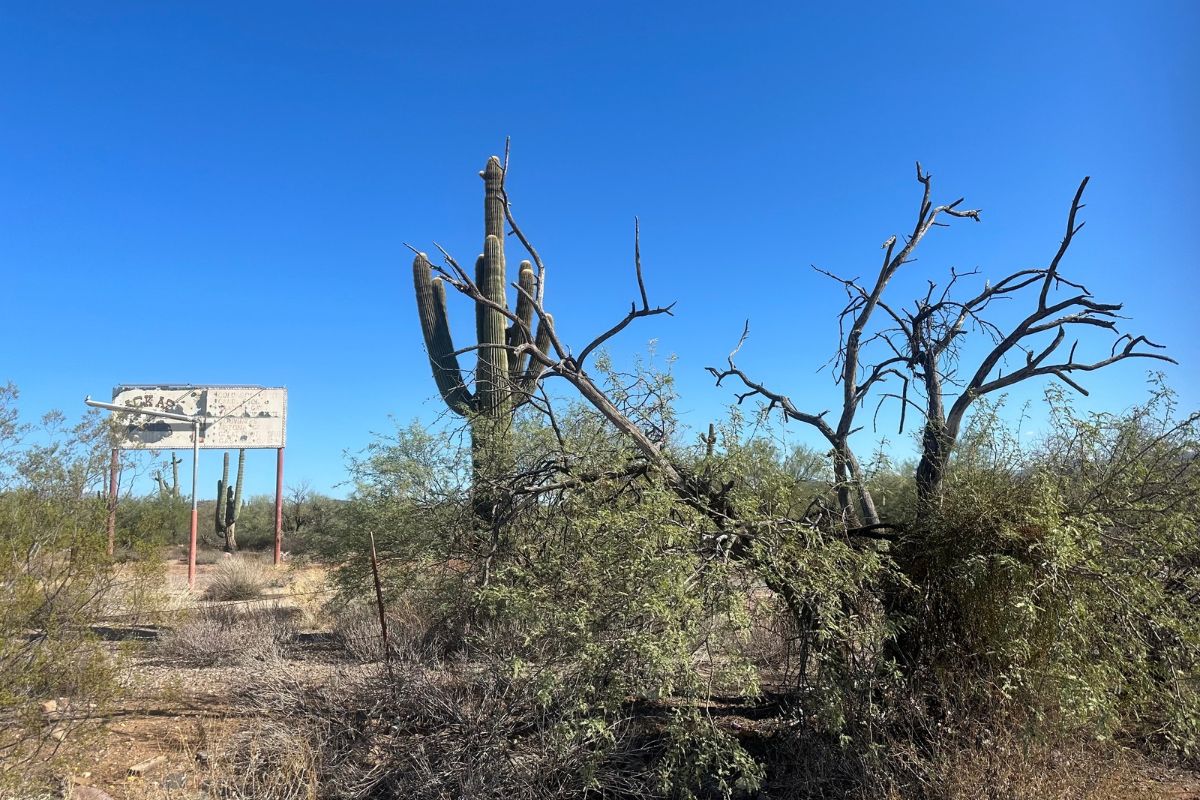
Once we were on the road, the sheer desolate vastness of the surrounding landscape was immediately intriguing – refreshing, even. It’s a terrain that changes from desert to towering alpine pine forests as you head north.
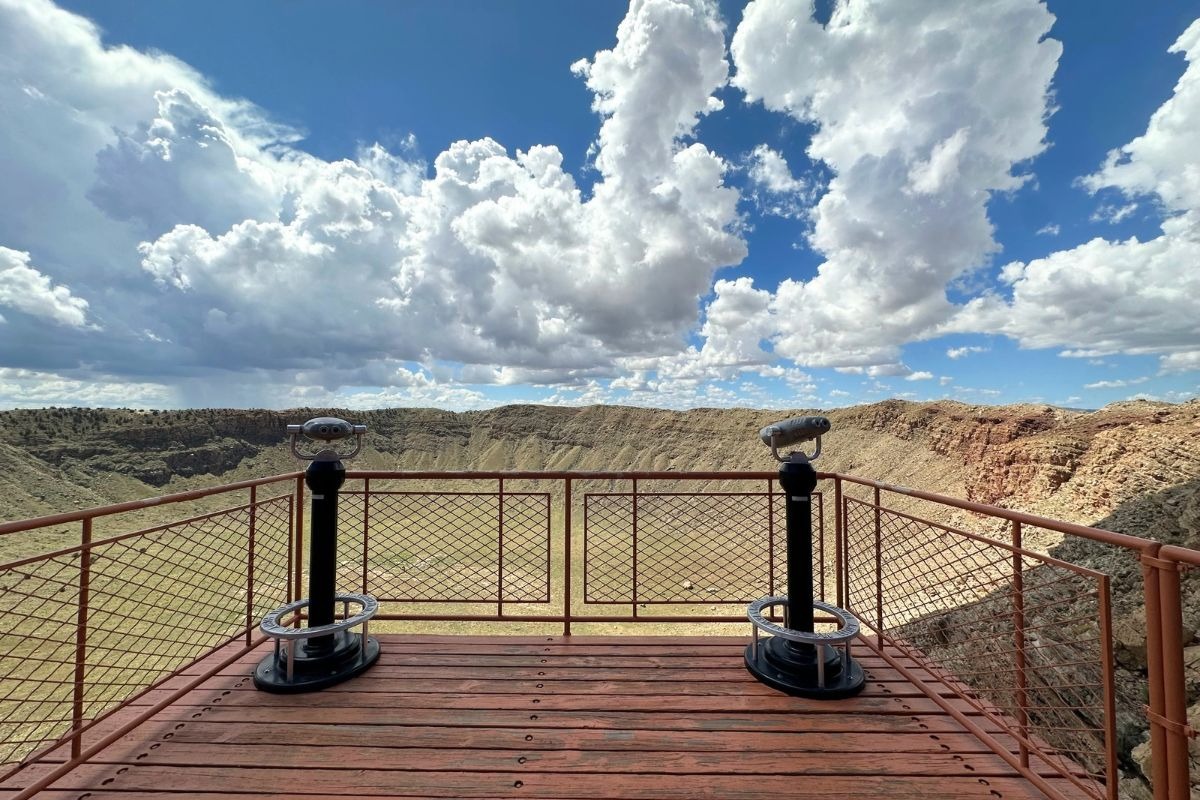
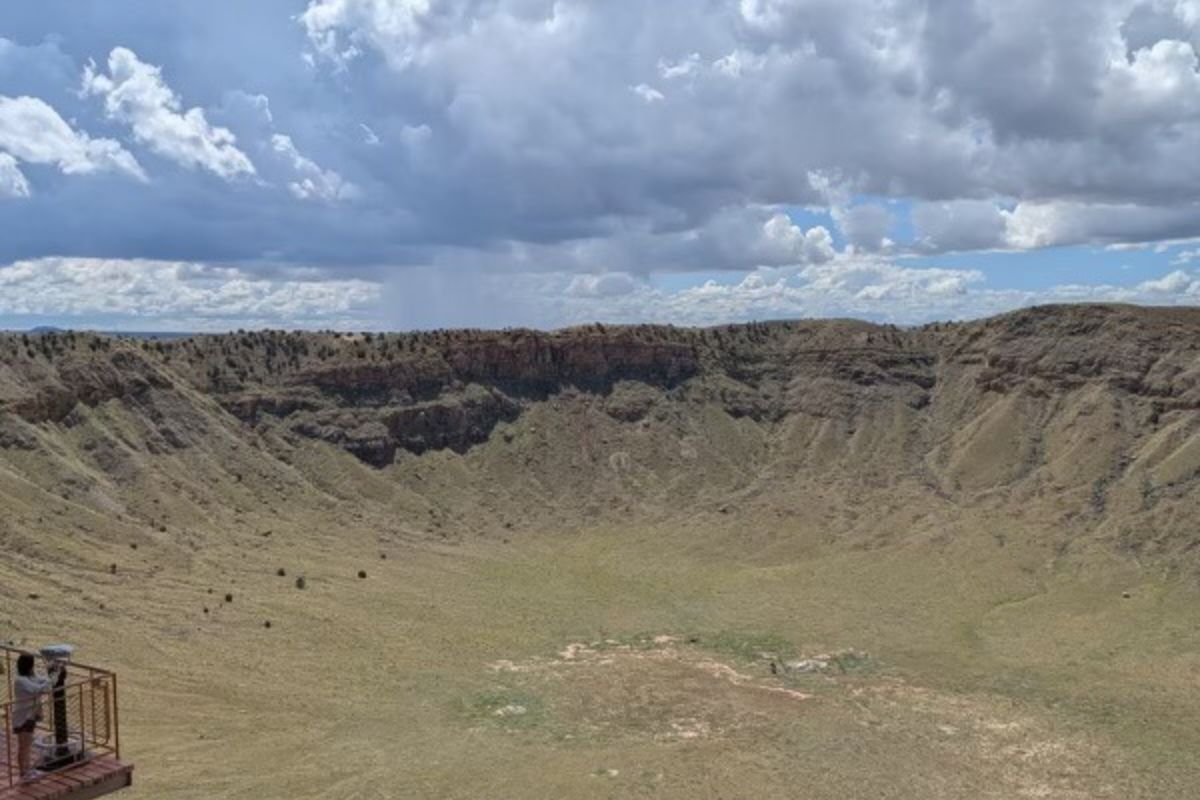
A three-hour drive brought us to Meteor Crater, the best-preserved meteorite impact site on Earth. Here, guests can take guided tours, visit the space museum, and enjoy stunning views of the sweeping 1.6 kilometre bowl-shaped crater. Here, we learned about the science of asteroid impacts, space geology, and cosmic collisions.
“Takin’ it Easy” in Winslow
The famed Route 66 highway – which was established in 1926 as a vital transcontinental artery linking Chicago to Southern California – turns 100 this year, and the Arizona stretch makes a great hook for an unforgettable road trip.
In Winslow, a massive Route 66 symbol painted on the road at the intersection of East 2nd Street and North Williamson Avenue is an inevitable photo op spot for tourists – you just have to wait until the roads are clear of cars to snap away.
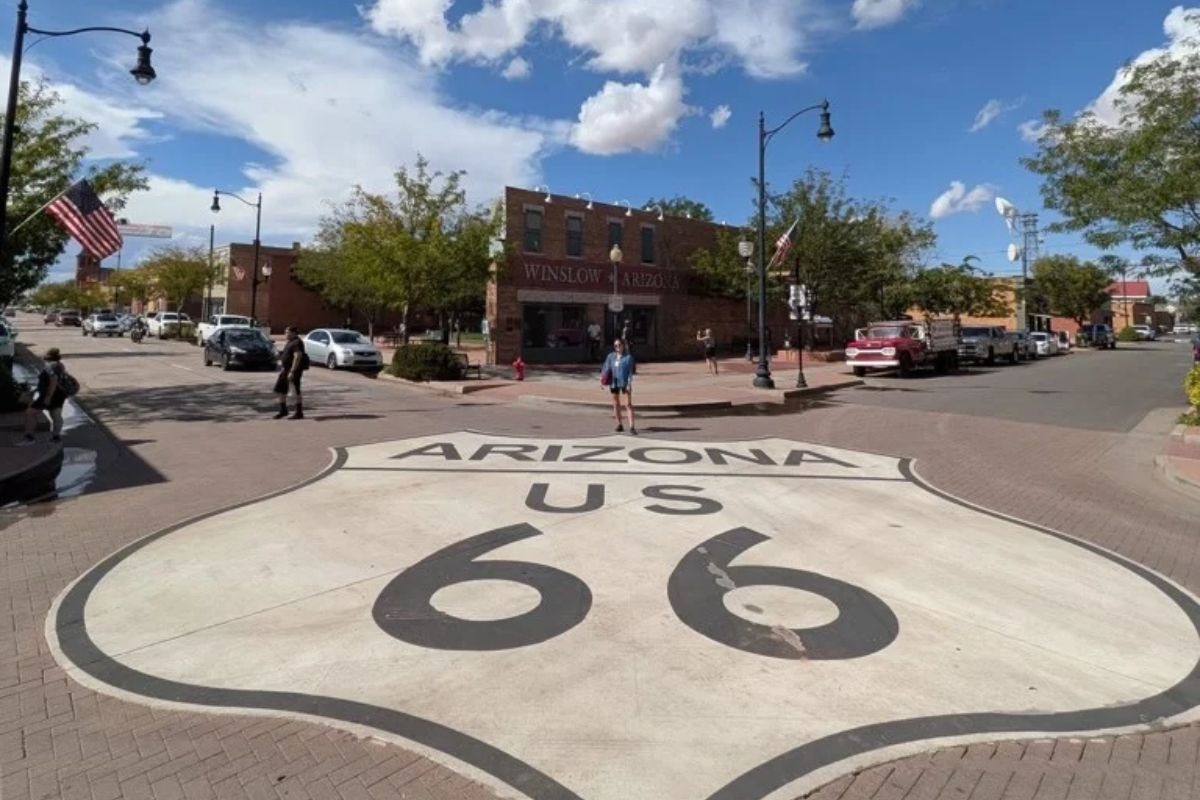
The intersection is famous for its connection to the Eagles’ hit song “Take it Easy,” and commemorates the famous lyrics, “Well, I’m a-standin’ on a corner in Winslow, Arizona, and such a fine sight to see. It’s a girl, my Lord, in a flatbed Ford slowin’ down to take a look at me.”
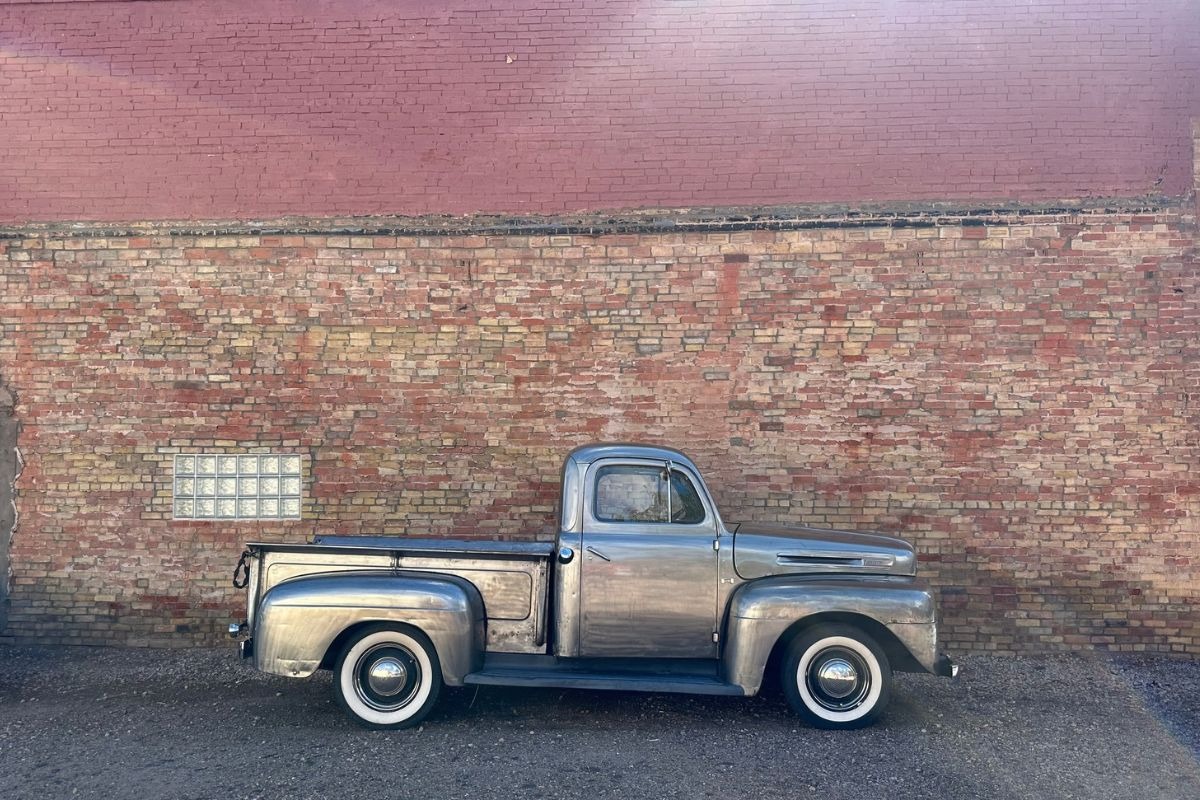
The lyrics come to life at the Standin’ on the Corner Park, featuring a life-size bronze troubadour holding a guitar and a vintage flatbed Ford truck parked permanently on the corner.
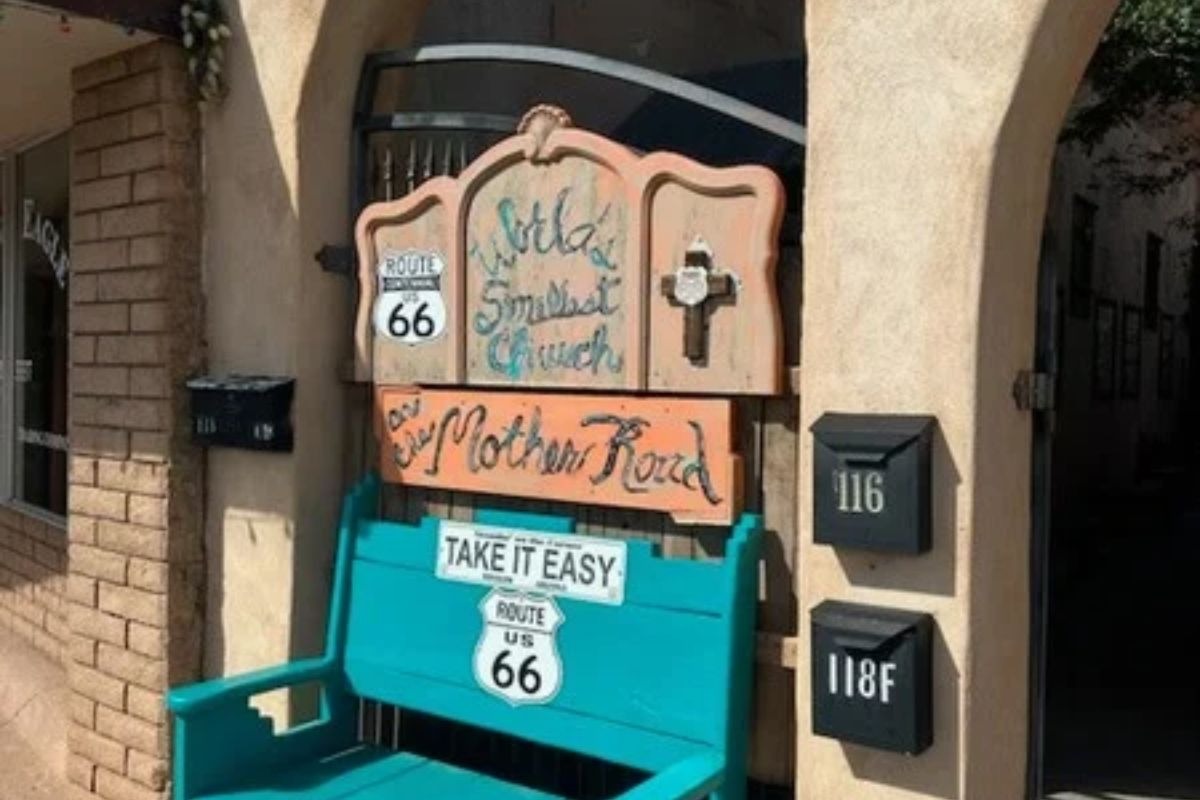
In a courtyard behind a storefront-style facade on the street, you can also check out Church of the Mother Road – the world’s smallest church – get a tattoo at a small tattoo shop (the Route 66 symbol, anyone?), and pose under a “Most Wanted” sign.
The last Harvey House in America: La Posada Hotel
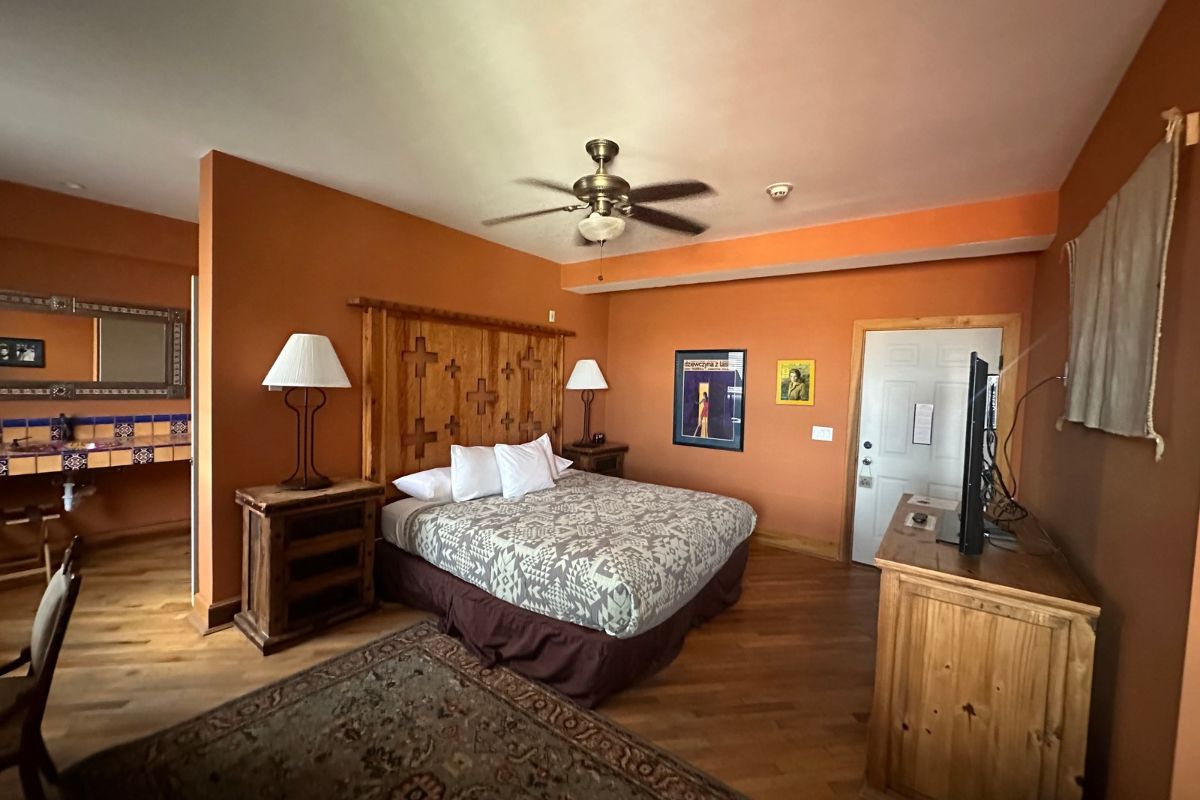
Winslow’s La Posada Hotel, which opened its doors in 1930 as a Harvey House, is a storied option for those travelling to or through Winslow. The check-in area doubles as an eclectic shop, jam-packed with native jewellery, dishware, handwoven textiles, wind chimes, crosses, art, prints, and keychains.
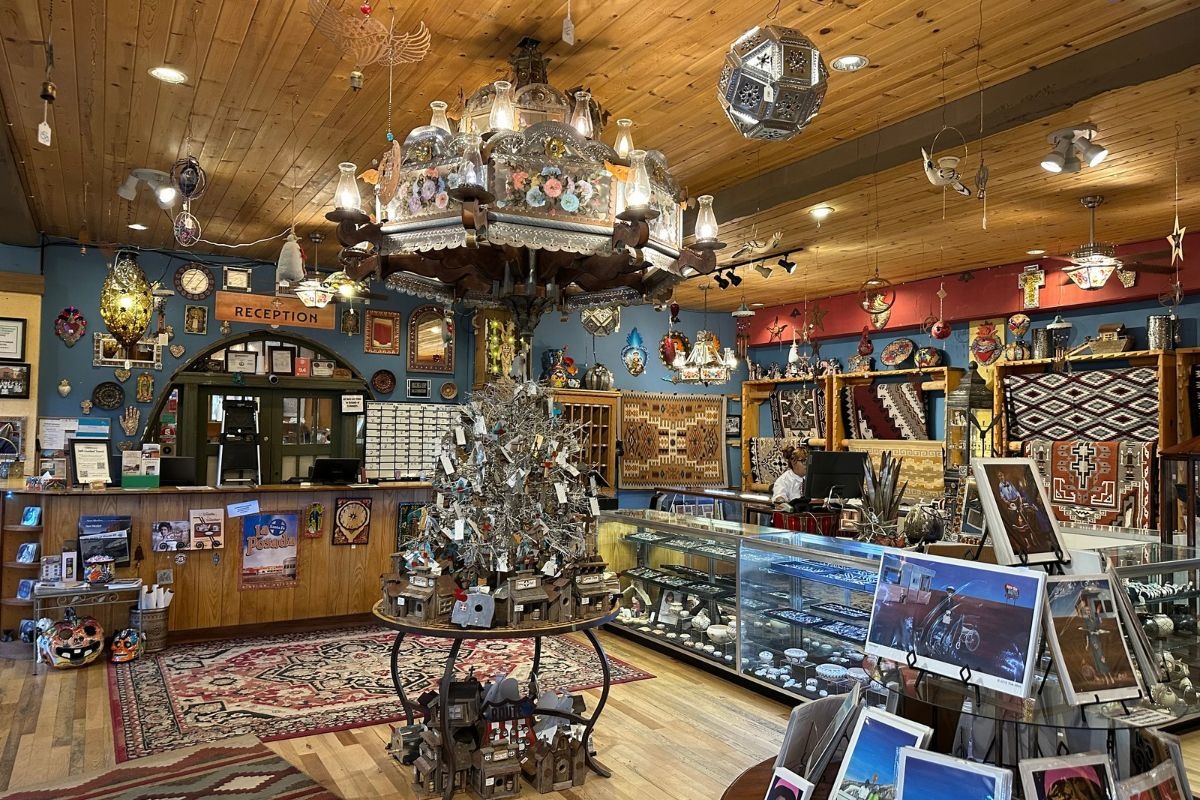
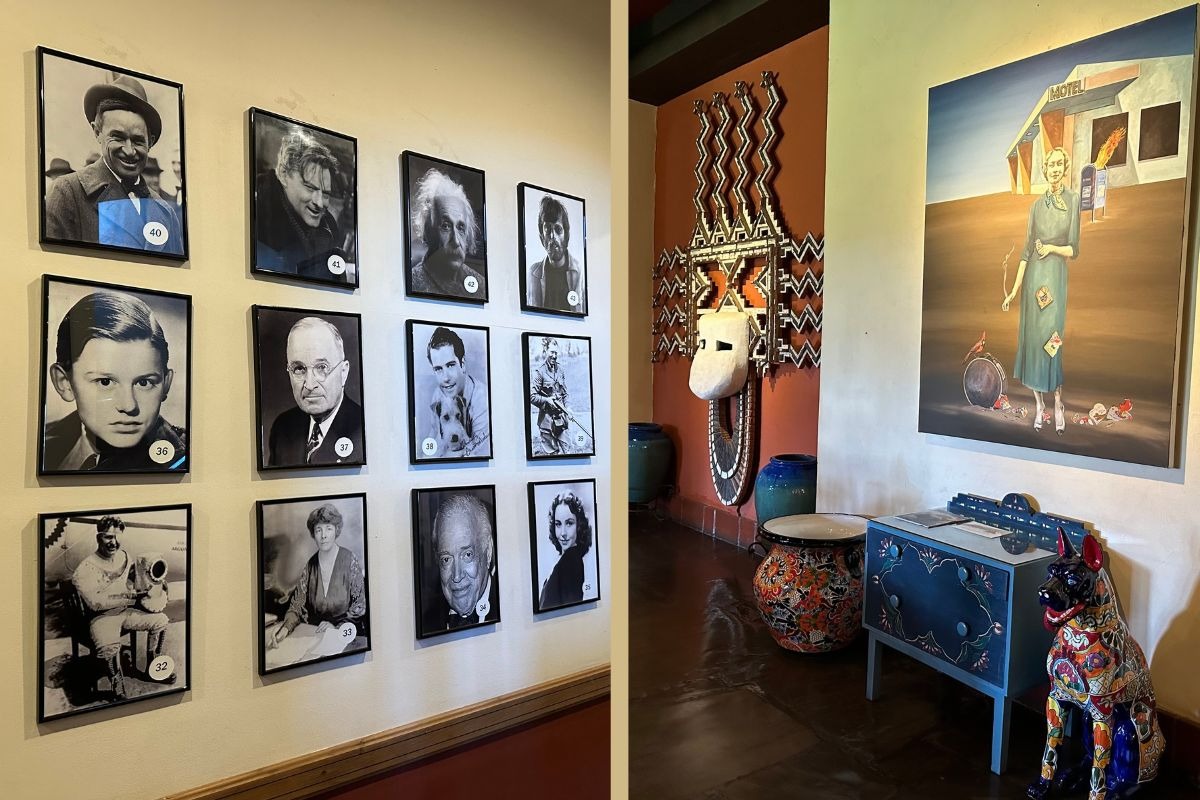
Guests are handed old brass-tag room keys and make their way to their southwestern-style rooms, which are named after a celebrity guest who’s stayed there, like Albert Einstein, Shirely Temple, and John Wayne.
Downstairs, guests lounge in the property’s many peaceful courtyards and gardens, sit with guitars in the central lobby area, and admire the years of history and art that colour the hotel’s walls.
A 70-something local Arizona woman at the bar next to me at the hotel’s Turquoise Room restaurant – a local treasure – told me she and her husband have stayed at the hotel over 40 times on road trips. Margarita in hand, she gushed about its character and how it was designed by a woman, famed architect Mary Jane Colter – a rarity at the time.
“I notice something new every time I’m here,” she said of the talking point-filled hotel. In a sense, the property doubles as a museum, and guests are encouraged to discover its rich history – including a 1990s refurbishment – through a self-guided tour.
Snakes and stars at Homolovi State Park
Our evening in Winslow’s Homovoli State Park opened with a guest astronomy speaker, geographer David Mayer from the USGS Astrogeology Science Center.
His “How to Land a Rover on Mars” presentation in the Visitor Center and Museum showcased findings of five years of science on Mars. For example, Mayer highlighted how Mars appears to have had abundant liquid water in the distant past – and water is a requirement for earth-like life.
The park hosts star parties and guest speaker presentations on the second Saturday of each month from April through November. Meanwhile, the Homolovi Visitor Center includes exhibits explaining the archaeology of the ancient people of Homolovi. Additional exhibits tell of the continuing tradition of Hopi pottery, carving, and other art forms.
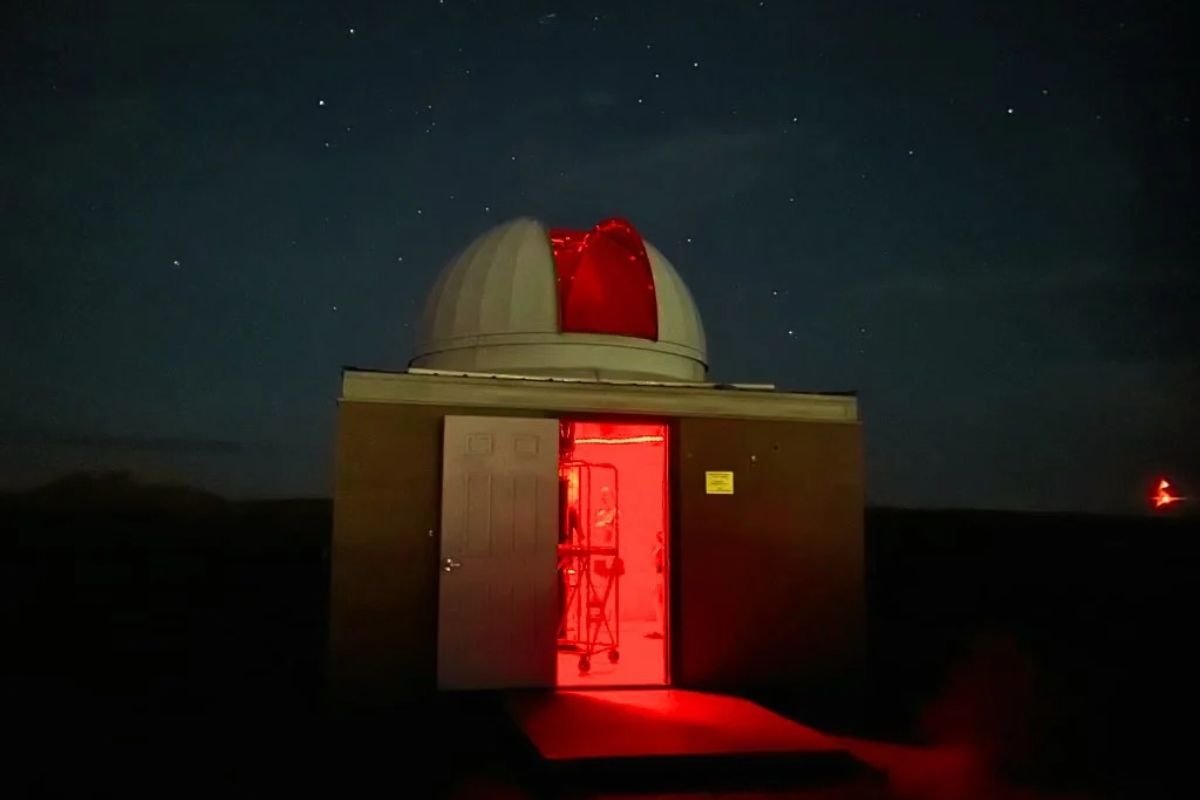
The Winslow Homolovi Observatory’s Moore Telescope – the only permanent observatory in Arizona’s state park system – can reveal distant galaxies, shimmering star clusters, and planetary details like the rings of Saturn.
While we didn’t have the most optimal stargazing conditions (again, sadly), we did see what we were told by park rangers was a rare sight – a venomous snake. (Don’t worry, nobody was hurt).
Good energy in Sedona
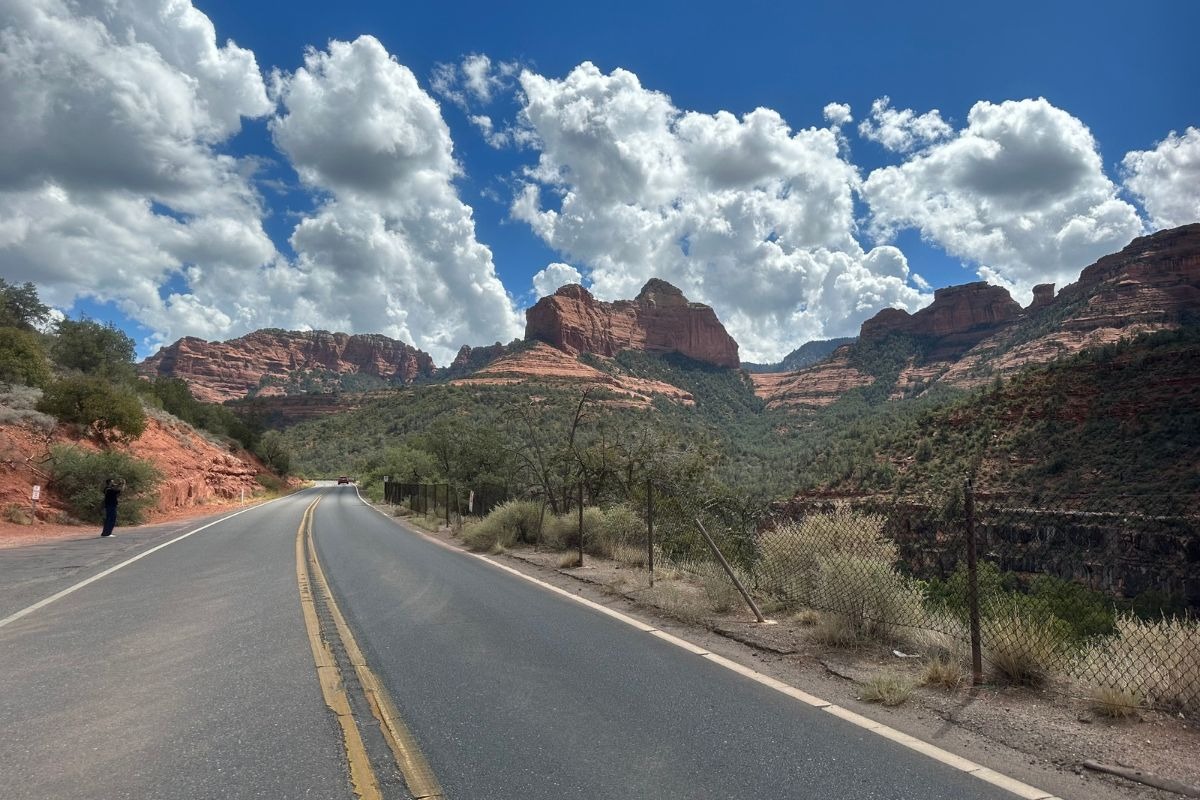
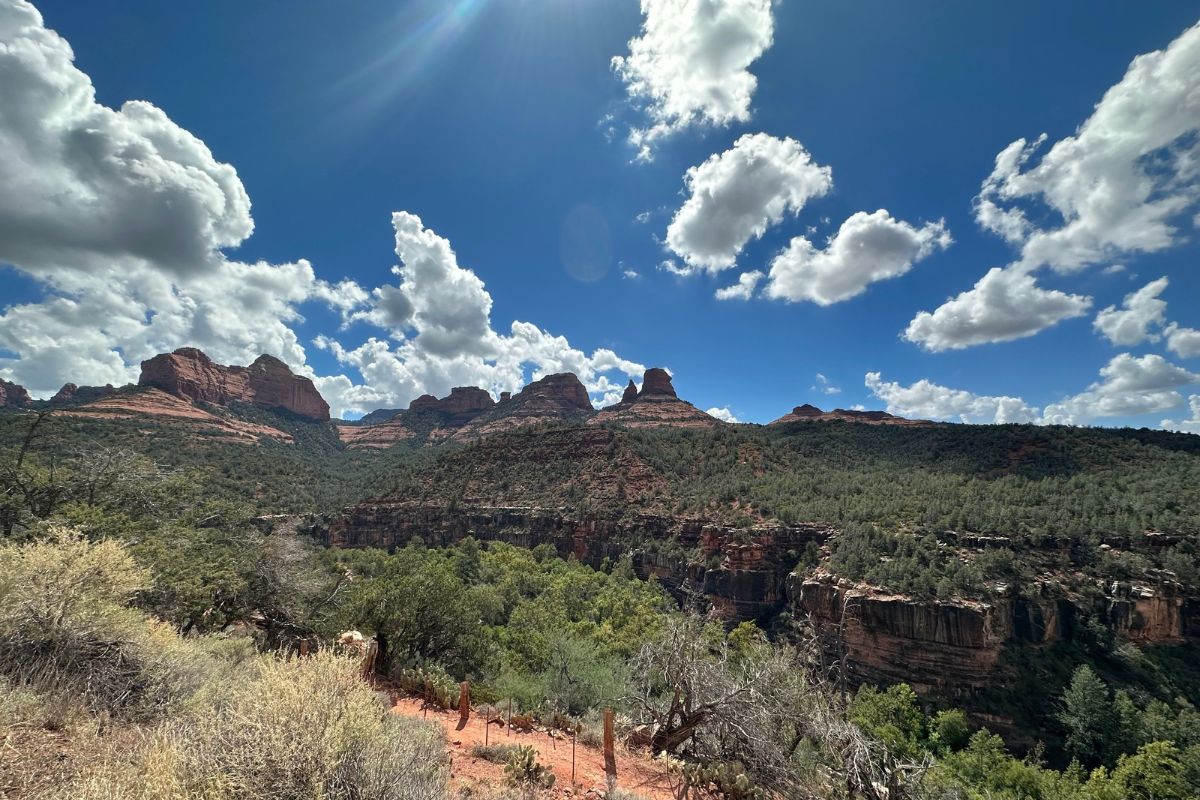
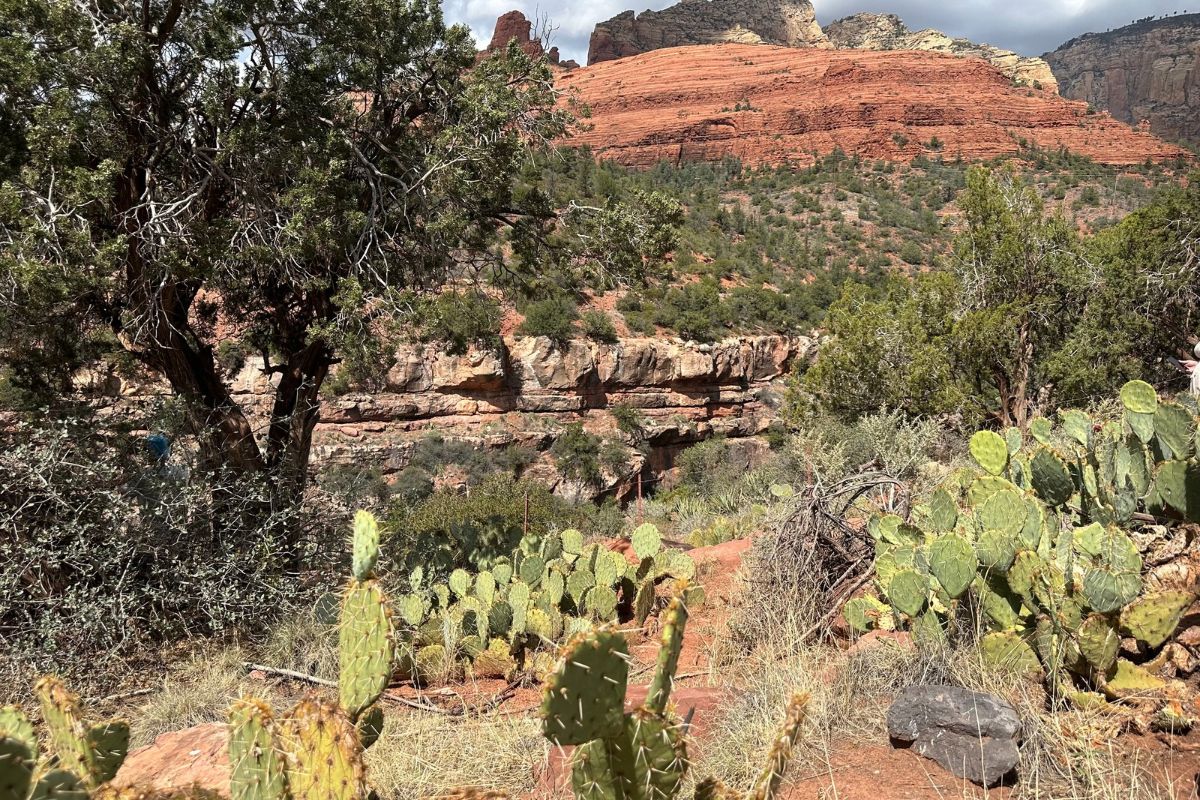
The red rock mountains of Sedona rise dramatically from the high-desert floor, shifting from burnt-orange to deep crimson in the changing sunlight. It’s a stunning sight once they first appear in the distance.
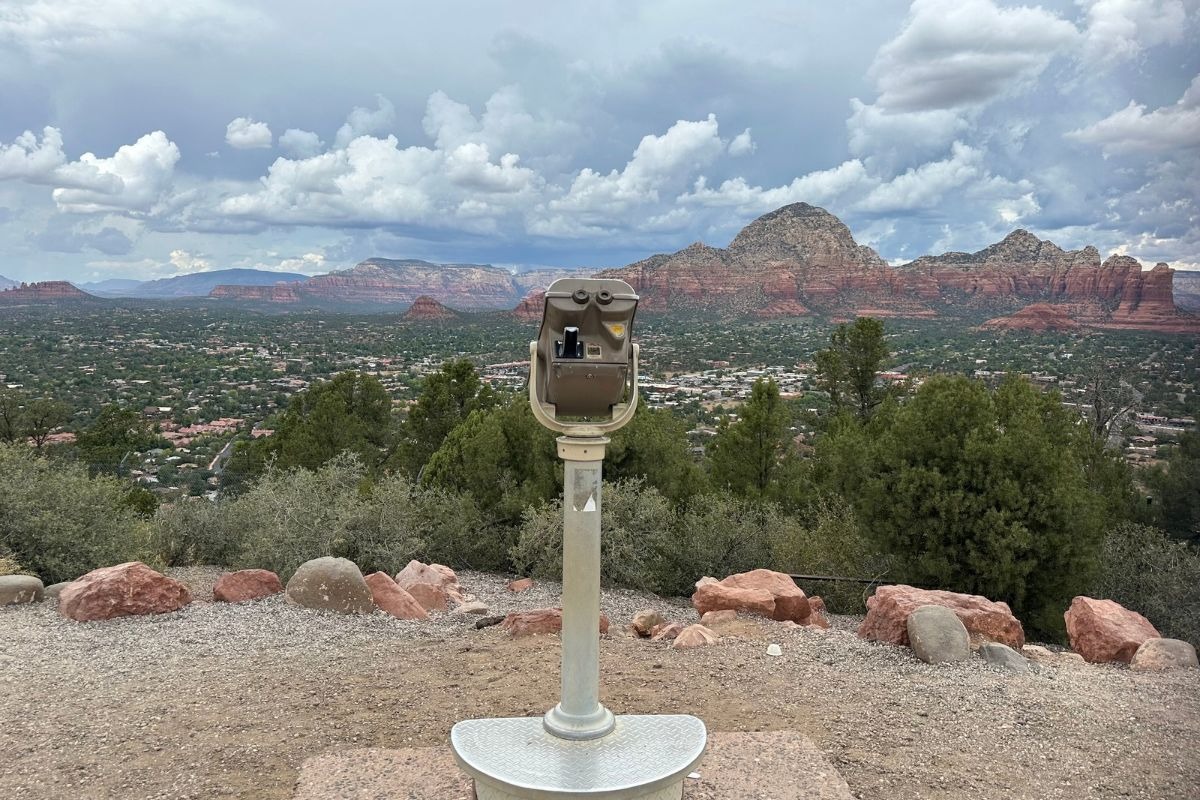
Perched high above Sedona, Airport Mesa Scenic Overlook offers sweeping panoramic views of these iconic red rock formations. It’s considered one of Sedona’s four major vortexes or energy centres. These swirling centres of subtle earth energy are thought to promote healing and spirituality.
On a jeep tour into Sedona’s wild terrain with Arizona Safari Jeep Tours, our guide, Chris Jay, used two L-shaped copper rods – held loosely in each hand – combined with a quartz rock placed on the ground to demonstrate how underground forces, magnetic fields, or energetic currents interact with conductive materials. With the quartz on the ground, the two rods magnetically pull together. Without it, they don’t.
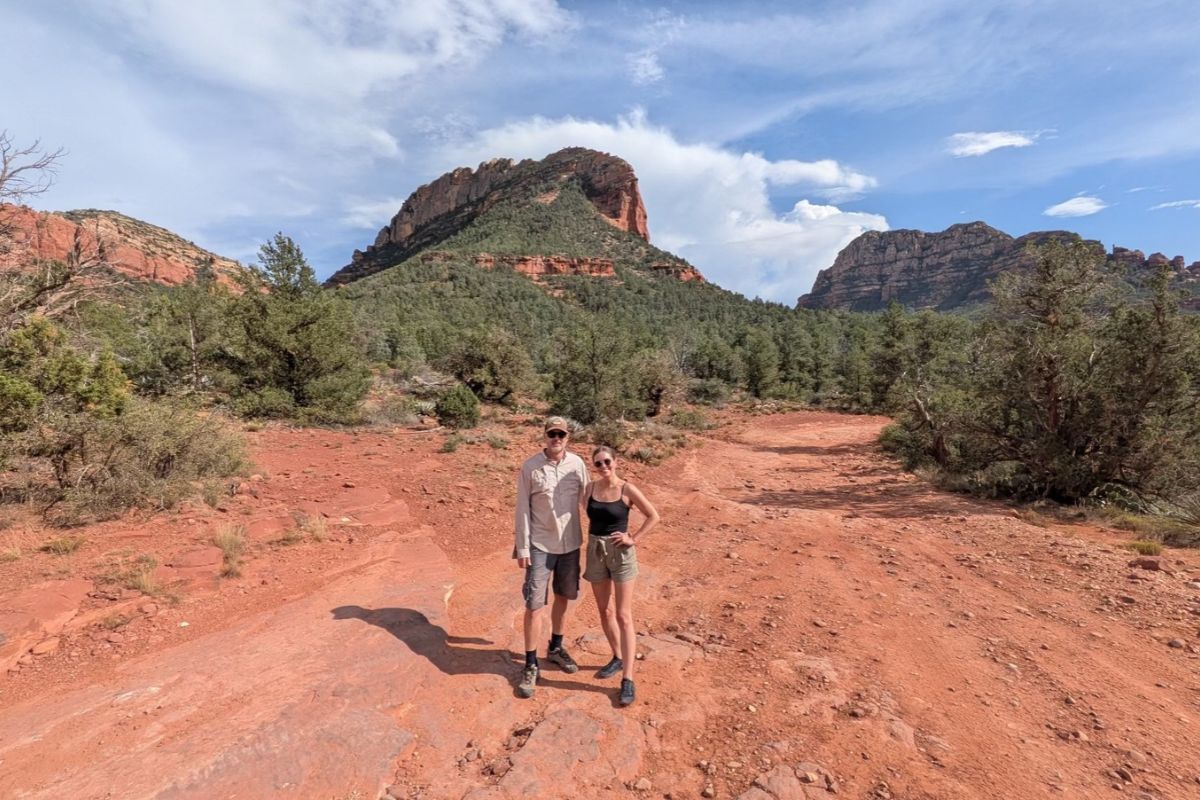
With spirituality in its DNA, Sedona naturally is filled with spots to buy crystals, speak with a psychic, and have your aura read.
Over lunch at Mesa Grill, Adam Hall, Destination Development Coordinator for the City of Sedona said that – beyond its beauty and hiking trails – Sedona is a huge wellness destination that goes beyond the standard spa services and yoga offerings. “It means things like sound healing, breath work, shamanic drumming, past-life regression, and mediums,” says Hall, noting that many of Sedona’s hotels roll these things into their wellness offerings.
Spring and fall are typically the busiest time of year for tourists in Sedona, according to Hall.
“A lot of people visit for a day and wish they stayed longer,” says Jay. He and his wife fell in love with Sedona after visiting for two days and moved there full-time six months later.
Flagstaff: A city of many wonders
About 42 kilometres north of Sedona on Route 66 and along the tracks of the Santa Fe railroad, sits Flagstaff, a pioneer in all things astronomy. It’s also a gateway to the Grand Canyon. The city’s 7,000-foot elevation and famed Lowell Observatory – where Pluto was famously discovered in 1930 – put it on the international celestial map.
Here, the new Marley Foundation Astronomy Discovery Center houses a rooftop stargazing platform with heated seats for guided sessions. A state-of-the-art planetarium sits inside and multiple telescopes are found outside for guests to use.
In the Pluto Dome outside, celebrated research scientist Brian Skiff explained the massive Pluto Discovery Telescope in front of us – the specialized 13-inch astrograph that captured the photographic glass plates used to find Pluto, reshaping our map of the solar system.
Skiff’s own contribution to astronomy includes the discovery of numerous minor planets (he named some after members of The Beatles, like John Lennon, George Harrison, and Ringo Starr) and comets, alongside his work mapping near-earth space rocks from the observatory.
When it comes to positioning Flagstaff for clients, Ellen Jimenez, International Travel Trade Manager for Discover Flagstaff says it’s a city of many wonders.
“We are only an hour and a half away from the Grand Canyon, 45 minutes to Sedona, and a quick drive to Antelope Canyon and Monument Valley,” says Jimenez. “Flagstaff offers four distinct seasons, which offers travel options for all of our visitors. Flagstaff as the hub of your visit, is home of eight award-winning craft breweries, James Beard Award-winning restaurants, and a MICHELIN Guide recommended restaurant. Our historic downtown Flagstaff has walking tours, haunted tours, and festivals.”
The DoubleTree by Hilton Flagstaff, Woodlands makes for a solid (and very organized) hotel choice in Flagstaff, offering an outdoor pool and comfortable accommodations near the city’s historic downtown and major outdoor attractions.
Who is Arizona for?
Stargazers or not, Arizona surprises people, says Alix Skelpsa Ridgway, Director, Arizona Office of Tourism (AOT). “Many expect primarily deserts and cactus, and then are delighted to discover pine forests, mountains, red rock canyons, and snow in Flagstaff,” she says.
According to AOT, Arizona is seeing mostly leisure travellers (93%), with an average age of 48 and an average household income of about $171,500. “The average party is 1.5 people, so we see a lot of couples and solo travellers,” says Skelpsa Ridgway.
Arizona’s visitors travel big and combine destinations, with Canadians averaging 14 nights in the United States (US), with around seven nights in Arizona, according to Skelpsa Ridgway.
Many enter through Las Vegas (45%), followed by San Francisco, Denver, and Seattle at 10 to 12% each, and just over half rent a car to explore. Most stay in hotels or resorts (62%), and about a third stay in a private home.
Skelpsa Ridgway says 2024 marked Arizona’s best year for Canadian travel since 2019 and brought approximately 852,200 visitors to the state. “Even with Canadian visitation dipping to roughly 681,600 travellers in 2025, Canada continues to be one of Arizona’s most celebrated global travel partners,” says Skelpsa Ridgway.
Still, like many places in the US, it’s no secret Canadian travellers are down across the state due to our current political climate.
Flagstaff saw a 22% decrease in Canadian travelers between 2024 and 2025, says Jimenez. “We’re expecting a relatively flat number of Canadian visitation numbers for 2026,” she says.
It’s the same story in Scottsdale. “Our numbers of Canadian travellers are still down prior to the tariff talks,” says McMurchie. “But we’ve seen air traffic remain steady. Many Canadians have an affinity to Scottsdale and have homes or family here. The bigger challenge right now is to attract new Canadian visitors.”
Similarly, Hall says Sedona too has seen fewer Canadian travellers as of late. “We know the situation is temporary and are looking forward to the rebound,” he says.
Selling Arizona
When it comes to positioning Arizona to clients, Skelpsa Ridgway advises to sell the state’s variety.
“Arizona has a little of everything: museums, great food, hiking, luxury hotels, wellness retreats, local wine and about 330 days of sunshine a year,” says Skelpsa Ridgway. “Attractions and dining rank at the top of what Canadians look for, so lead with the experiences and let the weather back them up.”
Sports are a big draw, says Skelpsa Ridgway. “Fans come for Cactus League Spring Training, PGA Tour golf, and NHL and NBA games, so it’s an easy pitch for a client who wants a winter trip built around something to watch,” she says.
Beyond a warm winter escape, Arizona is an outdoors destination. “It’s for people who want to get outside and enjoy nature,” says McMurchie.
As we discovered, the state’s Dark Skies may offer a fresh way to position Arizona. “Especially during this time of year when it’s really hot, people are getting out early and hiking early, doing something indoors during peak heat, and then getting out in the evenings and night,” says Hall. “So, [stargazing] is a way to add to your itinerary without feeling like you’re missing out on the time spent outdoors.”
Of course, Arizona also makes for a great road trip destination. “Since so many Canadians already come through Las Vegas and spend about two weeks in the US, a Southwest loop through Vegas, the Grand Canyon, Sedona and Phoenix is an easy sell, especially since half of them rent cars,” says Skelpsa Ridgway.
Agents also get plenty of support from the AOT. The Arizona Specialist training program covers culture, wellness, national parks and outdoor activities.
There are also monthly newsletters, regular webinars that can be tailored to what agents need, FAM trips, and downloadable videos and brochures for client conversations.
“Seeing it first-hand is the best way to sell it,” says Skelpsa Ridgway.
Don’t miss a single travel story: subscribe to PAX today! Click here to follow PAX on Facebook.