

Listen to this article
Estimated 3 minutes
The audio version of this article is generated by AI-based technology. Mispronunciations can occur. We are working with our partners to continually review and improve the results.
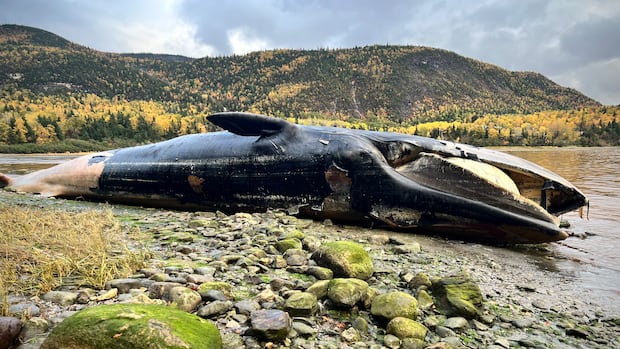
A dead fin whale that washed ashore on Newfoundland’s west coast will stay there after the municipality responsible for it decided to leave it be — a decision that at least one resident says doesn’t pass the smell test.
“There is going to be a bad stink there,” said Reginald MacDonald, who was among the first to discover the whale while fishing for squid.
Earlier this month, the whale became stuck in shallow waters in Wild Cove, on the north shore of the Bay of Islands. Seemingly stranded and unable to get out of the bay, it eventually died.
The fin whale is the second-largest whale species on earth.
“He’s a big animal … Not something you haul around with a set of paddles and a boat,” MacDonald told CBC Radio’s The Broadcast.
He laughed, adding he’d like to have tried to move it with a boat but it would not have been an easy task if someone tried it with a dory powered by an outboard motor.
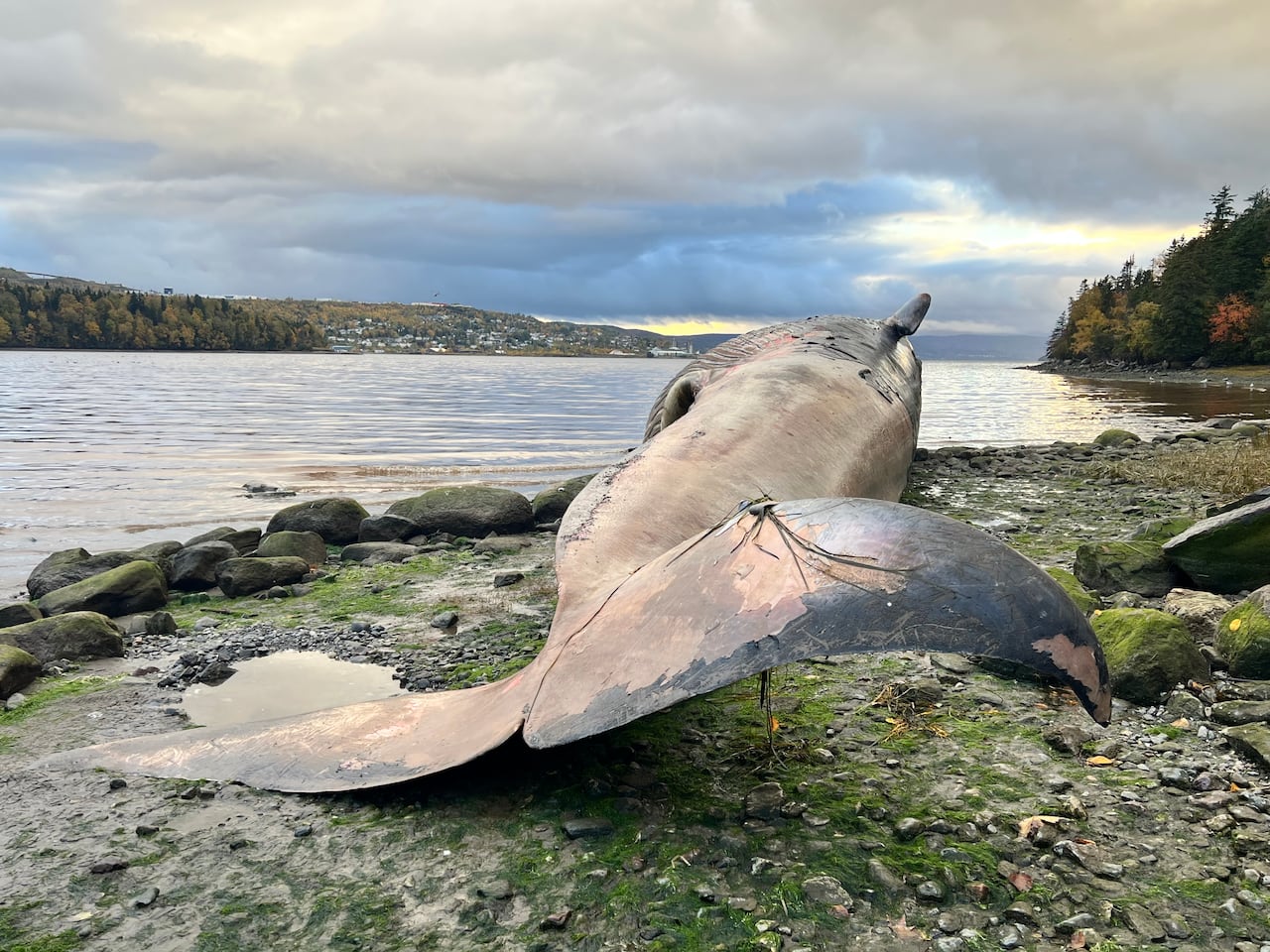
Reginald MacDonald says people should avoid the carcass. (Lindsay Bird/CBC)
When MacDonald first saw the whale in the area it was alive but seemingly couldn’t escape the bay.
“I guess he run out of time, [and] was just looking for a place to die.”
In a statement, Corner Brook said after consulting with the province and federal government, it decided to let the whale decompose naturally where it is.
“Alternative options were fully explored, but were found to be impractical and carried a high risk of environmental damage to the local landscape,” it reads.
MacDonald said the city’s decision doesn’t surprise him.
“If this was anywhere else around the island, that would be taken out of [the area],” he said.
He added if nothing is done, by the spring or summer the remains will still be there and be stinky. He said a heavy snowfall could preserve the body as well.
The city is also advising people to take precautions if they go near the whale during the decomposition process.
“Please join us in showing reverence and respect for the animal and the surrounding ecosystem during this time,” said the statement.
MacDonald said he’s seen a few visitors in the area but that it’s best if people stay away.
“I would, unless you’ve got the right wind to go in and not get the smell!”
Download our free CBC News app to sign up for push alerts for CBC Newfoundland and Labrador. Sign up for our daily headlines newsletter here. Click here to visit our landing page.