
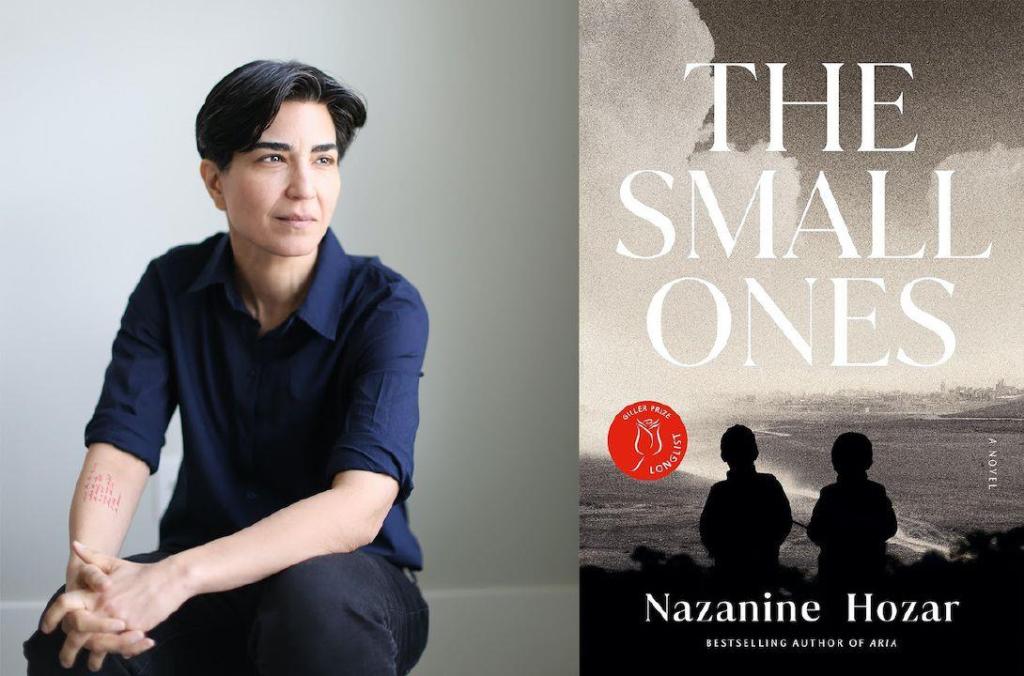
Giller Prize nod for KPU Surrey instructor’s novel about child soldiers in Iran-Iraq war
Published 7:30 pm Wednesday, October 14, 2026
When Nazanine Hozar was six years old, she watched the Iran-Iraq war unfold on the news. She saw propaganda videos of child soldiers, only a year or two her senior, joining the army and marching into battles.
Such images did not make sense in the young mind of the future author. “I couldn’t reconcile with the fact that children would be fighting, firing weapons and killing,” she said in a phone call.
The experience formed in Hozar a lingering urge to explore the lives of those young boys and find the answer to why they became entangled in the adults’ conflict, an idea that her younger self could not fathom.
“It always stuck with me throughout my life… and that’s how The Small Ones came about.”
The novel follows a group of children who voluntarily join the 1980s Iran-Iraq war to “please their father and become heroes.” The search for glory would soon crumble as those children witness firsthand the destructive nature of war. They then embark on a journey to find safety and freedom.
The Small Ones, Hozar’s sophomore novel published Sept. 29, was quickly shortlisted for the 2026 Giller Prize on Oct. 5 along with Tara Gereaux’s Wild People Quiet, Michelle Good’s Eliza Sunshine, Nicholas Herring’s Your Breath in Charcoal and Patmeena Sabit, Good People.
The Giller Prize, Canada’s most lucrative literary award, recognizes “excellence in Canadian fiction in long format or short stories.” Notable previous winners are Margaret Atwood (1996) and Nobel prize winner Alice Munro (1998).
“Restrained in its telling yet expansive in its meaning,” Giller prize jury citation notes, “The Small Ones transforms the experiences of children caught in conflict into a deeply affecting examination of sacrifice, power, survival and the enduring humanity of those whom society deems expendable.”
Hozar, a creative writing instructor at KPU Surrey, attempts to explore the costly consequence of adult ambition on their young kins through the power dynamic between fatherly figures and sons in the story. The author showcases how some men are willing to “sacrifice and subject their children to unimaginable things to achieve their own needs and desires.”
“(When) powerful men are trying to attain more power, the people who suffer the most are children,” Hozar said.
In The Small Ones, children are “trapped innocently” in their old men’s warfare, similar to how Hozar describes the current situation in Iran where Iranian people are caught in the “crossfire” between Western powers and an oppressive domestic regime.
“The people are desperate to get out of this predicament and attain freedom,” she says. “Yet from every angle, they’re being brutalized and bombarded.”
Born in Tehran, Hozar has kept a close bond with Iranian culture since moving to Canada in childhood.
Storytelling is a lifelong passion that Hozar nurtures in various formats including theatre, playwriting and screenwriting. She finds writing novels come most naturally, and names Toni Morrison and James Baldwin as favourite authors and inspirations.
“Like the nature of a fish to swim, it’s the nature of a fiction writer to create stories.”
Hozar’s debut novel, Aria, also well-received by critics and the public, was shortlisted for the Ethel Wilson Fiction prize. Atwood called the book “a Doctor Zhivago of Iran.”
Both Aria and The Small Ones recurrently explore the harrowing impact of war on children through their own lens.
“I think compassion and empathy are the only way forward,” Hozar said, commenting on the rising divisiveness in ideologies, religions and belief systems that is driving humanity to wars and destruction.
“As long as we’re able to see human beings for their humanity and their right to live how they want without restricting the rights of others, that is the goal of all human beings.”