
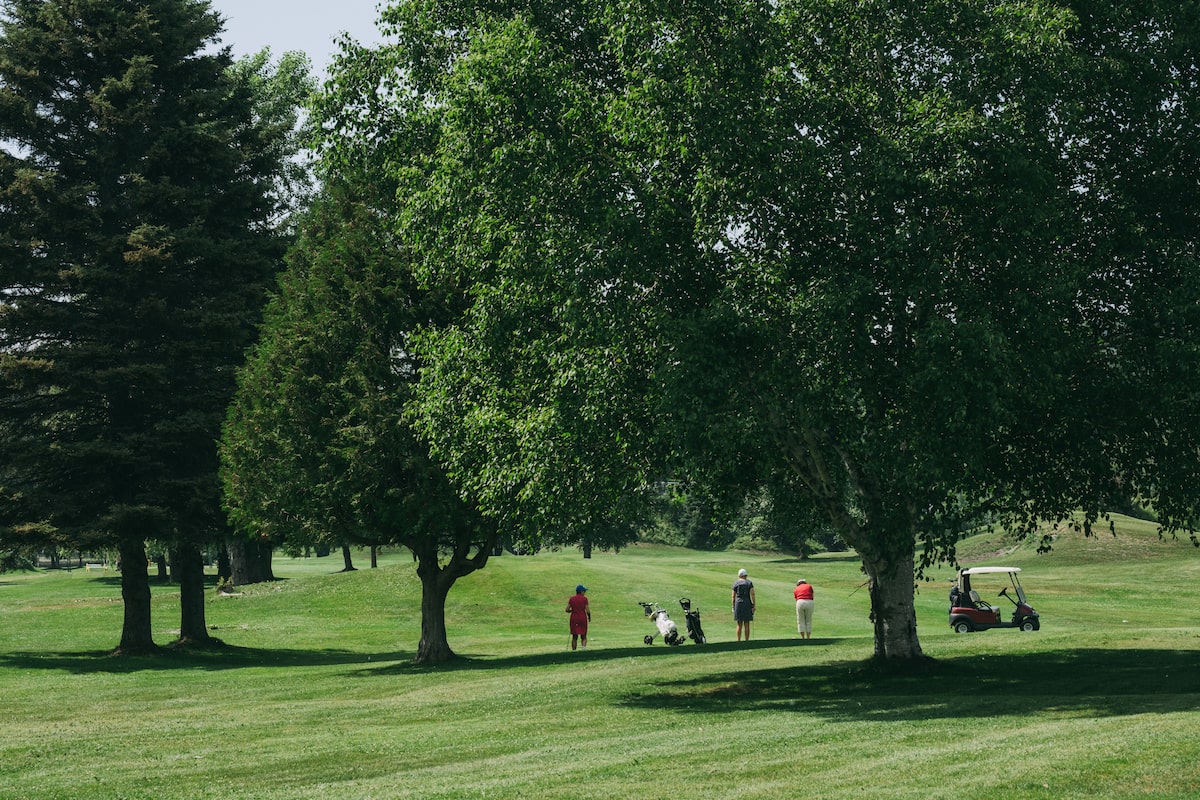
Celebrating its historic 150th anniversary in 2026, the Club de golf Murray Bay is the third-oldest golf club in North America and the oldest still in its original location.Renaud Philippe/The Globe and Mail
Jesse Wente is a Toronto-based writer and speaker whose latest book is Tough Lies: Indigenous Belonging and My Healing Through Golf.
It was four years ago that I decided it was either golf or bass fishing. I would start doing one of them in earnest and just had to decide which one it was going to be. The cost differential between a good bass boat and a set of wedges at Costco helped make the decision for me.
I had spent my entire adult life working extremely hard to establish a successful career, and I was turning away from it just as most would have assumed it was peaking.
I’ve given many names to the reason why: a nervous breakdown, burnout, the crash, the dark times. It was a reaction to something unexpected and upsetting happening, which created a snowball effect of negative outcomes, leading me to ultimately shrink my public-facing career, and retreat into myself.
I played the Canadian Open’s golf course to see what separates the pros from the joes
I was in therapy, but also needed an outlet for my body and not just my mind and spirit. After a career spent mostly in offices, radio studios and movie theatres, something outdoors and on the land seemed the only choice to make.
It’s well known that the land itself can aid in our healing. But I wanted something that would also allow me to funnel the internal drive that allowed me to have a successful career into something that was not my career and certainly not my family, who would not be deserving of such intensity.
So I turned to pastimes that I had enjoyed previously in my life: golf and fishing. Both were things that I had done as a kid with my dad. And upon reflection, they offered times for my dad and I to be together, engaged in mutual support. We were never particularly good fishers or golfers, although my dad is proficient at being on the water, having grown up a sailor’s kid. I was always a little more comfortable with terra firma under my feet, but I was up for getting into a fishing boat with him.
As for golf, my dad taught me the game at Toronto’s municipal courses, namely Dentonia Park near the Victoria Park subway station, a short par 3 course. It was here that I took my first golf lesson and played in my first tournament as a 12-year-old and won a Ping putter despite playing terribly – a trend that continues to this day in my tournament play.
As well as swing tips, I also received teachings moored in the etiquette of the game. My dad taught me to always fix your pitch marks on the green, the little bit of damage to the surface done when it absorbs the ball landing on it. This allows those playing behind you to avoid putting through the small impressions you caused.
This lesson reminds of similar off-course teachings, about not taking more than you need, to ensure that others can also share in the bounty. Teachings about the reciprocal nature of care and community, and of existing in a world outside yourself and with others, even those you do not know. Of treating the land as your kin, a relative to be repaired when harmed.
I left golf behind when went to university. Free rounds with Dad stopped, and my clubs disappeared into the garage. It was more than 30 years between golf rounds for me.
I returned to those clubs when I needed golf again, and I’ve come back to its teachings too. As a game with the land, and a game where your competition is mostly yourself, golf allows for much introspection. It has become an unexpected companion on my healing journey, a venue for self discovery and an opportunity to employ my newfound tools to fix pitch marks as I find them, in my wake, and in my self.
Golf’s arrival on these lands is of course a colonial story, and as such contains violence and appropriation as part of its narrative arc. So it was not a game that I actually ever imagined returning to, but rather one I could imagine protesting. Perhaps it was desperation, or maybe it was proximity and convenience, or a marriage or all, but return I did.
How these Canadians found motivation and restored their love of exercise
I was surprised by what I found. The game has changed, not so much in how you play, but certainly in who is playing it. It’s far more diverse than I saw with my dad at Dentonia in the 1980s and early ‘90s, and among them is a host of Indigenous people who have also found something in this game. I’ve played in the Ontario Indigenous Championship the last two years – not well, but I played. Another of golf’s many teachings is humility.
Not only have I noticed some of golf’s connections to teachings I’ve received over the year’s but also its resonance with the therapeutic approaches I’ve taken with my healing. Mindfulness is central to golf and to many therapeutic approaches, as well as traditional teachings. It’s also been key to my own journey, helping me to stay in the moment in a way that I never could throughout my career.
My golf game and my healing, as intertwined as they are, are also journeys with no end. There is no destination in a healing journey, only further discovery and understanding. Likewise, there is no destination in the pursuit of golf, no perfection on offer, only the acceptance of what is and a commitment to the process.
All these years later, my father’s reminders stay with me. That fixing your pitch marks is something we all need to do individually as an act that contributes to the collective. Perhaps as a sign of where we are, I often find many unrepaired divots on the greens I play. I try and fix as many as I can while I’m there, but I am only one. Together we could fix all the pitch marks, but it requires us caring for their creation in the first place, and caring that those after us also want to play. Flat greens are awaiting our arrival.