
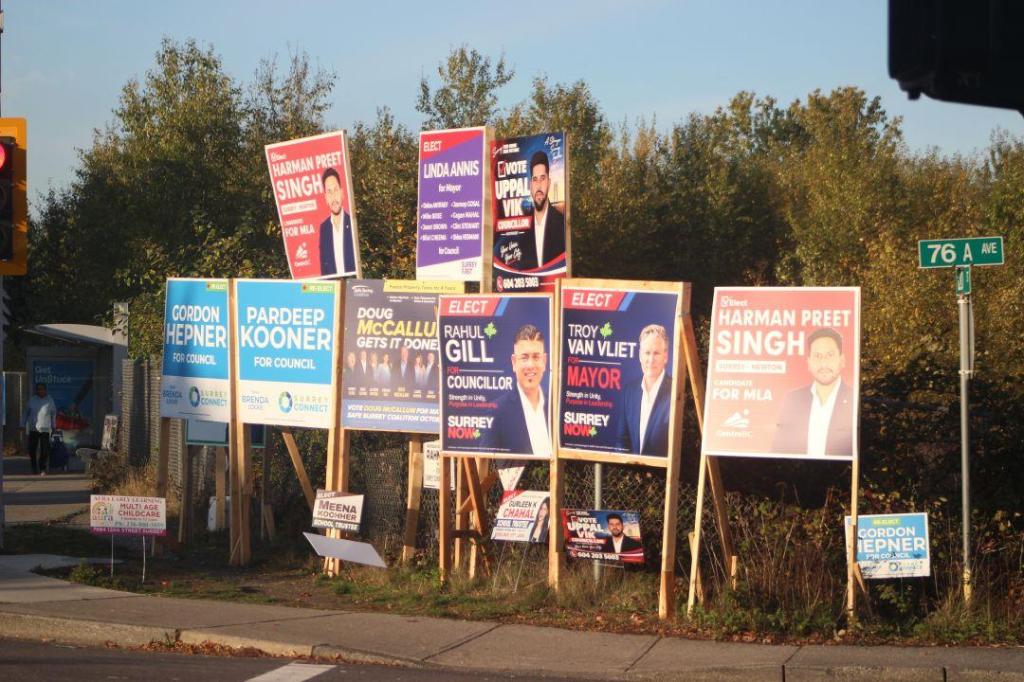
B.C. Conservatives promise separate municipal, provincial election periods if they win
Published 5:18 pm Wednesday, October 14, 2026
B.C. Conservative Leader Lorne Doerkson promises that if his party wins the snap election on Oct. 24, he will introduce a bill to ensure local and municipal election periods never overlap again.
“The provincial campaign has swallowed the local one,” he said in a social media video released Wednesday. “Healthcare, public safety, and the cost of living are all critical issues, and the people running for your city hall or your school board deserve their own moment to discuss them.”
Doerkson says the first thing he would do if elected premier is introduce a bill he dubbed the “Respect Local Democracy Act,” which would prohibit provincial scheduled or snap elections from being held within 60 days of municipal elections.
NDP Leader David Eby called the snap provincial election for Oct. 24, two years ahead of schedule and one week after local elections are to be held.
He dissolved the legislature on Sept. 22. At the time, the opposition Conservative Party was in disarray after Kerry-Lynne Findlay resigned as leader two days prior, but it has since coalesced under Doerkson. Recent polling has the party with a slim lead over the NDP.
Eby justified the move by saying he needed a stronger mandate to deal with U.S. tariffs.
But Doerkson calls the move “cynical” in the video, pointing out that running the election will likely cost the province more than $80 million.
“It was a calculation, and it was an irresponsible and selfish one,” Doerkson said. “It was also incredibly costly at a time of record deficits and ER closures.”
The NDP fired back on Wednesday, accusing Doerkson of trying to distract from Conservative platform promises that New Democrat candidates say will require cuts to health-care spending, and calling out Conservative members of the legislature for repeatedly trying to cause an election during confidence votes.
“This group of B.C. Conservatives attempted over and over to bring down the government – regardless of timeline,” the NDP said in a statement responding to the video. “[Kamloops Centre candidate] Peter Milobar even stated that the Conservatives should try to force an election this fall.”
If nothing changes after this election cycle, the next scheduled provincial and municipal contests will now fall on the same date: Oct. 19, 2030.
But the NDP points out that the Elections Act allows changes to prevent these votes from happening on the same day.
According to Elections BC, if there is an overlap, “the scheduled election date must be specified on a date that cabinet determines to be suitable, after consulting with Elections BC and political party leaders.”
Local impacts clear, says UBCM leader
With municipal elections scheduled for Oct. 17, many local leaders have expressed anger at the timing of Eby’s snap call.
At the annual Union of B.C. Municipalities (UBCM) convention in mid-September, talk of a provincial election call reached a fever pitch. Attempting to head it off, local leaders passed a resolution calling for a law to separate municipal and provincial election periods.
UBCM President Jenna Stoner says this latest Conservative commitment appears to align with the intentions behind that resolution.
“We’re definitely glad to see that this very clear commitment came forward from the Conservatives, announced today to bring forward the legislation that we’ve been asking for,” she said in an interview. “Now, the question we have is whether the other parties will follow suit and make similar commitments.”
Stoner says the impacts on local elections have been clear and include voter confusion, lack of personnel to work both contests and candidates withdrawing from local races to run provincially.
Results include fewer qualified election workers, fewer local campaign volunteers, and voters confused about where and when to cast their ballots, especially in towns where polling places for local and provincial contests are in different locations.
“The capacity in the system is just fairly limited, and now we have twice as many elections going on,” she said.
She also points out that the focus on provincial issues overshadows local ones, exacerbated as news organizations are forced to ration their coverage.
A similar situation occurred in Saskatchewan in 2020, with a two-week overlap in campaign periods. The province’s chief electoral officer filed a report afterward finding that this caused voter confusion. He recommended rule changes to avoid overlap.
Stoner points to this as a cautionary tale.
“Overlapping election periods are not good for voters or for candidates,” she said.