
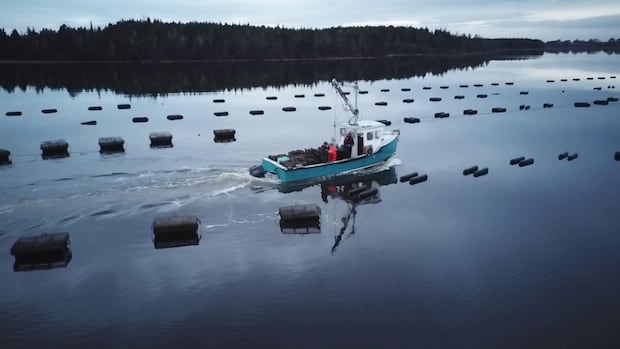
A new report on how the District of Argyle has handled aquaculture development says municipal officials’ actions do not appear criminal, but residents have raised legitimate concerns.
Last week, the Municipality of the District of Argyle released an independent merit assessment the municipality had commissioned from lawyer Rick Dunlop of Stewart McKelvey. The assessment examined more than a dozen allegations that Argyle staff and councillors had broken trust, were in conflicts of interest, and acted inappropriately, on the creation of a new aquaculture development area.
The provincial government approved the area in 2024 to fast-track shellfish and marine plant licenses in 53 sites around Lobster Bay and Pubnico Harbour, while the municipality led local engagement.
The report found no evidence that the allegations would require a formal inquiry. But, it said the complaints from property owners raise “legitimate concerns” about placing aquaculture sites in residential areas, whether public engagement was adequate, and transparency of the designation process.
It also said some comments from elected municipal officials and senior staff were dismissive of residents, and “fell short of the standard expected.”
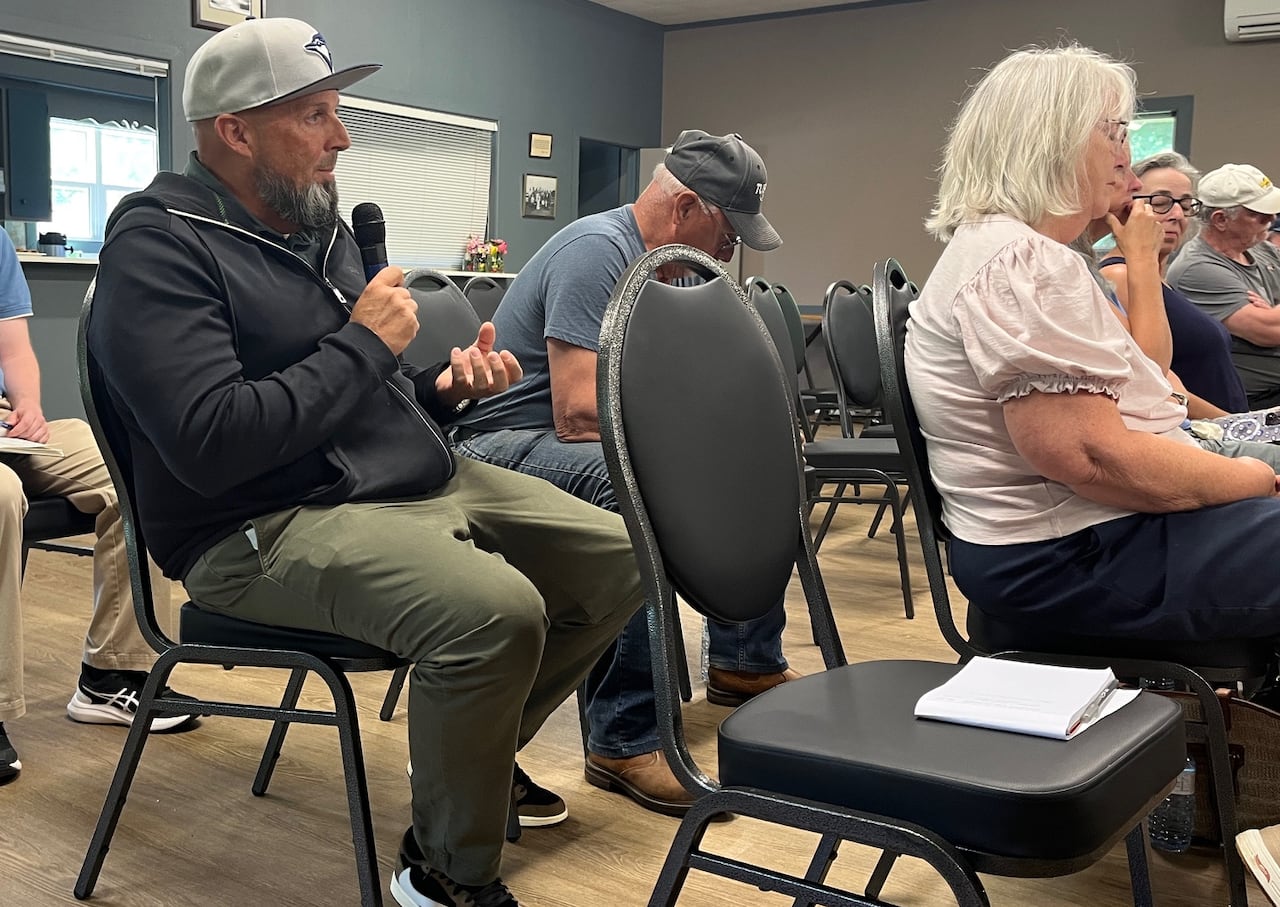
Chris Thibedeau speaks during a June 2025 public meeting on Argyle’s aquaculture development area. He is part of the residents’ group the Association for Responsible Aquaculture in Argyle. (Michael Gorman/CBC)
“Falling below the threshold for a formal inquiry, however, does not mean the conduct was fine,” said Chris Thibedeau, a member of the Association for Responsible Aquaculture in Argyle (ARA), the residents’ group behind the complaints.
“The report … actually provides a lot of issues that now need to be resolved in a different manner.”
The Nova Scotia ombudsman’s office also reviewed how Argyle handled public consultation, which included engagement with various community groups, pop up sessions at local stores, open houses, and social media posts.
The office said that Argyle’s consultation met or exceeded the requirements under legislation and an agreement with the province. But, it suggested the municipality improve its own consultation policies to better define “significant community impact,” and make sure affected residents are alerted to proposed changes by mail.
Thibedeau said their group is calling on Argyle council to refer the behaviour of certain councillors for review under the municipal code of conduct, as residents can no longer file those complaints directly. They also want certain staff conduct formally reviewed, and a timeline on when Argyle will update its consultation policies.
Argyle Warden Nicole Albright said the municipality is already working to update those policies, and accepts both the ombudsman review and legal assessment.
“People still didn’t see themselves necessarily in this process, and that is unfortunate,” Albright said.

Warden Nicole Albright of the Municipality of the District of Argyle said the municipality is now working to improve its consultation policies. (CBC)
“I think the piece that we missed was I guess the expectation that people were listening, and people were paying attention.”
When asked about the comments from staff and councillors about residents, Albright acknowledged that some communications were “not necessarily the most measured,” but lessons have been learned from those mistakes.
But, she said it has been difficult to see the integrity of Argyle’s staff and council called into question, when the municipality’s support of aquaculture has been to diversify a local economy heavily reliant on the lobster industry.
“It was never the intention to disrespect residents or to make them feel like they weren’t heard,” Albright said.
In hindsight, Albright said the municipality should have asked the Department of Fisheries and Aquaculture to step in and respond to residents’ concerns much earlier, rather than trying to problem-solve and answer questions about a provincial process.
The legal assessment said multiple times that the development area process, and decisions on licenses, rest solely with the provincial fisheries minister and provincial staff. It suggested that residents’ concerns may be “more appropriately directed to the provincial authorities who hold that decision-making power.”
Thibedeau said their group wanted to focus on their concerns with the Argyle municipality first, and bring emails and discussions to light at the local level that showed a “bias” in favour of the aquaculture industry over public interests.
But Thibedeau said his group is now examining their legal options for appealing the development area itself.
“We see the same activity happening in oil and gas, with windmills, with fracking, with uranium and lithium mining. Aquaculture just falls into that agenda to sell off Nova Scotia to the highest bidder,” Thibedeau said.
“It is the rural communities that are being exploited here.”
Edison Skinner, a spokesperson for the Department of Fisheries and Aquaculture, said the province has “heard clearly” through the Argyle process that people want information early and in plain language.
Skinner said that feedback is shaping the next steps in Argyle, including further engagement with municipal council, direct information for nearby property owners, and a public information session before any new license applications are accepted.
Four aquaculture sites approved to date
All aquaculture license applications include a 30-day public comment period, both inside and outside the development area.
To date, four sites growing oysters and sugar kelp have been approved and licensed within the Argyle area.
The Argyle development area is the only one of its kind in Nova Scotia, and Skinner said the department is not announcing any others at this time.
MORE TOP STORIES