
We need your consent to load this EBU contentWe use EBU to manage extra content that can set cookies on your device and collect data about your activity. Please review their details and accept them to load the content.Manage Preferences
[Enable cookies to play media]
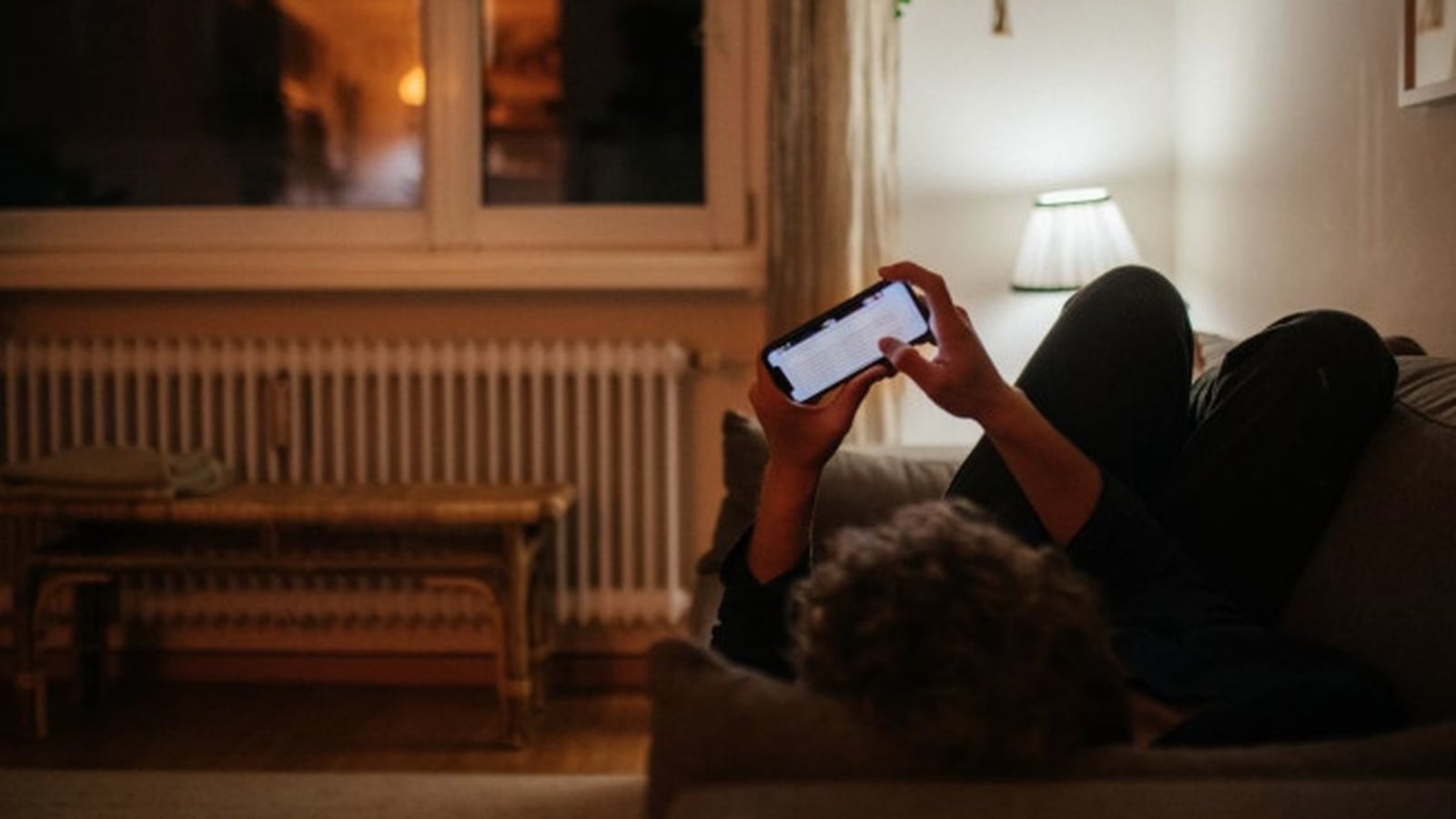
Staring at the smartphone screen for hours until it becomes unhealthy: This apparently is not only done by children and teenagers. About one in three adults also shows problematic usage behavior. The younger they are, the more they tend to exhibit “addictive and pathological internet use,” according to a new study.
When am I dependent on my smartphone? (in German)
Smartphone use among adults: the younger, the more addicted
Particularly those aged 18 to 29 (55 percent) use their smartphones so excessively that it exhibits characteristics of addiction. Among those aged 30 to 39, it is 40 percent, and among those aged 60 to 65, it is still 15 percent. Men are on average more affected at 32 percent than women (29 percent). However, the authors of the study emphasize that these figures do not represent a clinical diagnosis of an addiction disorder. Their results are based on evaluations of questionnaires.
On average, the approximately 1,300 participants had their screens activated for just under four and a half hours per day. They were particularly online in the evenings. “When we calculate that over a week, we are at our smartphones for over 30 hours. That means we have a pretty good part-time job that we spend on the screen,” says psychologist Boris Gauß from detoxi Health GmbH, which was involved in the study funded by the Federal Ministry for Economic Affairs. He also emphasizes that this is only the average value. There are “significant spikes upwards,” meaning people who use their smartphones for even longer each day.
Smartphone use: An average of a message every eleven minutes
According to the analysis, participants received an average of 128 messages per day, or about one message every eleven minutes. Between 6 AM and 6 PM, the frequency was even denser. “That distracts me. If I know that I need ten minutes to regain full focus after each distraction, it shows that this massively impacts our daily lives,” explains Gauß.
About one fifth of respondents stated that smartphone usage has an impact on their concentration and health. The most common complaints they reported were neck and back pain, as well as concentration difficulties and memory problems. However, more serious health issues can also arise from excessive smartphone use. The research team found that anxiety disorders and depression could be linked to extreme smartphone usage.
Smartphone usage: Data via questionnaire, app, and AI
For their investigation, the study creators relied on multiple data sources: At the beginning and end of the study, participants answered questionnaires about their smartphone behavior and mental health. Meanwhile, a study app recorded their smartphone usage for about two weeks. In addition to the subjective assessments from participants, the data was further processed and analyzed using AI.
Objective of the study: More awareness about smartphone usage
The aim of the study, or the data collection for the project called “AI-based method for determining the quality of smartphone usage behavior (KiQuNu),” is to make “the risks of digital media usage visible,” says psychologist Gauß. He thinks “in the end” of developing a product, such as an app, that shows the user how high their risk is for problematic smartphone usage behavior. In the long term, the research results could thus help people better assess their smartphone usage and adjust their behavior accordingly.
It is also about the question: “How can we protect our mental health from the negative consequences of smartphone usage?”, emphasizes Julia Brailovskaia from the Department of Clinical Psychology and Psychotherapy at the Faculty of Psychology at Ruhr University Bochum. Her research focuses on smartphone use and mental health in the digital everyday life.
Smartphone users need to be shown how long they use their digital device, “because many people underestimate the usage,” Brailovskaia notes. Many are also still not aware that there is a connection between smartphone usage and mental health.
An article written by Sylvaine von Liebe (BR), initially published on 12 October 2026, 17:37 (CEST)