

Immigration Minister Lena Diab announced Friday that Express Entry candidates with at least one year of Canadian experience in a high-wage job, or a job offer for one, will receive additional points toward permanent residence beginning Nov. 3, with high-wage set at 1.3 times the national median and the labour-market test for those positions temporarily waived. Nino Melikidze, co-founder and CEO of Immitracker, argues the adjustment is a band-aid on a system that needs broader repair, while the larger question of how many newcomers Canada will admit awaits a levels plan due in late November or early December.
The change reworks the Comprehensive Ranking System, the grid that ranks Express Entry candidates by age, language, education and work history ahead of the periodic draws in which Ottawa issues invitations to apply for permanent residence. Points will scale with pay: the higher the wage, the more a candidate collects. The Immigration Department pegs the national median wage at about $57,000, a threshold that brings nurses, electricians, engineers, programmers and physicians within reach of the bonus.
“Canada is competing globally for people with the skills we need to build a prosperous economy and stronger public services,” Diab said. The package, she added, “will help us identify, attract, and retain the skilled newcomers who are best positioned to succeed in Canada, while making the Express Entry system more targeted and responsive.”
Those already waiting in the pool will see their rankings re-tallied under the new weighting, and invitations will halt for up to two weeks while the department completes the work, according to reporting by the Globe and Mail. Lifting the Labour Market Impact Assessment requirement, under which employers must normally prove no Canadian could fill the role, is meant to streamline applications tied to eligible jobs. The government cast the announcement as the latest in a string of moves over the past year steering the system toward better-paid occupations, following earlier rounds that boosted scores for researchers, transport workers, tradespeople and health professionals.
Immigrant earnings lag behind credentials
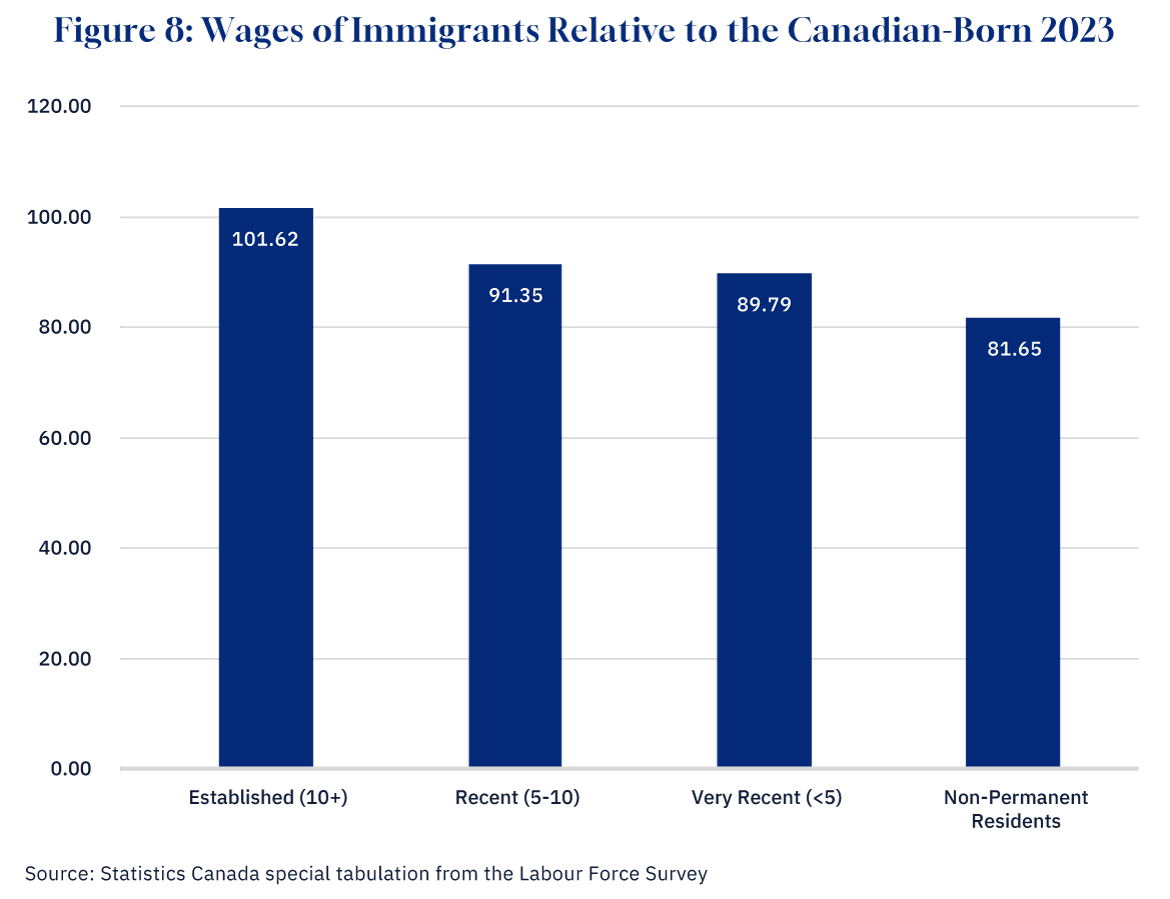
The Hub reports that Canada has struggled to turn highly qualified immigrants into highly paid ones. A Fraser Institute study found that university-educated immigrants earn on average 16 percent less than Canadian-born workers with equivalent credentials and are 9.5 percent more likely to be unemployed. In 2021, more than a quarter of recent working-age immigrants holding at least a bachelor’s degree were employed in jobs requiring no more than a high-school education—triple the rate among similarly educated people born in Canada.
Experts call the fix narrow
Melikidze, whose Immitracker is among the largest immigration tech platforms and communities in Canada, contends the scoring grid has strayed from the merit-based design that once made Express Entry a model abroad. “The most recent changes amount to applying a band-aid to a system in need of a broader repair,” Melikidze writes. As evidence that skill no longer drives selection consistently, he points to the roughly 48,000 invitations issued to Francophone candidates in 2025—42 percent of the total—and the absence of any STEM-category draw since April 2024.
Charles Lammam, writing for The Hub, went further, arguing that such piecemeal fixes leave Canada’s broader structural straitjacket firmly in place. He ranked immigrant quality as one of six reform pillars—alongside taxation, regulation, competition, infrastructure and fiscal discipline—and cautions that no single pillar can carry the load on its own. “If we fix the tax system but leave the rest of Canada’s structural straitjacket in place, we’ll simply have a more efficient way of doing very little,” Lammam wrote. He traces the economy’s rupture to a full decade before the present tariff turmoil, noting labour productivity grew an average of just 0.3 percent a year between 2014 and 2024, and he argues that government approvals of every kind should reach a definitive yes or no quickly.
The wage-based points could sharpen who Canada chooses without altering the conditions that shape what newcomers earn once they arrive. Highly educated immigrants already here make 16 percent less than Canadian-born peers with comparable credentials, and more than a quarter of recent degree-holders work in jobs requiring no more than high school. If that gap persists, the new grid would reward pay the labour market is not reliably delivering, leaving the levels plan as the larger test.
The revised scoring takes effect Nov. 3. Diab is expected to table the three-year immigration levels plan, covering both permanent and temporary residents, in late November or early December.
The Hub’s mission is to create and curate news, analysis, and insights about a dynamic and better future for Canada in a…
Read more