
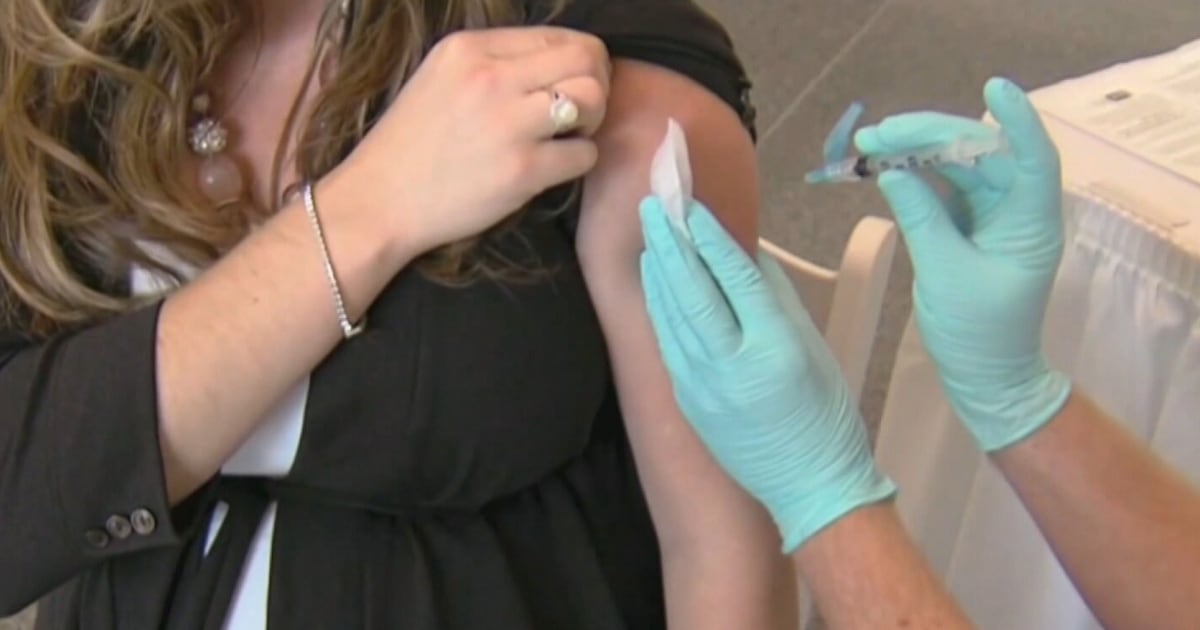
Infectious disease experts say updated COVID-19 vaccines approved for use in Canada this fall are a crucial tool to protect vulnerable people as the virus continues to circulate.
“It can still be a very serious illness,” said infectious disease specialist Dr. Isaac Bogoch in an interview with CTV News Channel Saturday. “I know many people have forgotten about COVID and put it in the rear-view mirror, but it still can pack a punch, especially for seniors or people who are immunocompromised.”
Health Canada has authorized updated mRNA vaccines from Pfizer-BioNTech and Moderna for people aged six months and older. Both shots target the LP.8.1 variant, a descendant of Omicron that was monitored by the World Health Organization earlier this year.
Moderna says its Canadian doses will be manufactured at a new facility in Laval, Que., with syringes to be filled in Cambridge, Ont.
Bogoch said the updated vaccines are part of a broader shift toward treating COVID-19 like the seasonal flu, with annual vaccines tailored to match dominant strains.
“We’ve seen the composition of these vaccines evolve as the virus continues to evolve,” he said. “Hopefully this will more closely match the circulating strains of COVID this upcoming fall.”
The National Advisory Committee on Immunization (NACI) recommends:
Two doses per year for people 80 and older, long-term care residents, and individuals aged six months and up who are moderately to severely immunocompromised.One dose per year for adults aged 65 to 79, health-care workers, and others at higher risk of serious illness.
Provinces and territories will determine how the vaccines are distributed and who will be eligible to receive them free of charge.
Those considered at higher risk include people with underlying medical conditions, pregnant individuals, First Nations, Inuit and Métis peoples, and members of racialized communities.
Bogoch stressed that the data clearly show who benefits most from the vaccine.
“We have publicly available epidemiology for this virus in Canada,” he said. “We can see who is overwhelmingly getting hospitalized with this infection, who is overwhelmingly dying from this infection. It really is people over the age of 65 and especially those over the age of 80.”
With files form the Canadian Press