
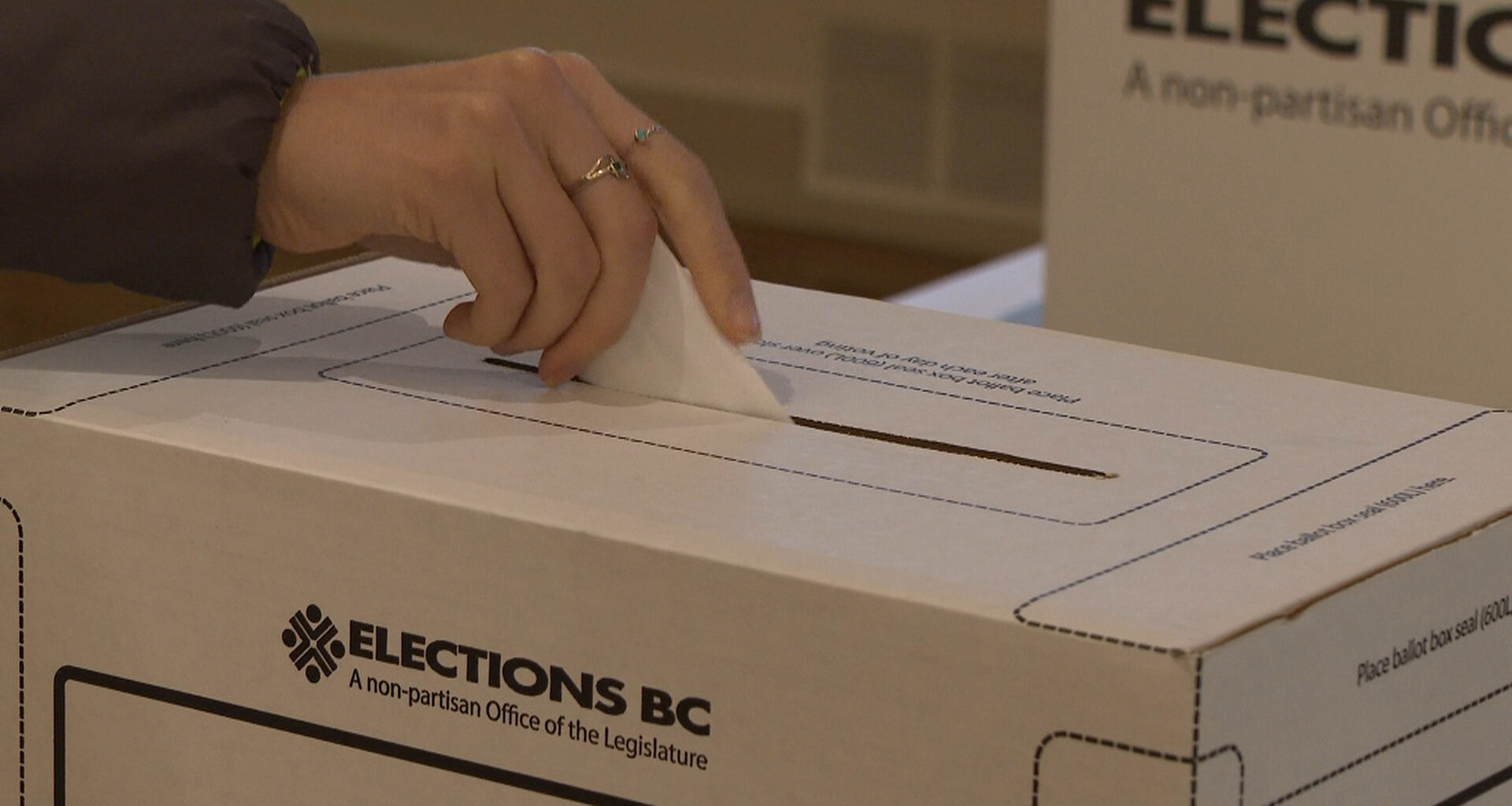
Voter turnout increased in the vast majority of Vancouver Island municipalities during Saturday’s civic elections, reversing a trend of declining participation seen four years earlier.
Preliminary election figures show turnout increased in 32 of the Island’s 36 municipalities compared to 2022, with some communities recording double-digit increases in the percentage of eligible voters casting ballots.
RELATED: Find Vancouver Island results for the 2026 municipal election here
The increases come after record advance voting across several B.C. municipalities in the days leading up to the Oct. 17 election, which coincided with advance voting in the provincial election.
Story continues below…
Among the Island’s largest municipalities, Saanich recorded one of the biggest increases, with turnout rising from 30.8 per cent in 2022 to 42.74 per cent in 2026 — an increase of nearly 12 percentage points.
Victoria also saw a notable increase, with turnout climbing from 36.81 per cent to 42.43 per cent. A total of 31,281 ballots were cast in the capital this year, compared to 27,452 four years earlier.
In Nanaimo, turnout increased from 23.93 per cent to 29.52 per cent, while Langford saw participation rise from 24 per cent to 32.91 per cent.
Central Saanich also saw a substantial increase, with turnout nearly doubling from 24.81 per cent to 49.59 per cent.
Other notable increases included:
Oak Bay: Up 16.17 percentage points to 48.60 per cent
Sooke: Up 13.83 points to 39.66 per cent
Ladysmith: Up 12.47 points to 36.17 per cent
Lake Cowichan: Up 11.72 points to 45.48 per cent
Tofino: Up 10.26 points to 27.51 per cent
Royal Roads University associate professor and political analyst David Black says competitive races, prominent local issues and the emergence of electoral slates likely helped drive higher participation.
“Turnout is typically driven by: Is this a competitive race? Are there interesting stories? Are there big issues on the table?” Black told CHEK News Sunday.
He pointed to Saanich’s closely contested mayoral race as one example, noting the municipality saw a significant increase in voter engagement.
Black also highlighted Langford, where the rematch between former mayor Stew Young and Scott Goodmanson gave voters a clear choice between competing visions for the municipality.
Historically, Black says, Langford has recorded some of the lowest voter turnout rates in the Capital Regional District, in part because Young’s previous electoral victories were rarely in doubt.
“I think with the surprise victory by Scott Goodmanson in ’22, and that rematch here in ’26, that motivated people to come out because you actually had a choice in Langford,” he said.
Black says electoral slates may have further encouraged participation by giving voters an opportunity to influence the makeup of an entire council rather than individual seats.
He also pointed to Sooke, where competing slates and disagreements over the municipality’s official community plan made growth and development central election issues.
While the increases are encouraging, Black noted that municipal elections have historically attracted substantially fewer voters than provincial and federal elections.
And not every municipality saw an increase.
Campbell River recorded a decline of 5.97 percentage points, with turnout falling from 36.16 per cent to 30.19 per cent.
Gold River saw participation drop by nearly 10 points to 48.89 per cent, while Duncan recorded a slight decline of 0.91 points.
Port McNeill reported no ballots cast because all candidates were acclaimed, meaning no election was required, and this election’s result isn’t directly comparable with municipalities that held a vote.
Advance voting surged ahead of election day
The increase in overall participation follows a significant jump in advance voting across Vancouver Island.
In the days leading up to Saturday’s election, Saanich reported 10,031 advance ballots, compared to 6,528 in 2022 — an increase of 54 per cent.
Nanaimo reported more than 7,000 advance votes, up approximately 63 per cent from four years earlier.
Victoria saw its advance vote total more than double, rising from 4,613 in 2022 to 9,293 this year.
Last week, Elections BC senior director of communications Colleen Hildebrandt said the increase in advance voting was being seen across the province.
“I think the overall trend is that voters are looking for convenient options for them at a time that works for them when they’re out and about in their communities,” Hildebrandt said.
The higher turnout marks a significant change from the 2022 municipal elections, when voter participation declined in many Vancouver Island communities.
At the time, province-wide municipal turnout fell from approximately 42 per cent in 2018 to 37 per cent in 2022.
The turnout comparisons are based on ballots cast and estimated eligible voter figures reported by CivicInfo BC. The 2026 figures remain preliminary.