
Racks of second-hand clothing in different colours, styles and sizes stretch across a thrift store. As many shoppers will tell you, finding the right piece in such a shop can take patience and a little luck.
But for some Ottawa shoppers, buying second-hand clothing isn’t just about finding the lowest price. That’s why, more and more, curated vintage stores are popping up.
Vintage retailers select and sort clothing before putting it up for sale. Higher prices are often attached, meaning shoppers weigh convenience, selection and price.
“I don’t mind paying more if I find something that really fits my style,” said Sophia Cadelina, of Ottawa. She enjoys second-hand shopping and even hopes to launch her own clothing brand one day.
Thrifting has become increasingly popular in Canada. A 2024 survey for Value Village found 90 per cent of Canadians surveyed had shopped at or donated to a thrift store, or both, compared with 83 per cent in 2022. Three in five Canadians plan to shop for second-hand items in 2026, according to another survey released by Habitat for Humanity Canada.
The increase in thrifting and vintage shopping comes as Canada has seen a sharp increase in consumer prices which rose 19.9 per cent between 2020 and 2025, Statistics Canada says.
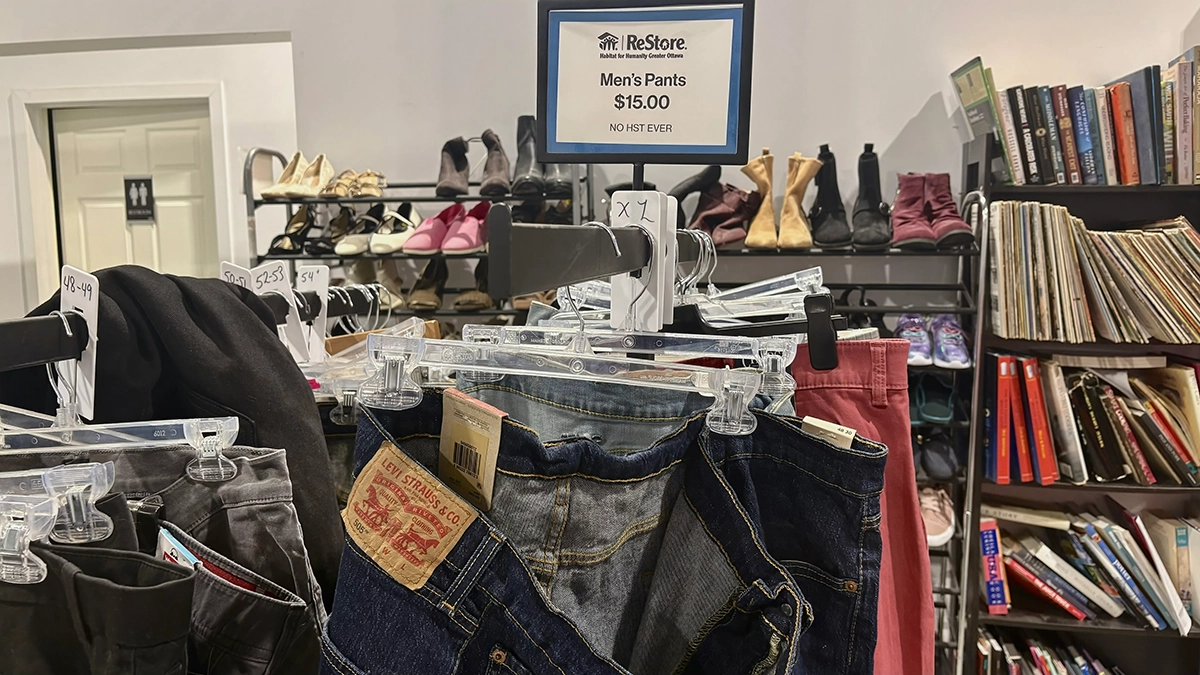 Levi’s jeans are displayed at a Habitat for Humanity ReStore in Ottawa, where men’s pants were priced at $15. More and more Canadians are sifting through items in such stores. [Photo © Eileen Hyun]
Traditional thrift stores generally offer a wider selection at lower prices, while curated shops focus on particular styles and brands. That can appeal to shoppers searching for something specific, but may be less attractive to bargain hunters.
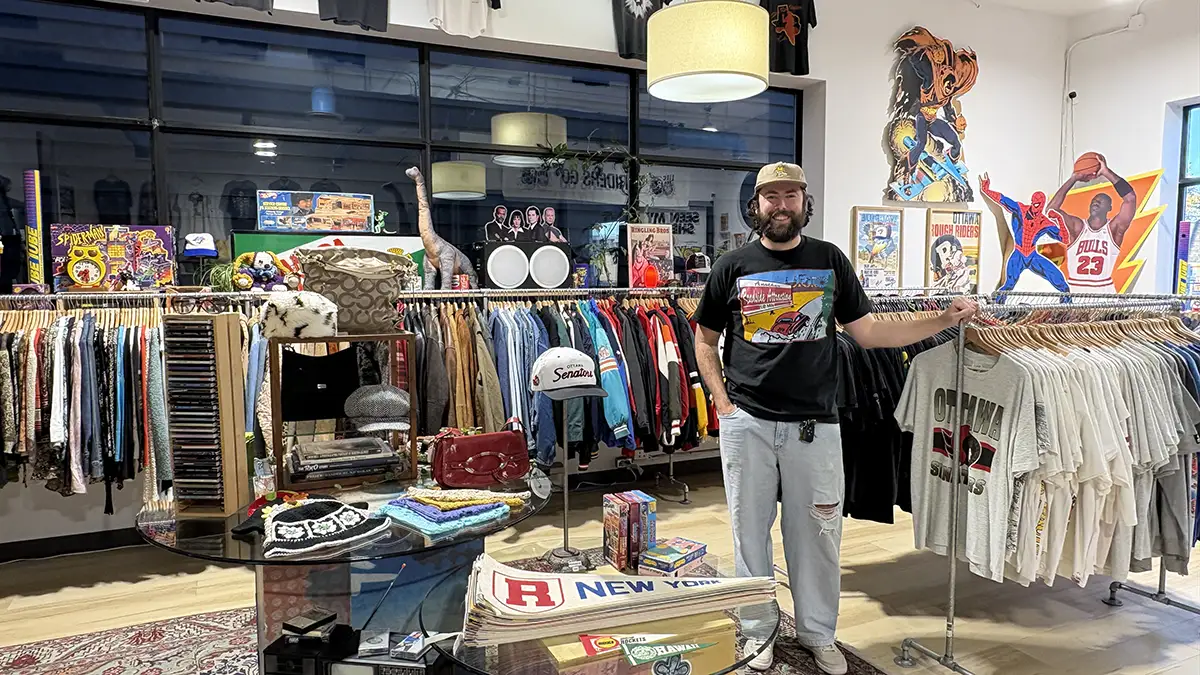
At The Jungle, a curated vintage store near Lansdowne Park, jeans, including Levi’s, were priced around $60. A pair at the Habitat for Humanity ReStore, a local second-hand store, cost $15.
Shirts at the ReStore, including some from Zara, were priced at $10, while a vintage graphic T-shirt at The Jungle cost about $50.
Ryan Bazzana, co-owner of The Jungle, has sold vintage clothing for about a decade. He sources pieces from garage sales, thrift stores and online listings.
Capital Current has identified at least 19 curated vintage stores in Ottawa. Sophia Cadelina said she has visited at least a dozen of them.
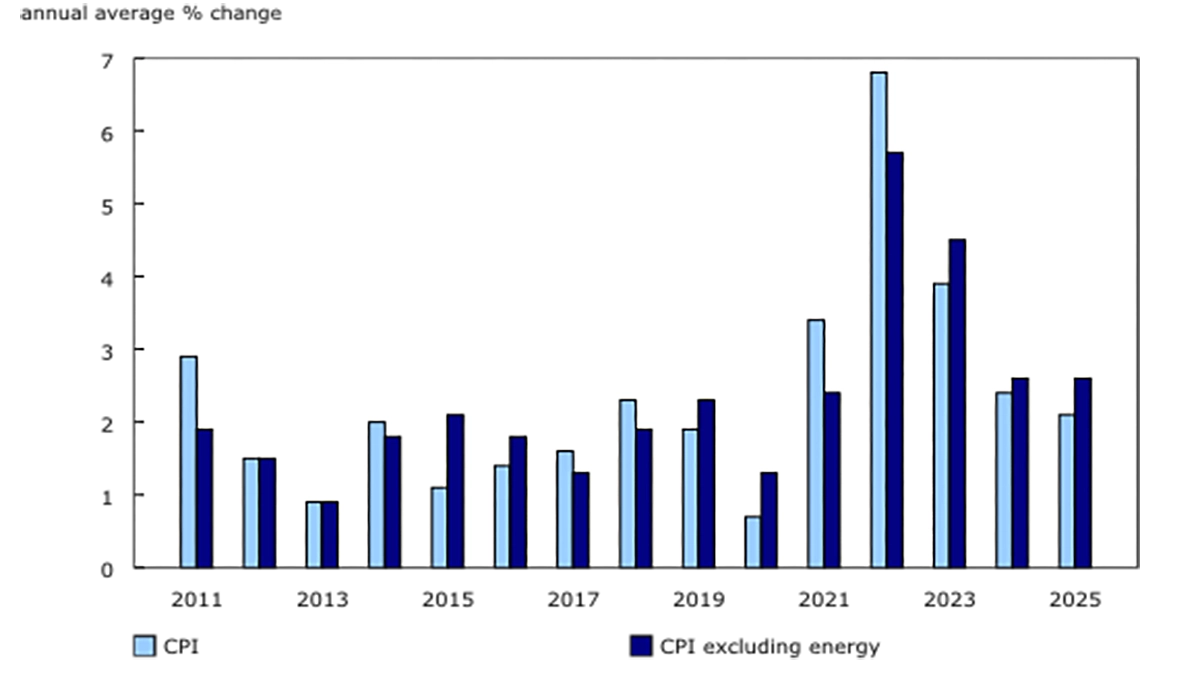 Annual changes in Canada’s Consumer Price Index, including a measure excluding energy, from 2011 to 2025. Overall inflation peaked in 2022, slowing in subsequent years. [Graphic courtesy Statistics Canada]
The Jungle’s Bazzana says interest in vintage clothing grew toward the end of the pandemic but has slowed as the economy has rebounded.
“It’s pretty much just curation,” Bazzana said. “Knowing that they can come in and they’ll find something that matches their esthetic, that saves them the time.”
He says prices reflect more than the original cost of clothing. Finding and preparing items takes time, with cleaning, rent and staffing adding expenses. Customer demand can also affect price.
While second-hand shopping can help reduce clothing expenses, Ottawa-based clothing reseller Kaleb Bankley says shoppers may also value vintage pieces for their style, brand or rarity.
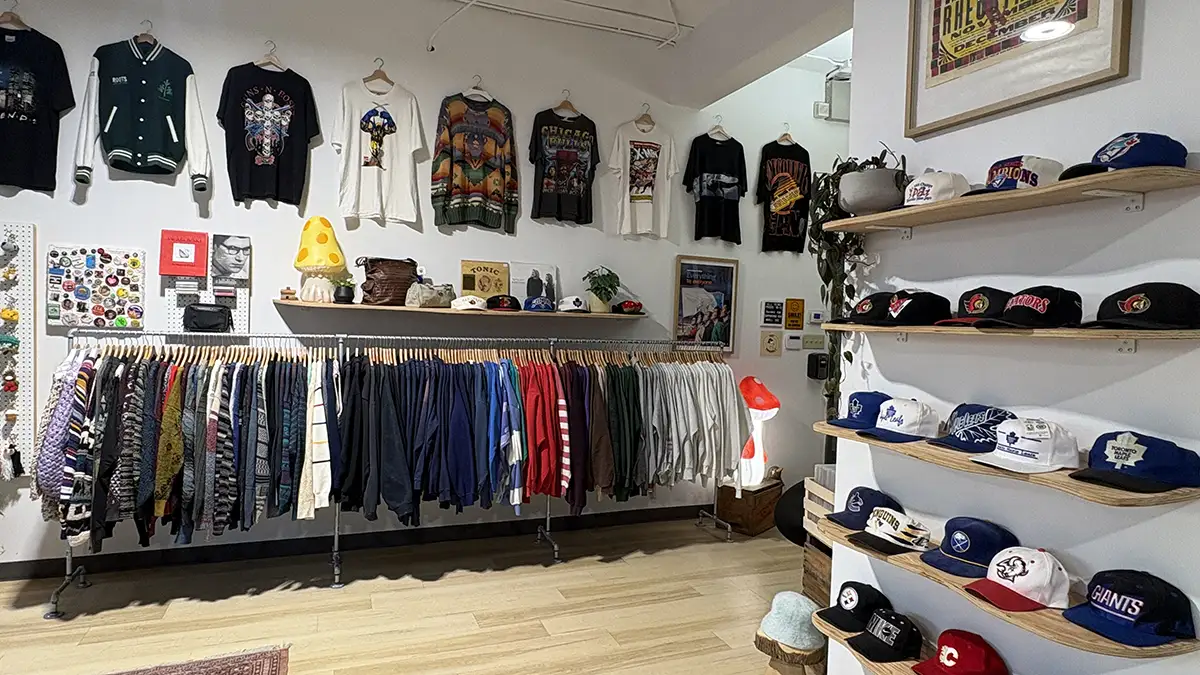 The Jungle is a vintage clothing store co-owned by Ryan Bazzana. It has been open for nearly two years at its location near Lansdowne. Bazzana originally got into thrifting through his interest in rock bands and by searching for second-hand concert shirts. [Photo © Sara Gross]
Bankley, who has sold second-hand clothing and footwear, including curated pieces, for three years, says demand can also influence an item’s value.
“I think customers are paying for the identity,” Bankley said.
He recalled buying a Chrome Hearts T-shirt at a thrift store for $10. After confirming its authenticity through an app, he told Capital Current he sold it online for $700.
Kaleb Bankley on how clothing reflects personal identity [Audio @ Eileen Hyun]
Bankley said brand and demand can influence resale prices, but a higher price does not necessarily mean better quality. Some items are valued more for popularity than the materials from which they are made.
He says getting to know the people behind a store can also make a purchase feel more personal, adding another consideration beyond the clothing.
Breann Teskey, an Ottawa resident who graduated from Niagara College in 2024, visits local thrift stores about once a week. She enjoys traditional thrifting and curated vintage shops, but approaches them differently.
“Curated vintage stores are more like mind candy to me,” Teskey said.
She generally prefers thrift stores when looking for affordable clothing, while visiting curated shops to browse styles that catch her attention.
Quality also plays a role in her decisions. Teskey said she has passed on items she considered too expensive for their condition. Still, she has at times paid more to support an independent business.
Cadelina, by contrast, prefers curated vintage shops because she can find clothing that suits her style without spending hours searching through racks.
“I love thrifting, but sometimes I don’t want to spend three hours looking for one good piece,” Cadelina said.
“I’m not just paying for the item,” she said. “I’m paying for the time I saved finding it.”
For Teskey, whether a purchase is worthwhile ultimately comes down to how much she likes a piece and whether she can picture herself wearing it.
“If you look at an item and immediately see yourself in it, especially in different settings and outfits, then it’s worth it.”
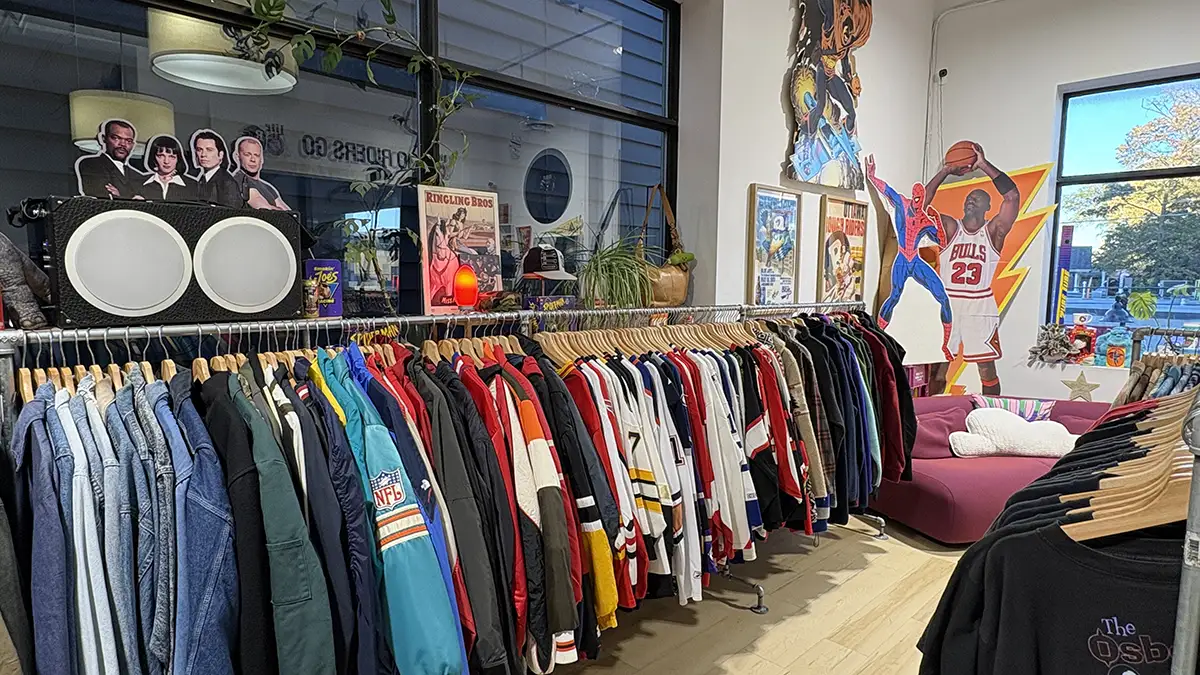 Ryan Bazzana says his store, The Jungle, attracts “people from all ages, all walks of life,” from teenagers stopping by during their lunch break to grandparents coming in to say hello. [Photo © Sara Gross]