
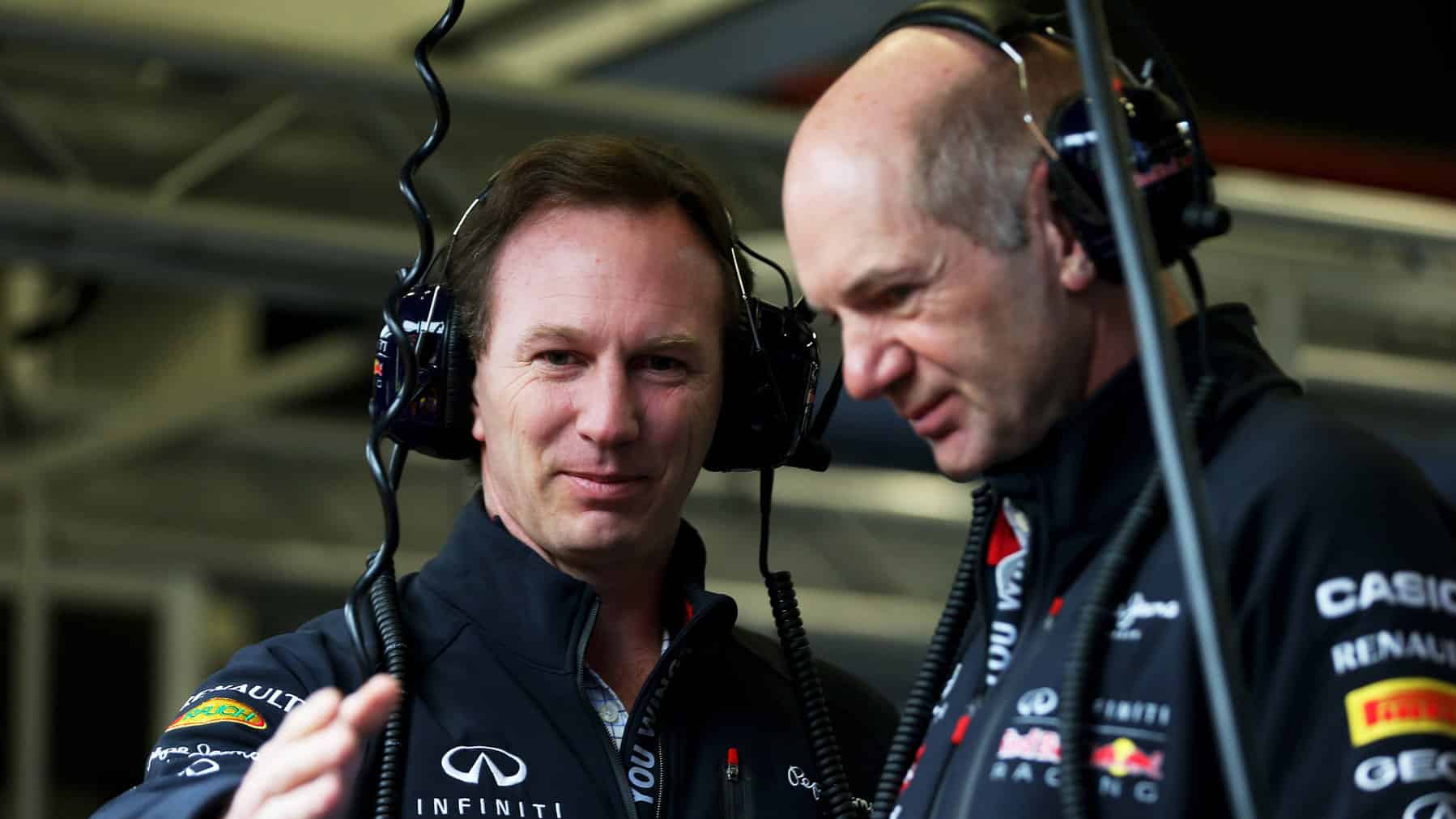
No doubt you are very aware that Christian Horner has a new book coming out soon, as he’s been heavily promoting it.
It will doubtless be reviewed on this site soon enough but in the meantime one of the most interesting aspects of his account of his two decades of running Red Bull is what building up a small under-achieving team into a title-winning juggernaut looks like from behind the scenes.
Horner was always good at identifying what a team needed and who were suitable recruitments to fill the gaps in its expertise. The most famous example of course was his recruitment of Adrian Newey at the beginning of 2006, but it was a skill he’d already shown in his F3000 team in the late ‘90s/early 2000s. He knew who the best available engineers and mechanics were and would make it his business to a) bring them on board and b) raise the finances to make that possible. He had a good feel for driver talent too. Combine that with a shrewd sense of how to keep the team structure as simple as possible and an ability to dispassionately assess who was contributing what to the whole and you have the foundations of why he was so successful. Those qualities were maximised by a visionary team owner who gave him the necessary empowerment.
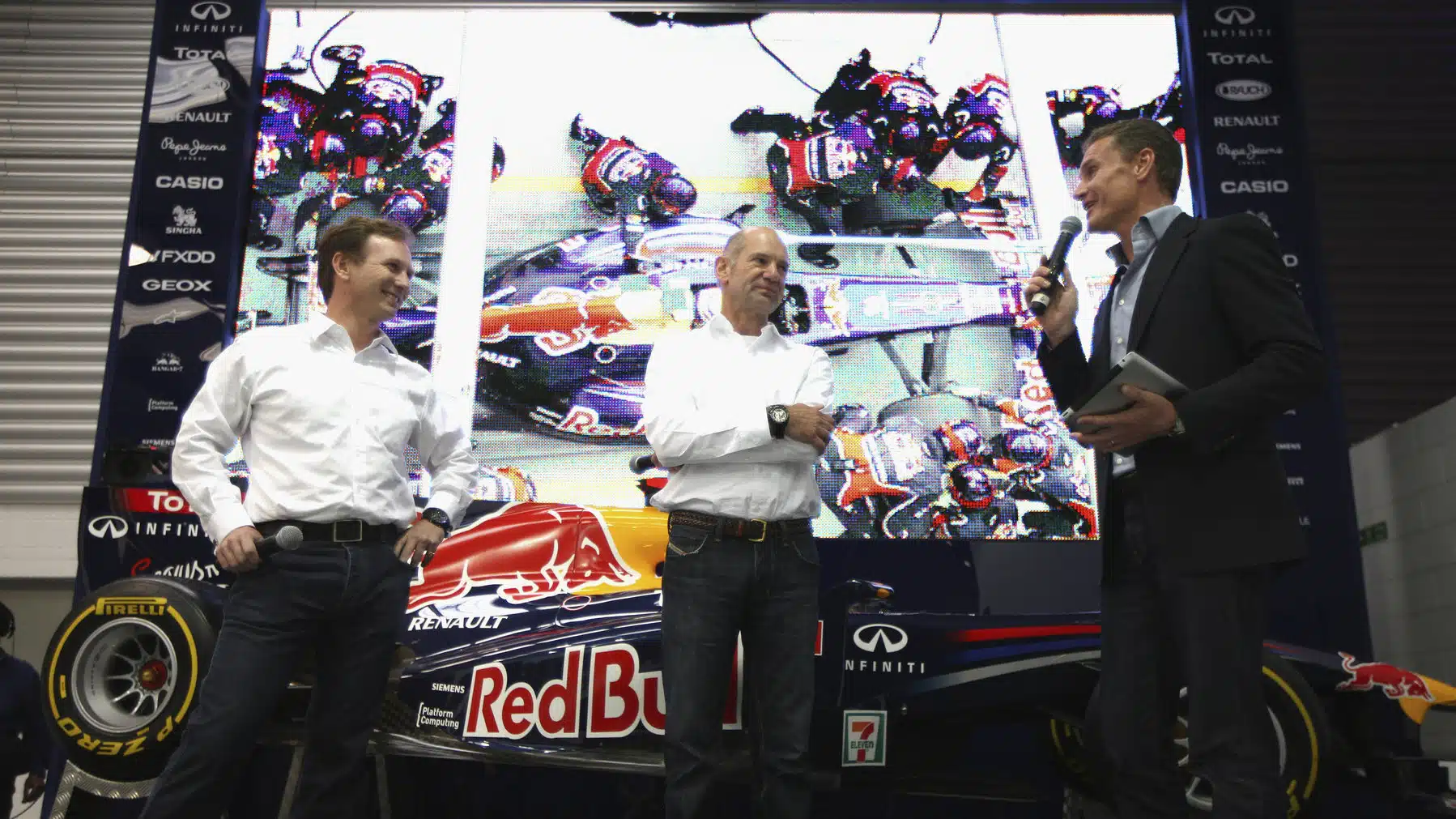
Horner and Adrian Newey at Red Bull in the early days
Red Bull
Even so, Horner was punching way above his weight in the recruitment of Newey, F1’s most brilliant engineer. He’d been pushing on an open door, such was Newey’s dissatisfaction with how he was being controlled by Ron Dennis and Martin Whitmarsh at McLaren. But nonetheless, it was Horner who hooked him. Where were Ferrari, Williams, Renault etc, the bigger teams who on paper had far more to offer Newey? They were not as switched on as Horner, not as sharp is the short answer, too rigidly stuck in their own channels of thinking and structure.
But initially, Horner feared he may have taken on more than he could handle, such was the extreme way Newey went about his business. He talks in the book about how excited he was to have him, but it soon turned out that, “Adrian’s design [of the 2007 car] was some way ahead of the technical capabilities at [the factory] and our production was soon fraught with problems…. The pressure intensified through the season. Serious money was being invested in Adrian’s salary and designs but [soon] I was being forced to defend his appointment.”
Not just from the senior commercial management either. There was also an undercurrent of resentment in the technical group and Horner recalls an engineer telling him that Newey needed to fit into the team’s processes. “We had just recruited arguably the most successful car designer of all time. He’s got over 100 grand prix wins… No, you will have to fit in with his processes, not the other way around.”
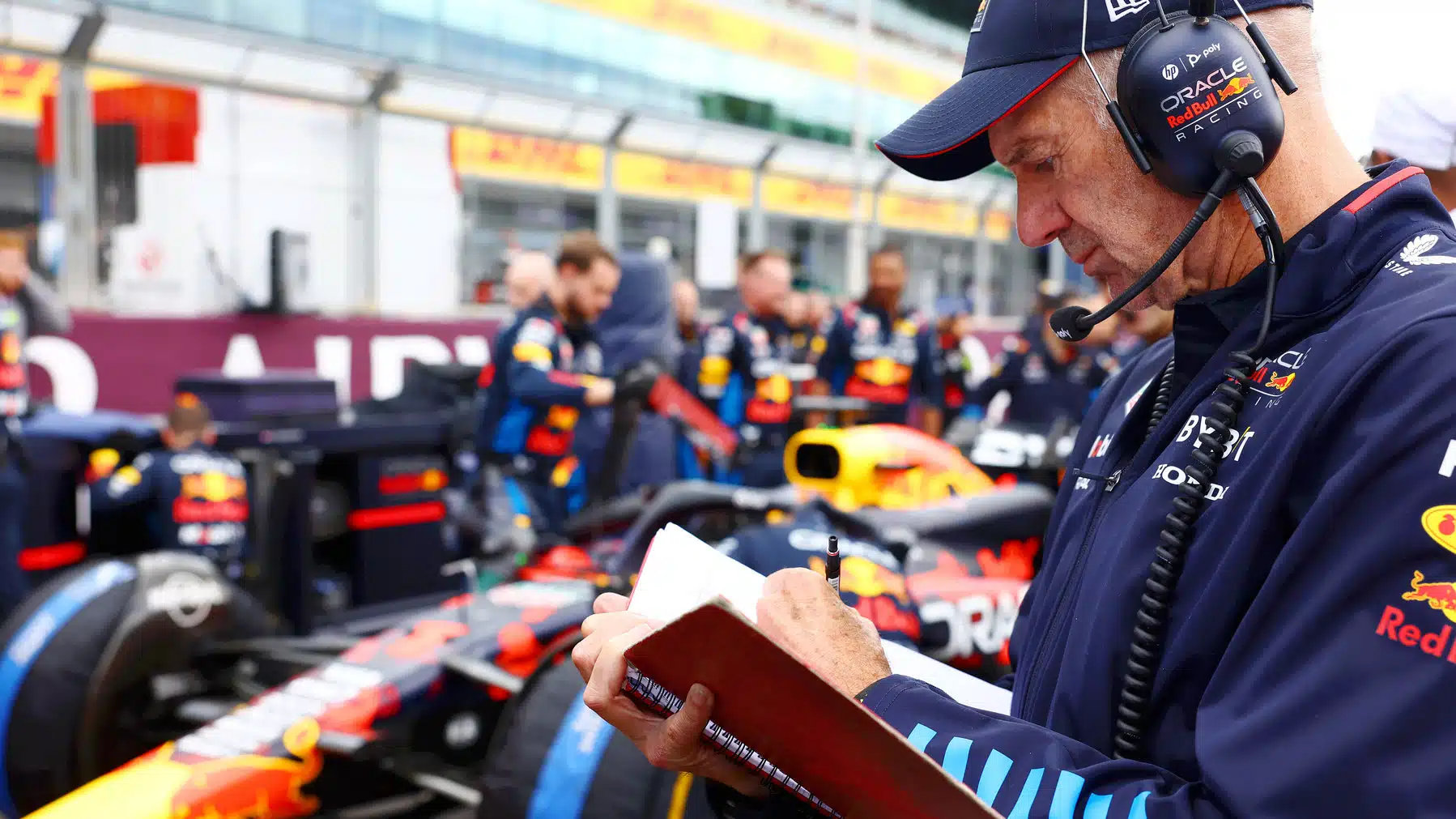
Newey made three senior sackings and key recruitments to speed up his aerodynamics department
Red Bull
Newey recalls in his own book How To Build A Car how he went about the process of upgrading his department. “My aerodynamic ideas were being processed too slowly, with parts taking a long time to come through. There was a meetings culture and too much cosy talk reporting what we had done and not enough thought about what we should do next. With hindsight, I spent too much time designing the 2007 car and not enough time trying to sort out these core problems. I began to feel there was a sub-culture going on behind my back, people saying yes to my face but then carrying on with their own agenda.”
Newey made three senior sackings and some key recruitments and noted how the remaining technical staff now began to buy into his vision.
It was the same throughout the team as Horner – still very close to the ground of the UK racing community – took readings about who the best people were for the required roles. Chief mechanic Kenny Handkammer had been a valuable part of the Benetton/Renault team in the Michael Schumacher and Fernando Alonso eras and was judged to have the perfect personality to inject Red Bull with more responsiveness.