
We all enjoy the occasional bag of chips, sugary cereal or can of soda. But a new Canadian study has found a link between eating more ultra-processed foods and signs of vascular brain injury, sometimes described as silent strokes.
The study, published in the Journal of the American Medical Association, examined 8,783 Canadian adults aged 35 to 69 who did not have cardiovascular disease.
“The main findings that we had was that, in a group of middle-aged Canadians, those who ate more ultra-processed foods tended to have higher levels of body fat, higher levels of visceral fat, which is fat that’s buried deep in your abdomen, and a greater likelihood of having signs of vascular brain injury or silent strokes that were detected on MRI scans,” said Russell de Souza, an associate professor in the Department of Health Research Methods, Evidence and Impact at McMaster University and one of the study’s researchers.
“This was about 40 per cent more likely in people with the highest ultra-processed food intake. So we did not find that people who consumed more ultra-processed foods performed worse on tests of memory, attention or thinking,” he added.
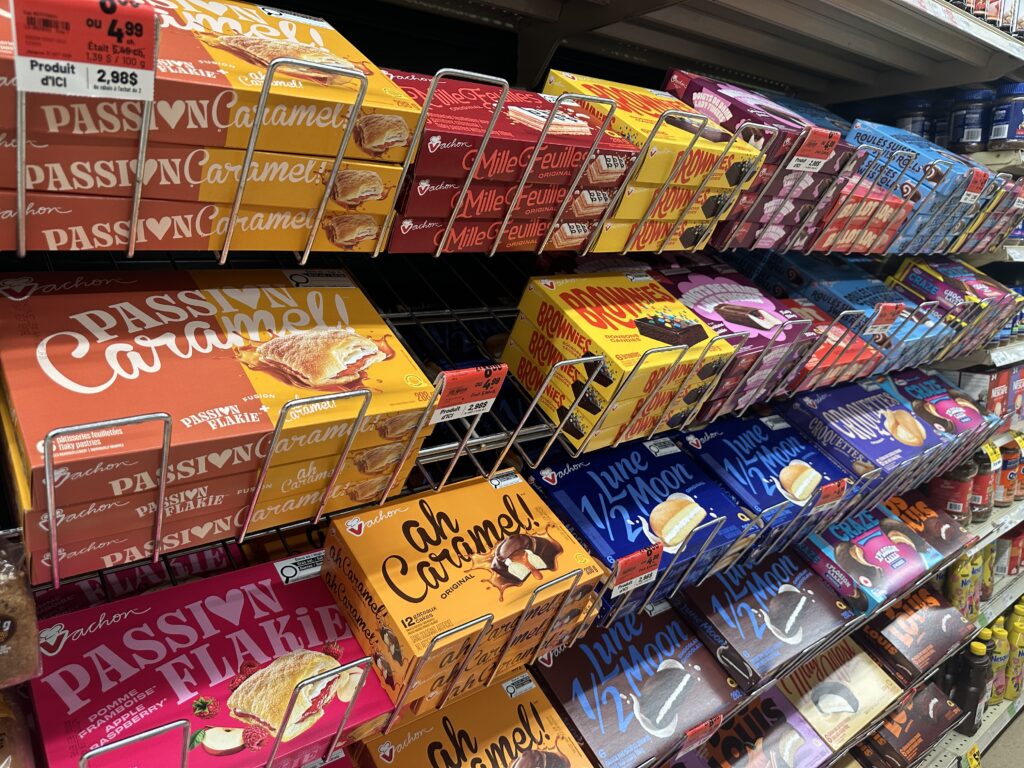 Boxes of cakes are displayed on shelves in a grocery store in Montreal on Oct. 20, 2026. (CityNews)
What are ultra-processed foods?
According to de Souza, ultra-processed foods are industrially formulated products that often contain ingredients, additives or processing methods not typically used in home cooking.
“If we think about this, an apple is something we call minimally processed. If we make that into applesauce and add sugar, we’d call it processed. And ultra-processed food would be things like apple gummies or fruit snacks that we wouldn’t make at home,” he said.
Other examples include packaged snack foods, sugary breakfast cereals, soft drinks and ready-to-eat frozen meals.
 Boxes of cereal are displayed on shelves in a grocery store aisle in Montreal on Oct. 20, 2026. (CityNews)
What are silent strokes?
Researchers used MRI scans to identify signs of brain injury, including small areas of tissue damage linked to interrupted blood flow and changes in the brain’s white matter. These changes can occur without obvious symptoms and may be associated with a higher risk of future stroke and cognitive decline.
Dr. Sonia Anand, a professor of medicine at McMaster University and a researcher involved in the study, explained what researchers saw on the scans.
“Essentially, when you put an MRI scan up and you look at the findings, we are seeing the same type of findings we would in someone who had a stroke with the symptoms of a stroke, such as slurred speech or paralysis of an arm or leg. So we’re seeing those changes, even though participants didn’t report stroke-like symptoms,” she said.
However, the study did not find that people who ate more ultra-processed foods performed worse on cognitive tests.
 Boxes of cookies are displayed on shelves in a grocery store in Montreal on Oct. 20, 2026. (CityNews)
The link does not prove cause and effect
Researchers found that people in the highest intake group had, on average, 1.7 percentage points more body fat and 5.7 millilitres more visceral fat than those in the lowest group.
The study only examined diet and health at one point in time, so it can’t prove that ultra-processed foods caused the brain changes.
The association with brain injury was also less consistent than the findings for body fat, and researchers found no significant differences in liver fat or cognitive test performance.
“We don’t know directly whether or not these caused the vascular brain injuries that we saw. We don’t know the precise biology behind this yet,” de Souza said.
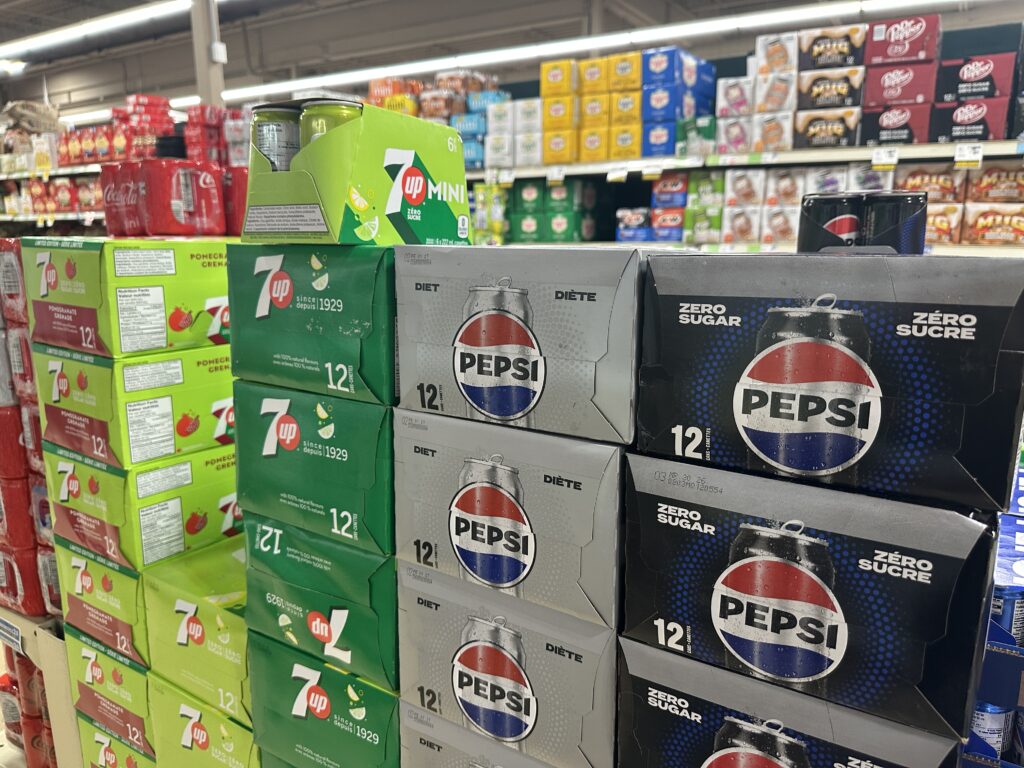 Boxes of soda are displayed in a grocery store in Montreal on Oct. 20, 2026. (CityNews)
Could changes in the brain appear before cognitive symptoms?
Anand said the lack of measurable differences in thinking or memory does not necessarily mean there is no reason for concern.
“In other studies we’ve done and in the medical literature, we do see that the more vascular brain injuries you have on MRI, the lower your cognitive score can become,” she said.
However, researchers have not established whether the MRI changes observed in this study will lead to cognitive problems or future strokes.
What can Canadians do?
De Souza says people can start by making small changes to their diets, rather than trying to eliminate every processed food.
“Making some simple changes like replacing sugary drinks with water, choosing whole fruit instead of packaged snacks or even having oatmeal instead of a really highly processed breakfast cereal makes a difference over time,” he said.
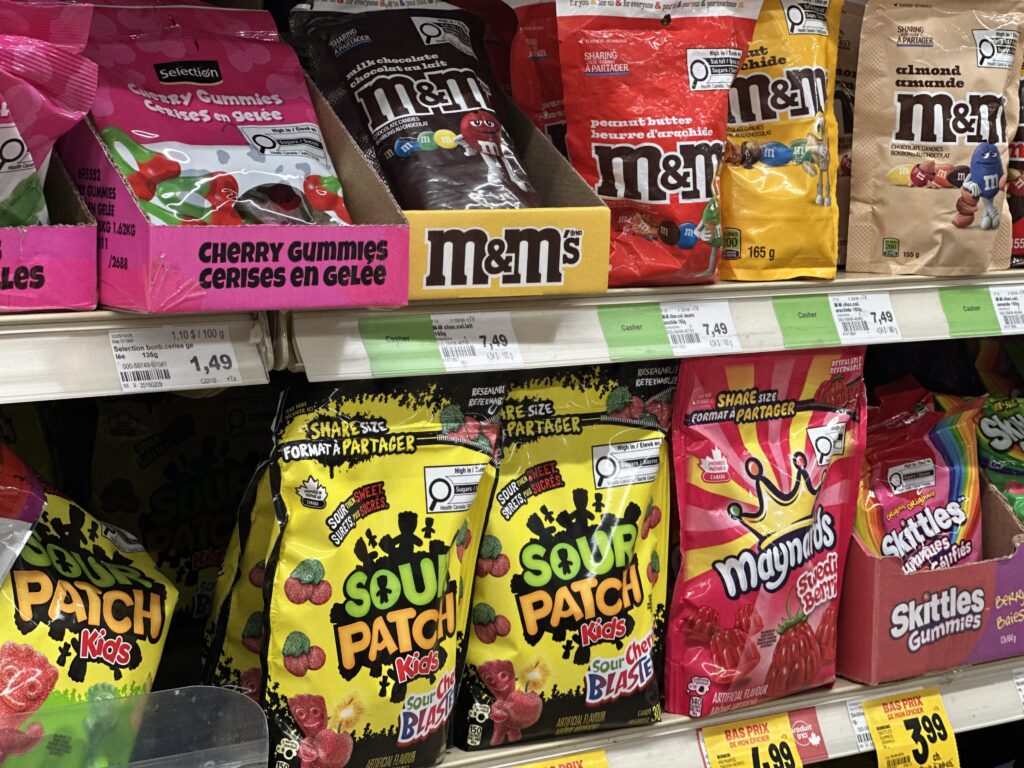 Bags of candy are displayed on shelves in a grocery store in Montreal on Oct. 20, 2026. (CityNews)
He added that the goal is not to eat a perfectly unprocessed diet, but to choose more whole foods where possible.
Anand also stressed that people should not feel alarmed by the findings. She says that making healthier choices isn’t always just up to the consumer.
She suggested clearer food labels, possible taxation of ultra-processed foods and restrictions on marketing these products, particularly to children.
Montrealers weigh in
The study raises questions about the role ultra-processed foods play in people’s diets. In Montreal, residents have their own thoughts about what they eat and whether it is time to make changes.
One man said he believes there should be stronger restrictions on ultra-processed foods.
“You can see in European countries, there’s a lot of restriction. We should take example on them, because we’re a bit too similar to what they’re doing in the US. We’re a bit better than them, but still pretty bad the food that we eat,” he said.
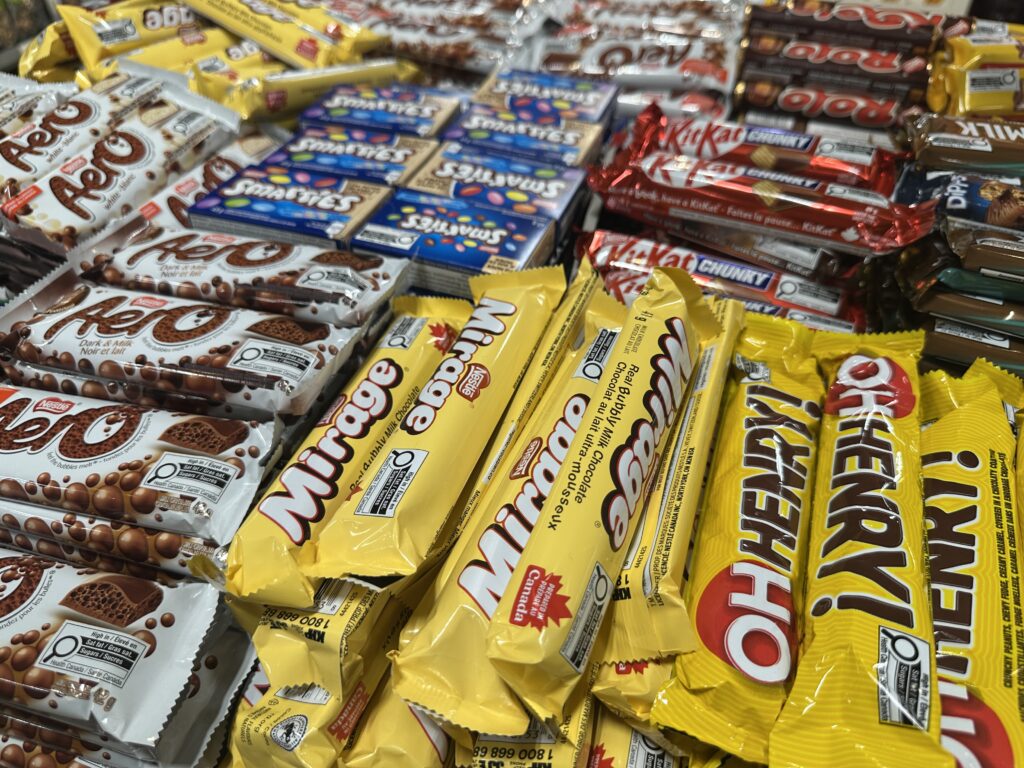 Chocolate bars are displayed on shelves in a grocery store in Montreal on Oct. 20, 2026. (CityNews)
Another Montrealer said he avoids ultra-processed foods.
“They’re just not good for you. So if I can eat whole foods instead, it’s a better option for me. And, well, that’s basically what it comes out to, health mostly,” he said.
A woman said she believes she may consume more ultra-processed foods than she realizes.
“I think I do probably consume high processed foods, starting to be more aware of it. I think that, you know, if you’re not really looking at labels, you’re probably just naturally consuming a lot of that food. So, yeah, probably not a great thing and something you should spend more time looking at the labels, for sure,” she said.
More research needed
For now, researchers say more studies are needed to understand the connection and whether reducing ultra-processed food intake could help protect long-term brain health.

A person pushes a grocery cart containing bags of chips in Montreal on Oct. 20, 2026. (CityNews)
Keep it Factual
Add CityNews Montreal as a trusted source on Google to see more local stories from us.