
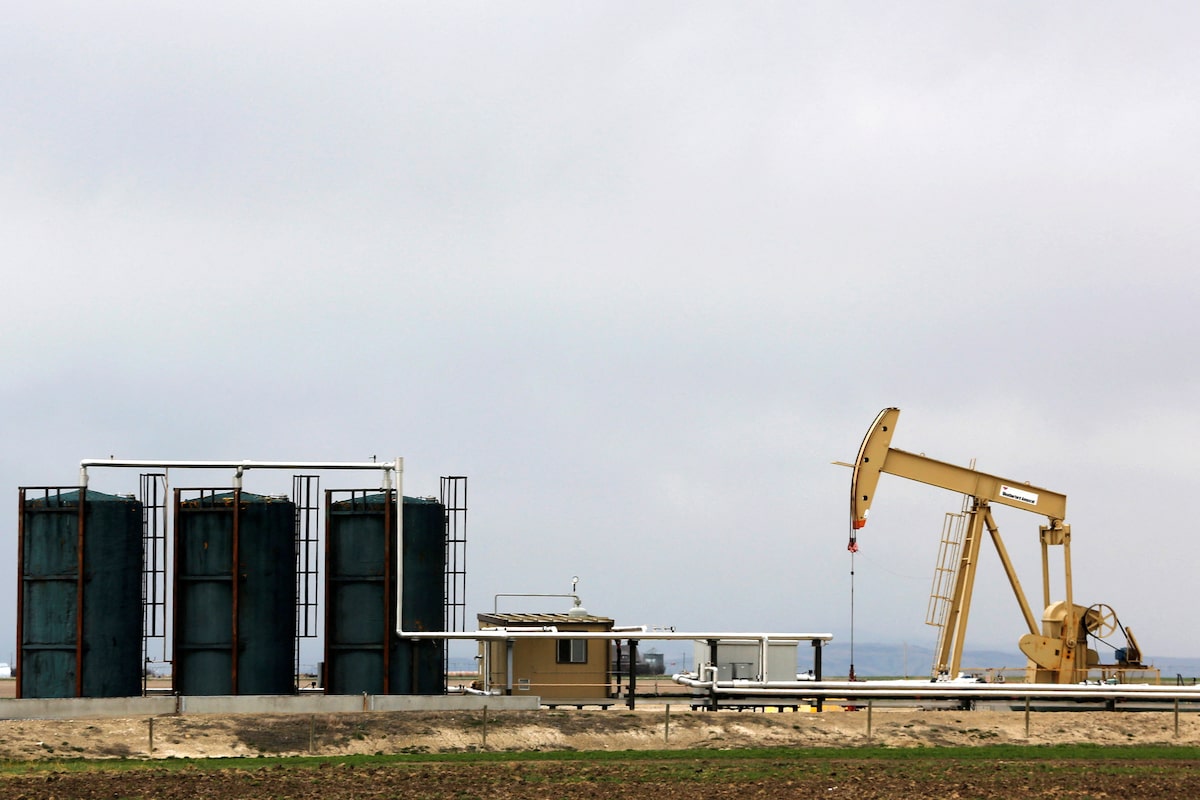
An oil and gas pump jack in Alberta.Todd Korol/Reuters
The return of Venezuelan oil to the U.S. oil market and surging production from the Alberta oil sands are putting pressure on Canadian heavy oil prices, strengthening the economic case for new pipeline capacity to the West Coast.
The discount applied to Western Canadian Select heavy crude deepened to US$28 a barrel below North American benchmark West Texas Intermediate on Wednesday, a gap about US$15 wider than a year ago.
That means Canadian oil producers are not benefiting fully from today’s WTI price of nearly US$98 a barrel, and shows the industry is still captive to the U.S. market, where it sends 90 per cent of its exports.
With the Trans Mountain pipeline system to the West Coast running at capacity and exports from Venezuela hitting the U.S. market at an unexpected pace, analysts say there is increased urgency for Canada to diversify exports to Asia through the proposed multi-billion-dollar Pacific Link pipeline. Early this month, Ottawa designated that proposal as a project of national interest.
Opinion: Canada must tackle our crisis in major project delivery
Decades of noninvestment had left Venezuela’s oil sector in a decrepit state in January, when U.S. forces captured President Nicolás Maduro and his wife in a military raid. President Donald Trump vowed to get Venezuela’s crude pumping with the help of billions of dollars invested by American oil majors.
Venezuelan crude exports to the U.S. have gone from 125,000 barrels a day at the start of the year to an average of 600,000 barrels a day this month, according to Rystad Energy.
That’s ramped up “much quicker than people thought it would,” adding to the urgency to increase pipeline capacity for Canadian producers, TD Cowen analyst Menno Hulshof said.
The gap between Western Canadian Select and WTI, called the differential, has historically been widened by pipeline capacity constraints or refinery outages in the U.S. Midwest, where the bulk of exports are shipped.
The differential hit close to US$43 per barrel in October, 2018, though the completion of the Trans Mountain Expansion Project in 2024 narrowed it significantly to an average of roughly US$13 per barrel. But the discount on WCS has been edging up, as producers face slowly increasing competition from Venezuelan barrels and pipelines that are full to the brim.
The recent widening of the differential “has been a surprising negative” for Canadian producers, Mr. Hulshof and his colleagues noted in a commodity update last week. The bank revised its differential forecast from an average of US$15 per barrel to US$15.50 in 2026, US$17 in 2027 and US$16 in 2028.
The differential didn’t fall below US$20 through May, according to Mr. Hulshof. If he had made the suggestion that it would be even higher come November, “people would have just said, ‘You’re out of your mind. It’s just not going to happen,’” he said.
Now the conversation around differentials has started to shift from whether the gap is temporary or will stick around.
While Venezuelan volumes have put pressure on Canadian exports and the differential is “probably wider than what the Canadian producer likes to see, they’re still making a ton of money on the crude oil,” Rystad Energy analyst Susan Bell said in an interview.
Bay Street seems relatively optimistic about the strength of the Canadian Basin heading into the third-quarter earnings season.
Markets are being roiled by a combination of the expanding war in the Middle East, enduring shipping risks through the Strait of Hormuz and Ukraine’s escalating attacks on Russian refineries. The conflicts and resulting supply chain woes have pushed benchmark oil prices to consistent highs.
For Canadian producers, that higher per-barrel price has partly offset the wider differential, said Mr. Hulshof, as has “exceptionally strong” refining margins.
Robert Hope, an analyst with Scotiabank Equity Research, said in a Wednesday research note that quarterly results for the oil and gas sector will likely come in slightly ahead of expectations.
“More importantly, we remain constructive on the sector’s medium-term outlook, as LNG exports, data centre demand, electrification, and Canadian production growth continue to drive larger capital programs and an expanding project sanctioning cycle,” he wrote.
While higher interest rates and midterm elections in the United States “could create near-term valuation and political noise,” he said, the industry is buoyed by the underlying strength of company balance sheets and the sector as a whole.
More project announcements could also be “catalysts for renewed share price performance,” he said.
With a report from Reuters