
BioWare, a video game developer founded and based in Edmonton, is shutting its doors after more than 30 years.
The developer’s parent company, Electronic Arts (EA), said the closure is due to the restructuring of its studio department. About three per cent of the company’s workforce will be laid off.
BioWare launched in 1995 and a year later, in 1996, released its first commercial game, Shattered Steel. It has since produced popular games such as the Mass Effect franchise, Anthem, Star Wars: Knights of the Old Republic and the original Baldur’s Gate.
In 2008, the independent developer was acquired by video game publishing giant EA.
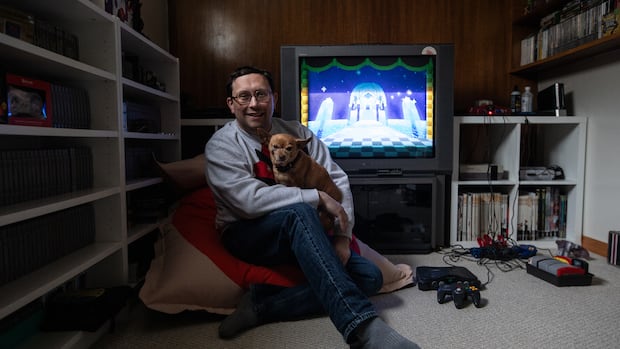
Ben Gelinas, a former BioWare employee and author of BioWare: Stories and Secrets from 25 Years of Game Development, told CBC Radio’s Edmonton AM Thursday that he believes Edmonton would be different had the company not taken root in the city.
LISTEN | Interview with Ben Gelinas:
Edmonton AM10:06End of an era: Video game developer BioWare is shutting down its Edmonton studio
After more than three decades in business, Edmonton-based video game developer BioWare is shutting down. The closure is part of a series of layoffs at Electronic Arts, BioWare’s parent company. Ben Gelinas is a senior writer in video game development from Edmonton. He’s also a former BioWare employee, and author of the book BioWare: Stories and Secrets from 25 Years of Game Development.
This interview has been edited for length and clarity.
What was your reaction when you heard the news?
Honestly, shock.
BioWare has always been there in the game industry, especially in Edmonton. It’s sort of central to everything that we do here and it ebbs and flows with development and successes and failures.
I never thought BioWare would ever truly shut down like this. It just seemed like a forever place here in the city.
How significant do you think this is for Edmonton’s larger tech community?
BioWare’s legacy here in the city is immeasurable. It was video games here for decades.
It started out small — it was sort of an indie before indies — but as its success grew, it basically brought an entire generation of developers to the city.
In recent years, we’ve kind of seen it fracture as things have shifted, and a lot of developers are now working on their own things in the city. But you can trace almost all of them to BioWare in some form.
What do you think led to the shutdown?
I did not think it would shut down. We’ve been seeing some cuts in the past, there were lots of layoffs. I watched a lot of people who were there for even 20 to 30 years, close to the beginning, start to lose their jobs.
But I think the industry is changing. Gone are the days where it’s only about these massive, multi-million dollar blockbuster games. Those are still the temples of the industry, but as we’ve switched to more online indie development, it’s harder to find success throwing hundreds of millions of dollars at a video game project.
So, as the model changes, I think these larger companies are finding ways to evolve. Unfortunately, that evolution means a lot of really talented people lose their jobs — and a legacy, in this case, is cut short.
A lot of us are now working at other studios in the industry, in the city, and we wouldn’t have our careers if not for BioWare.
Do you think that was part of its eventual downfall, this move away from larger studios?
These larger companies are buying more and more of these studios once they find success, and we see them often, unfortunately, eventually get shut down under the umbrella of these larger companies.
So, it’s sort of a business thing that is super unfortunate, because we’re just trying to tell interesting stories and make games that don’t exist yet, and it’s harder to do that on a larger scale.
What do you think really made the games that were coming out of BioWare unique?
Mass Effect 2 is one of the reasons I wanted to get into games in the first place.
I kind of think about video games as a very young medium in terms of its potential for storytelling, and BioWare was central, especially in its early days.
When BioWare blew up, it was really bringing into the mainstream the potential for games to tell deep, complicated stories about interesting characters and interesting settings.
It really kind of blew my mind that you could tell a story with a game, that you could not tell any other way.
Because of BioWare, and early role-playing-game (RPG) makers like it, the medium completely changed, and raised a generation of people who play games for story and would start to see themselves in the games they were playing.
Mass Effect 2 is the one I point to, just because the level of character depth in that game is something that continues to inspire me as I continue to work on game narrative.
What was it like for you to work at BioWare?
It was surreal.
The team was largely people who were there for life. In most game studios, people move around a lot. But there, it was like a close-knit family.
Everybody who worked at BioWare has this kind of fraternity and kinship, because of the wild times we had there. We all came from different places, we started at different times, but we all bonded over these strange, giant story games that we were making there.
How do you want Edmontonians to remember the company?
BioWare is the most Edmonton thing I can think of.
It’s wild that a company this large, and often undersung, could blossom out of a place like this. But I don’t think it could have happened anywhere else, because we’re such a city of people who hunker down and make weird stuff.
I think what’s important is that, even though the studio is now closing, it birthed so many new opportunities and ideas and projects in the city. Blind Enthusiasm, the brewery, would not exist if not for BioWare.
It’s sort of spread everywhere in the city and it’s a part of the city’s DNA.