
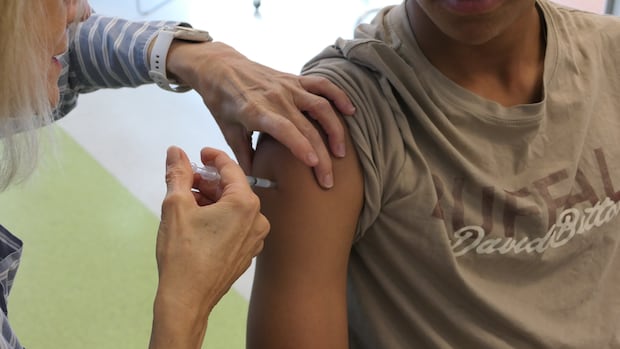

Listen to this article
Estimated 3 minutes
The audio version of this article is generated by AI-based technology. Mispronunciations can occur. We are working with our partners to continually review and improve the results.
As leaves fall this autumn, Winnipeg’s health authority is warning that Manitoba will soon see another annual rise in respiratory virus infections like influenza and COVID-19.
“Respiratory season is upon us,” said Dr. Kayan Xu, a medical officer of health with the Winnipeg Regional Health Authority, during a news conference Friday.
The health authority is encouraging all eligible people to get vaccinated against influenza, which is commonly called the flu, as well as COVID-19 and respiratory syncytial virus (RSV) to reduce their chances of getting sick.
“Immunization is really important to protect us and our loved ones from severe illness caused by respiratory viruses, and it helps keep our entire community healthy,” Xu said.
“That means less time away from meaningful and important life events.”
All Manitobans can get flu and COVID-19 vaccines for free, the health authority said in a news release. Everyone six months and older is encouraged to get them.
People 80 years old or older are eligible for one lifetime dose of the RSV vaccine, the health authority said. People between the ages of 60 and 79 who live in some congregate settings, and infants experiencing their first RSV season, are also eligible for a dose.
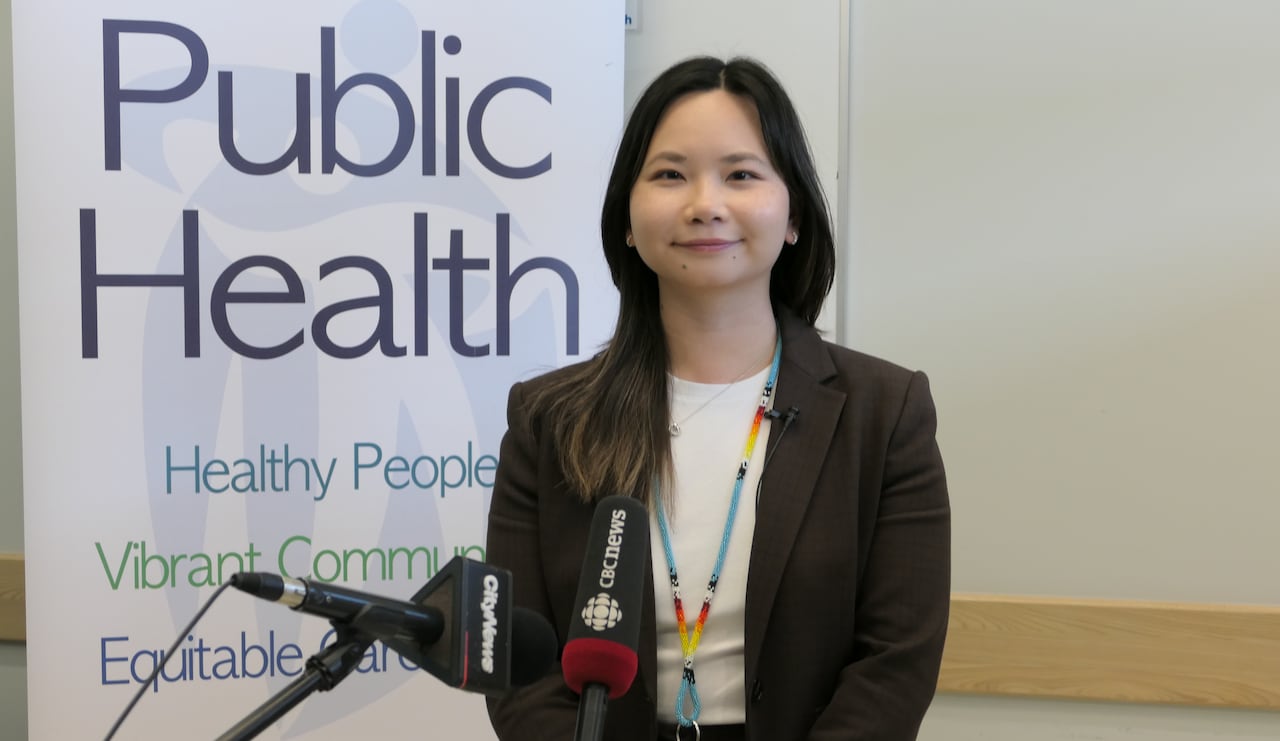
Dr. Kayan Xu, a medical officer of health with the WRHA, says respiratory season is here and that people should stay home if they’re sick. (Jeff Stapleton/CBC)
Anyone who has already been immunized against RSV does not need additional doses, the health authority said.
People can get vaccinated at immunization clinics hosted at Access Centres across the city. Vaccines are also available at pharmacies, doctors’ offices and walk-in clinics.
Respiratory viruses can spread through tiny droplets that form when an infected person coughs, sneezes or talks, the health authority said. They can also spread when a person touches a surface contaminated with droplets and then touches their eyes, nose or mouth.
Some people might be asymptomatic or only develop mild symptoms, while people who are at higher risk — including those who are pregnant, or 65 and older — might experience severe symptoms, hospitalization or even death if they get sick.
The health authority is encouraging people to get vaccinated early in the season, before viruses circulate more widely. Xu said people should also wash their hands and stay home if they’re sick.
“Our job here is to get vaccinated so we protect ourselves and others as well, especially those at higher risk,” Xu said.