

Listen to this article
Estimated 5 minutes
The audio version of this article is generated by AI-based technology. Mispronunciations can occur. We are working with our partners to continually review and improve the results.
Mayor Andrew Knack says the Alberta government’s recently released regulation on infill provides more clarity on Edmonton’s path forward when it comes to zoning, but he needs more time to review it to better understand what it will mean for the city.
The province announced earlier this month it was forcing Edmonton to reverse some infill-related zoning rules within three months, and also now requires the city to develop a new approach to infill over 18 months.
At the time, the provincial government said it was intervening because the pace and scale of high-density development in Edmonton has been too fast, but it did not provide the city with written instructions until Thursday afternoon.
The province’s City Land Use Bylaw Direction Regulation says that within three months, Edmonton must go back to following older rules for density, height and parking requirements for the small-scale residential zone (also known as the RS zone).
The regulation also says the finalized bylaw must comply with the province’s policy statement on infill. That policy statement says infill should generally be compatible with the established character of the neighbourhood and that enough parking should be provided on-site to minimize impacts on neighbouring properties and traffic flow.
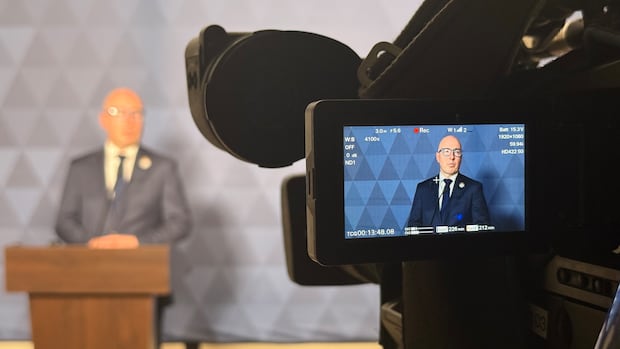
At a news conference on Friday, Knack told reporters the regulation provides “a little bit more clarity on very specific pieces” but he needs more time to review it.
He said he’s planning to speak with Premier Danielle Smith soon, and city council will discuss the regulation at a meeting next week.
Housing experts weigh in
Sandeep Agrawal, a professor at the University of Alberta’s School of Urban and Regional Planning, said given how much of the city is part of the RS zone, the province’s regulation will have “tremendous implications” on where new housing can be built in the city.
“It will certainly change the shape and the nature of the city in the coming years,” he said in an interview with CBC News.
Agrawal said the RS zone was a core principle of Edmonton’s revamped zoning bylaw because it allowed more housing density and different housing types to be distributed throughout the city.
Changing it will also affect other zones in the bylaw, he said.
WATCH | Alberta government’s infill mandate lays out what needs to change:
Alberta government’s infill mandate lays out what Edmonton needs to change
The City of Edmonton has two-and-a-half months to change its infill policies to comply with a provincial government mandate, which is now in writing. CBC’s Tristan Mottershead has the latest on the controversial process.
Agrawal said he believes requiring on-site parking will lead to smaller infill footprints and could mean row houses or other multiplex developments could no longer be feasible on some single-family lots.
Carolyn Whitzman, a senior housing researcher at the University of Toronto’s School of Cities, said Edmonton’s 2024 zoning changes made the city a model for other communities across North America.
She said she believes undoing the changes goes against what local voters wanted and will ultimately affect housing prices.
Whitzman said young families are moving out of Toronto in droves because they can’t find suitable housing they can afford.
“They moved to Edmonton and now the clock has turned back in Edmonton — I don’t know where they can go next,” she said.
Dave Onishenko, principal at Clarity Development Advisory, a consulting firm that works with developers, described the situation going forward as a “repositioning.”
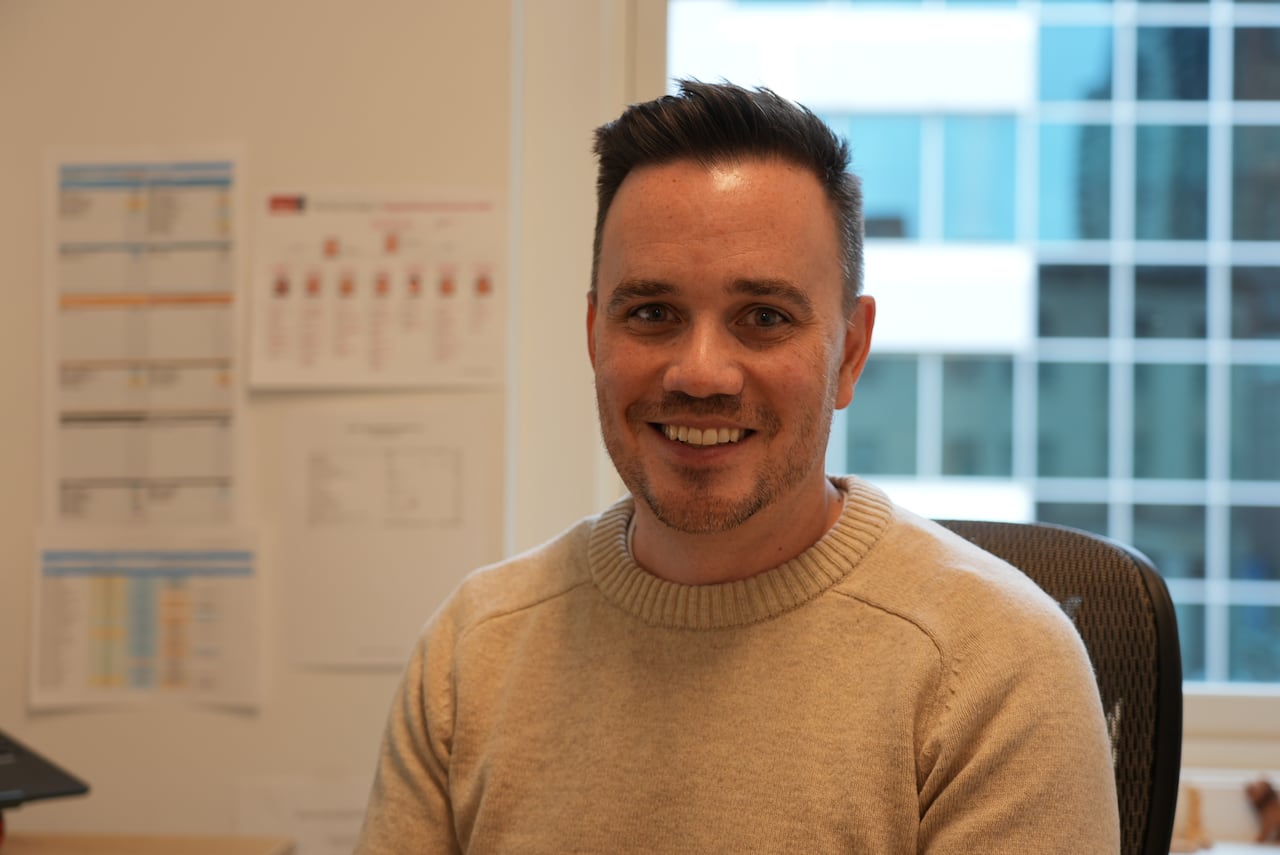
Consultant Dave Onishenko says the development community is adaptable and he hopes everyone can come together to find solutions on infill. (Tristan Mottershead/CBC)
Even under the old zoning rules, Onishenko said, infill was becoming more common and growing in popularity in Edmonton.
“This isn’t a complete erosion or removal of infill,” he said.
Onishenko said anyone who purchased land with the intention of developing infill will now have to go back to the drawing board. But he also said he thinks the development community will be adaptable and he hopes everyone can come together to find solutions.
“You’re never going to make everyone happy, but it at least is working towards something where we’re collectively coming together, providing our input towards whatever that next solution is,” Onishenko said.
Lydia Kawun, a retired urban planner in Edmonton who is involved with multiple infill-related community groups like the Residential Infill Working Group, told CBC News she likes that the province’s regulation focuses on the end results, leaving the city to determine what happens procedurally.
“It is all about the outcomes and comparability, not necessarily tearing apart the new bylaw or going back to the old one, but focusing on where the problems really are and changing those pieces,” she said.
Kawun said, based on her conversations with residents, only a very small number of Edmontonians are opposed to any growth in their neighbourhoods and that most want a return to “gentle densification.”