

Listen to this article
Estimated 3 minutes
The audio version of this article is generated by AI-based technology. Mispronunciations can occur. We are working with our partners to continually review and improve the results.
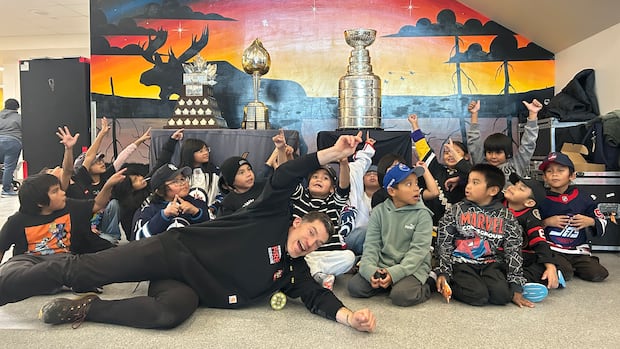
The Stanley Cup was nearly as far as it could be from its home in Toronto’s Hockey Hall of Fame while still remaining in Ontario. Hockey’s highest prize landed in Pikangikum First Nation this week, a remote Ojibway community about 230 kilometres north of Kenora.
The two-day visit began Wednesday and caused a buzz among the hockey-mad community of over 3,000 people.
“I’m so excited… it’s been something that we’ve been planning, a lot of co-ordination, a lot of planning. A lot of people had to come together to make this happen,” said Amanda Sainnawap, the assistant director of education for the Pikangikum Education Authority.
The goal in bringing the trophy to Pikangikum was “to uplift the spirits of youth and to celebrate the community,” according to an NHL news release.
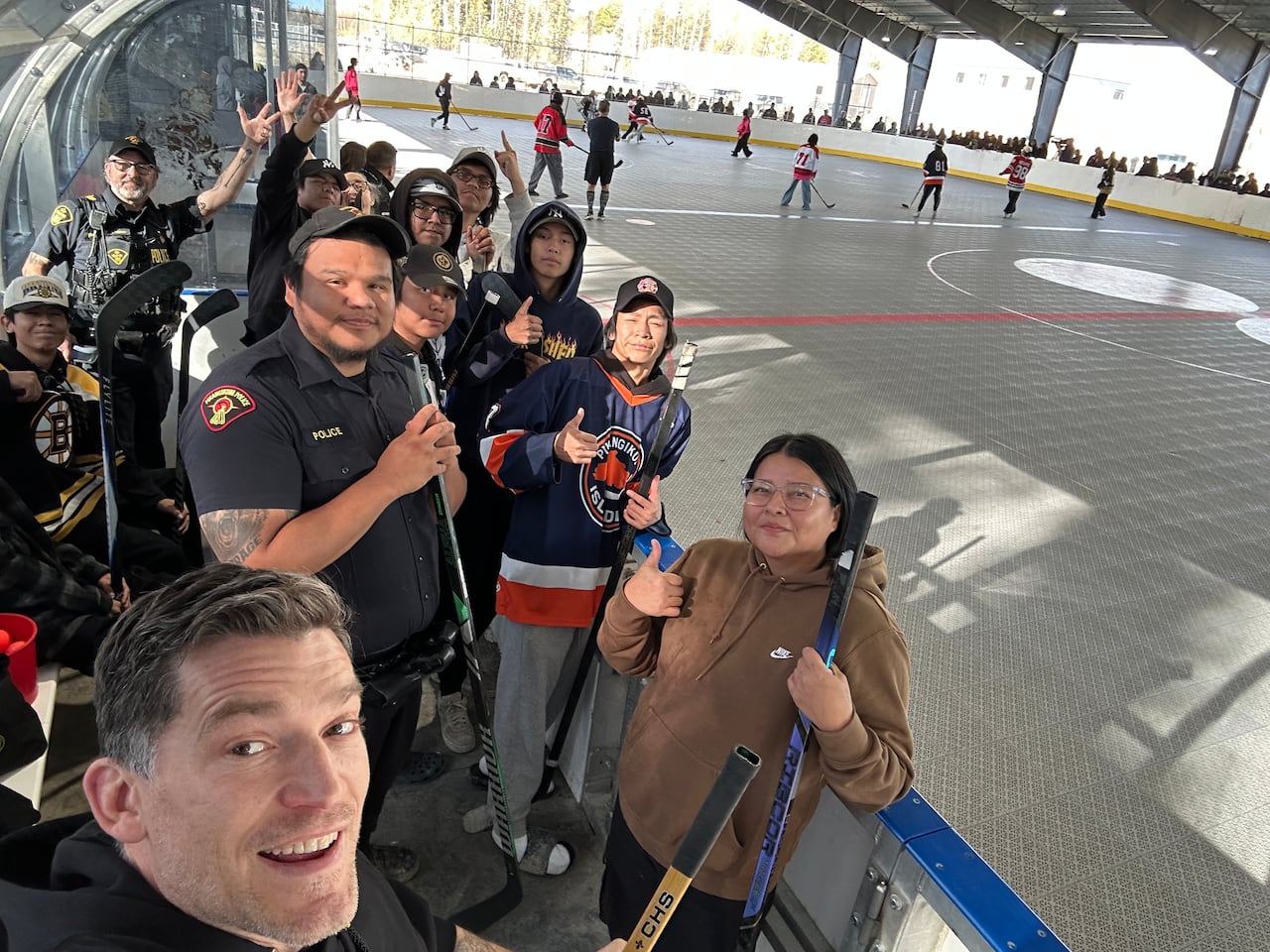
Andrew Ference hangs out with youth in Pikangikum during Stanley Cup visit in the remote community. (NHL-Andrew Ference)
The cup has previously visited other First Nations communities across Canada. In March 2026, the cup arrived on a dog sled to Kwanlin Dün First Nation in the Yukon for the 46th annual Yukon Native Hockey Tournament.
In 2023, NHL champion Zach Whitecloud brought the trophy home to Sioux Valley Dakota Nation in Manitoba. And in 2017, the trophy arrived in Sandy Lake First Nation in northwest Ontario, alongside 16 crates of donated hockey equipment.
Given these previous visits, Sainnawap knew bringing the cup to her isolated fly-in community would be difficult but possible.
“It takes so many people working together to bring something to our community,” she said of the work involved in organizing the visit.
Motivating the organizers was the thought of how the community’s youth would respond, she said.
“They deserve to experience exciting things, to feel included, and to have opportunities that inspire them,” she said. “Being able to bring something this special into our community and see the excitement it creates for our students and our kids, it makes all the work worthwhile.”
Youth suicide has been an issue for Pikangikum in recent years, alongside a state of emergency over an ongoing water crisis, recent wildfires and power outages.
Those difficulties were in mind when the NHL organized the visit, according to Andrew Ference, the league’s director for social impact and player programs.
“Just to address some of the hardships that they’ve had… you could see the pride that they have, as well as they really believe in these kids and believe in the community and the resilience of it,” said Ference, who played 16 seasons in the NHL and won a Stanley Cup with the Boston Bruins in 2011.
Events like this help the community ensure their youth feel seen and valued, Ference said, describing the visit as “a real core memory” for many children in Pikangikum.
After Pikangikum’s elders got the first chance to see the cup, about 1,500 students were next in line, followed by most of the rest of the community, Sainnawap said.
Following the visit, the Stanley Cup travelled to Winnipeg for the 2026 Tim Hortons NHL Heritage Classic outdoor game on Sunday.