

Listen to this article
Estimated 3 minutes
The audio version of this article is generated by AI-based technology. Mispronunciations can occur. We are working with our partners to continually review and improve the results.
“In 1910, three bankers travelled north with $50,000 in currency and a race against time: establish the first bank in the growing settlement of Fort George before their competitors could get there.”
So begins the blurb for The Pioneer Bankers: Three Scots, $50,000 & The Race to Prince George, a new book from author Vivien Lougheed published by Hancock House, an imprint focused on stories of the Pacific Northwest.
The wild journey north was driven by news that the Grand Trunk Pacific Railway was expanding to the area, sparking rival townsites and a rush for land, with hundreds of incoming residents needing loans.
“They had to be the first,” Lougheed said of the bankers in her story. “Prince George had no banks … and the first ones in the community would get all the business.”
The race against rivals was also a battle against the elements.
Lougheed’s book is full of photos showing the bankers trudging through early-April snow, canoeing through ice-covered water, and taking horses up steep, muddy embankments while protecting a sack of money that would be valued at more than $1 million in today’s funds.
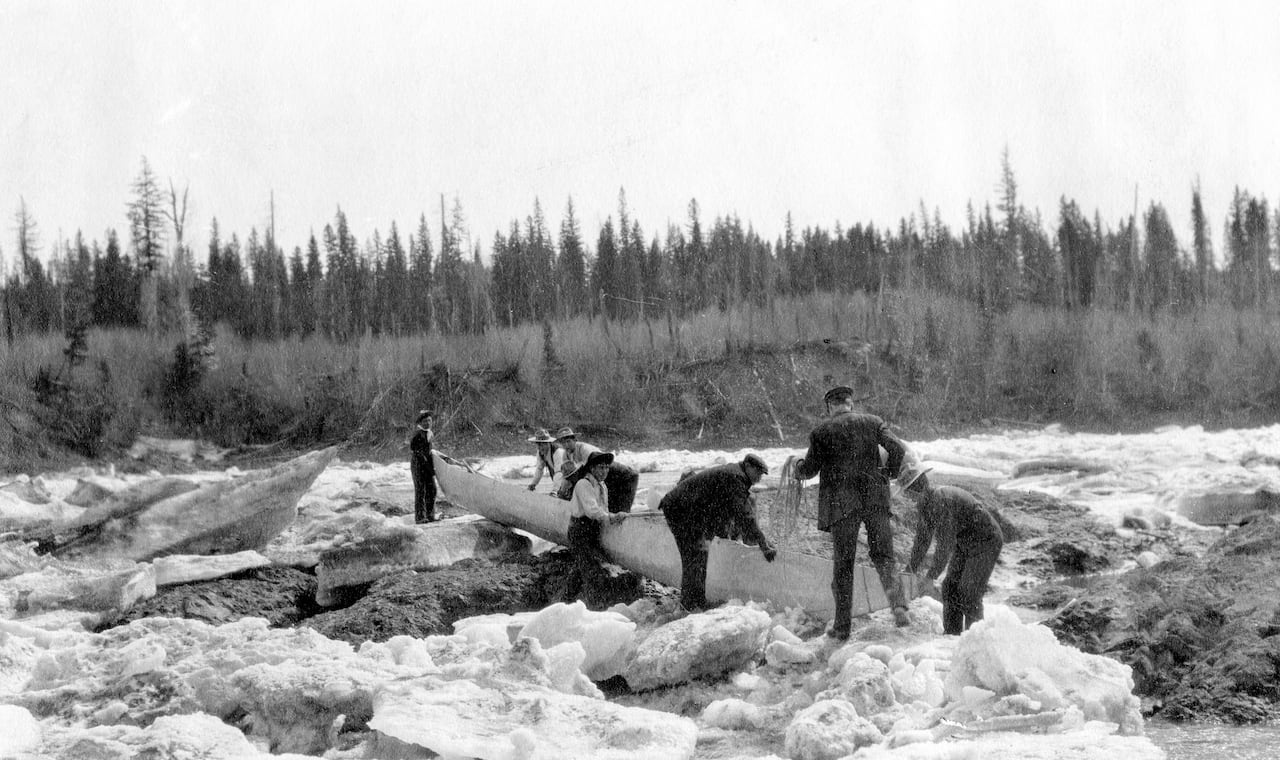
Ice blocked the water for the final leg of the journey, forcing the bankers to travel north on foot. (Jock Munro, submitted by Hancock House Publishing, courtesy of the Red Duncan Collection)
When ice blocked the river, preventing them from taking a sternwheeler, they were forced to trek on foot for days.
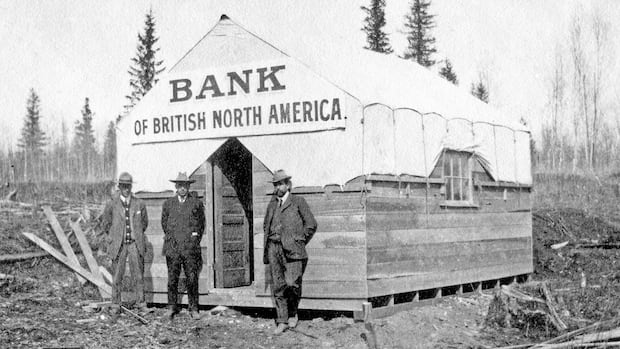
Ultimately, the trio beat their competitors by just 23 hours, throwing up a shack and a tarp that served as the community’s first bank branch.
The winning crew consisted of Bank of British North America chief inspector James Anderson, bank manager Lorne G. MacHaffie, and 24-year-old clerk John (Jock) Munro, whom Lougheed describes as a “fresh young boy out of Scotland” ill-prepared for the Canadian wilderness.
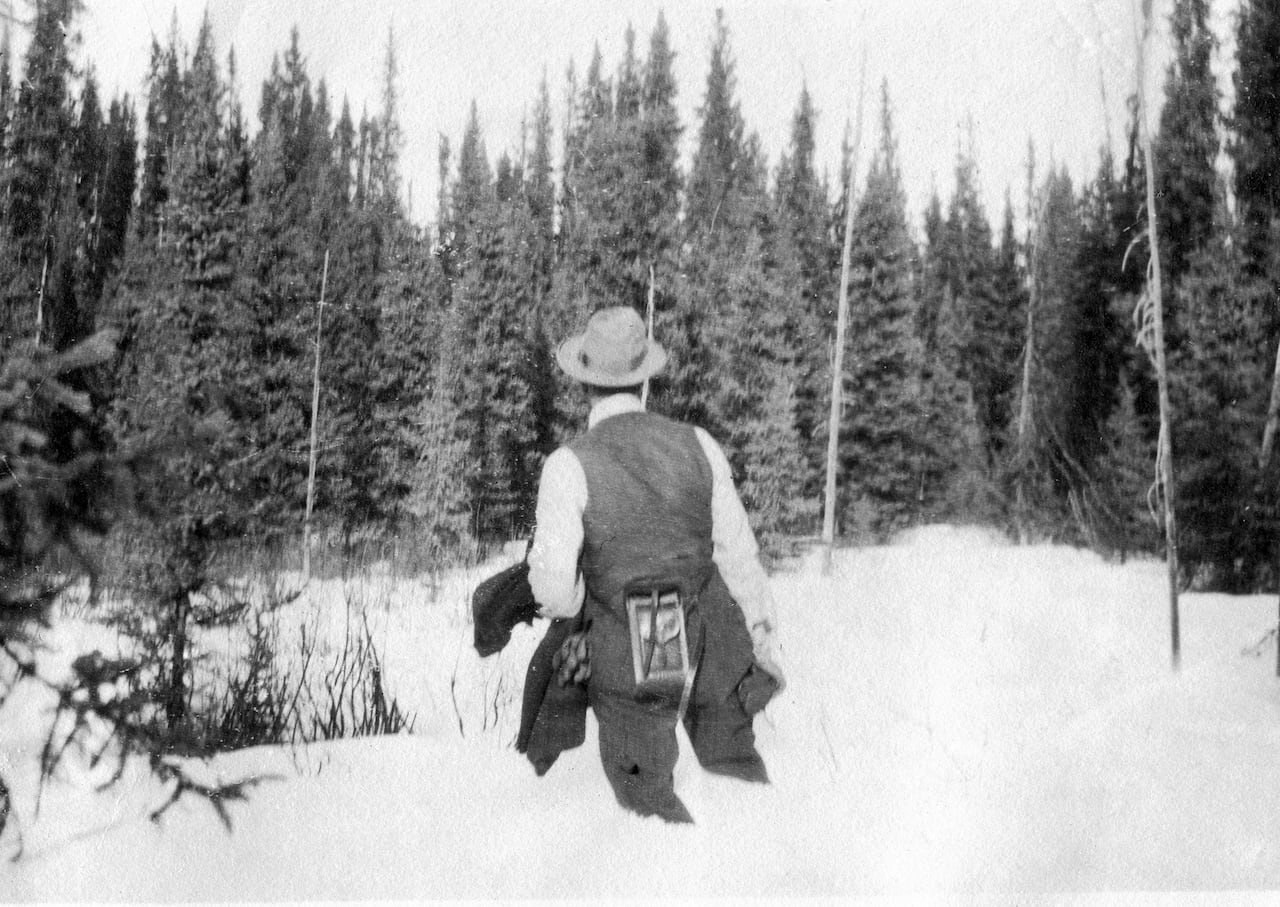
Lougheed says the trio were soaked day and night from moving through melting snow. (Jock Munro, submitted by Hancock House Publishing, courtesy of the Red Duncan Collection)
Lougheed discovered the story through Munro’s step-grandson Rod Duncan, who gave her access to the family’s personal archives.
“I got to talking to him and he said that their family always wanted the story told,” she told CBC Daybreak North host Carolina De Ryk. “He had all these photos … and pretty soon we didn’t just have a story, we had a book.”
The legacy of those bankers still resonates today. The City of Prince George was formally established in 1915 after the Lheidli T’enneh First Nation was displaced through a system that failed to recognize their stewardship of the land for centuries.
The Bank of British North America merged with the Bank of Montreal in 1918. The city grew rapidly over the ensuing decades, with thousands of new residents arriving in the immediate aftermath of that race north.
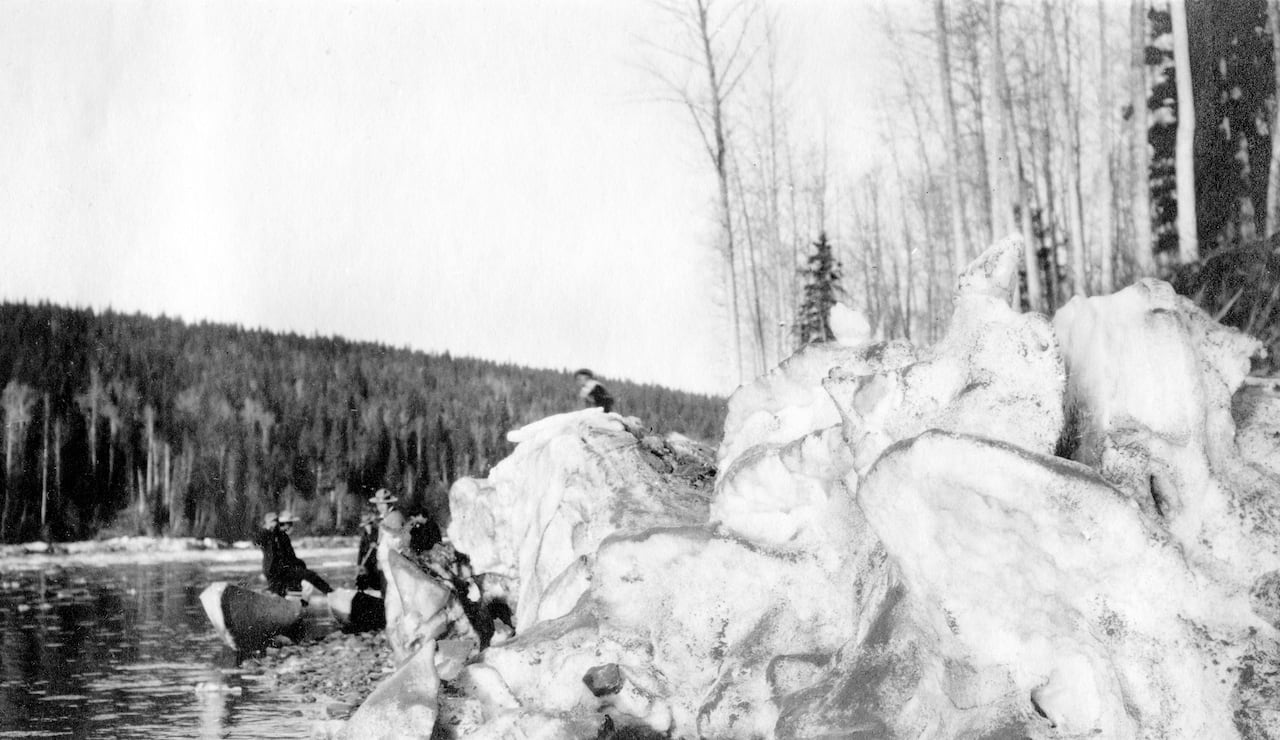
Aside from a canoe, the trio also travelled by horseback, carriage, wagon and foot, Lougheed says. (Jock Munro, submitted by Hancock House Publishing, courtesy of the Red Duncan Collection)
As for the bankers, Lougheed said Anderson “got on the first boat going out,” while MacHaffie stayed on as manager before being transferred to Edmonton.
Munro stayed and died in Prince George, raising a family whose name is still well-known in the city, even if the circumstances of how he came to be here weren’t previously well-documented.
“I was amazed,” Lougheed said of what she learned. “I was fascinated with these three men.”
LISTEN | An interview with Lougheed:
Daybreak North10:40Three Scots, $50,000, and a race to Prince George
Author Vivien Lougheed releases The Pioneer Bankers.