


Listen to this article
Estimated 4 minutes
The audio version of this article is generated by AI-based technology. Mispronunciations can occur. We are working with our partners to continually review and improve the results.
A judge has ruled that owners of Ottawa’s taxi licence plates will not have to individually argue how much each of them should receive for the city’s negligence in enforcing its taxi bylaws when ride-hailing companies like Uber illegally established themselves in the capital between 2014 and 2016.
Ontario Superior Court Justice Marc Smith issued the ruling Monday in the class-action lawsuit launched by lead plantiffs Metro Taxi Ltd. and plate owners Marc André Way and Iskhak Mail against the City of Ottawa on behalf of taxi plate holders across the city.
“There are 768 members who collectively hold the licences for the 1,188 taxi plates issued by the City. However, the assessment of individual damages does not need to consist of 768 individual trials,” Smith’s ruling in favour of the plate holders reads.
If the city had its way, each of the 768 members would have to “reconstruct business records dating back to 2012, complete detailed questionnaires, and participate in individualized assessments” at significant cost and effort, which might not be possible given the passage of time, among other issues.
“Taking these considerations into account, I conclude that the denial of aggregate damages would result in a denial of access to justice,” the judge wrote.
Appeals before damages
Now that the liability phase of the trial is complete, it’s on to damages. The taxi drivers claimed $215 million in damages in their original statement of claim.
But the damages phase won’t proceed for some time, if it can happen at all. Both sides have 30 days to appeal any of the decisions made in the case so far, and the appeals would have to be heard and ruled on before the damages phase could commence.
City solicitor Stuart Huxley informed the mayor and council Monday that he’s instructed outside counsel to file notices of appeal on the 2024 finding that the city was negligent in enforcing its bylaws from 2014 to 2016, as well as Monday’s decision on aggregate damages.
The damages phase can only happen if Ontario’s top court upholds the negligence finding against the city.
Conway Litigation, the firm handling the case for the plaintiffs, did not immediately respond to a question Monday afternoon about whether it intends to file an appeal. (The judge earlier found that the city did not infringe on the Charter and Human Rights Code rights of plate holders, and that the fees collected under city’s 2012 taxi bylaw did not amount to an unlawful tax.)
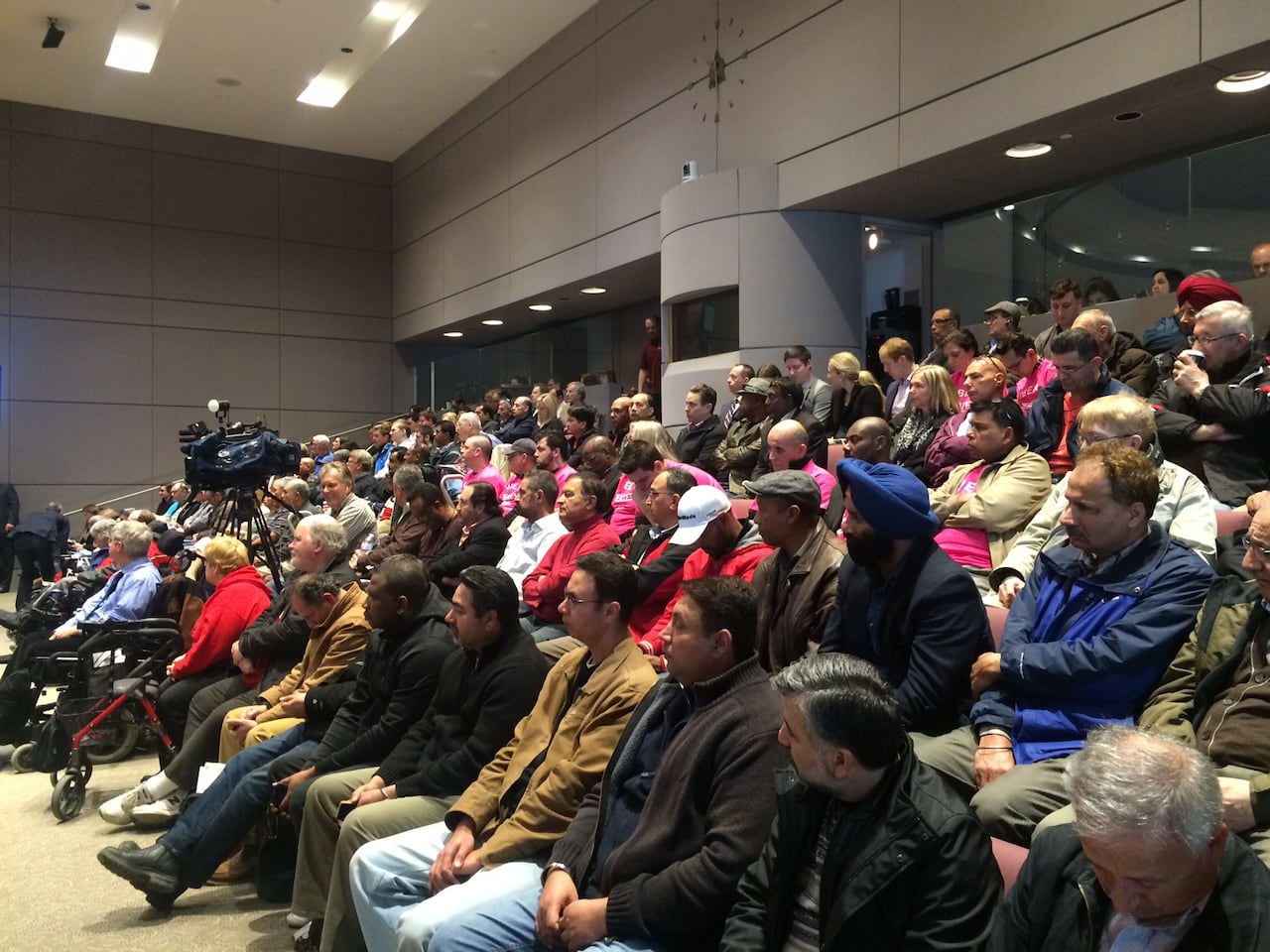
Spectators pack the council chamber at Ottawa city hall on April 13, 2016, as councillors reviewed a proposal to change taxi regulations and legalize ride-hailing services such as Uber. (Chloé Fedio/CBC)
Bylaw allowed ride-hailing as of 2016
Uber began operating in Ottawa in 2014, causing an uproar among taxi drivers. They argued that the company was operating outside the taxi bylaw framework and disrupting their business, making it difficult for them to make a living. The taxi industry in Ottawa is heavily regulated, and taxi drivers are required to pay fees to operate.
It wasn’t until 2016 that city council approved a bylaw allowing private transportation companies like Uber to operate legally. The plaintiffs successfully argued that the city had allowed Uber to operate illegally for two years before the bylaw was passed.
The city contended that regulations for taxis were created to safeguard the public and not to protect the interests of the taxi industry. It also argued it was incapable of preventing Uber’s entry into the market and therefore not responsible for any financial losses suffered by taxi companies and plate owners.
“The city adopted a defeatist and acceptance approach to Uber’s entry into the Ottawa market,” Smith concluded in his 95-page decision back in 2024.
“A multinational giant was invading Ottawa, and because of the city’s unpreparedness and its lack of efforts to develop a plan to enforce the 2012 by-law, the city’s enforcement efforts against Uber drivers were ineffective.”