
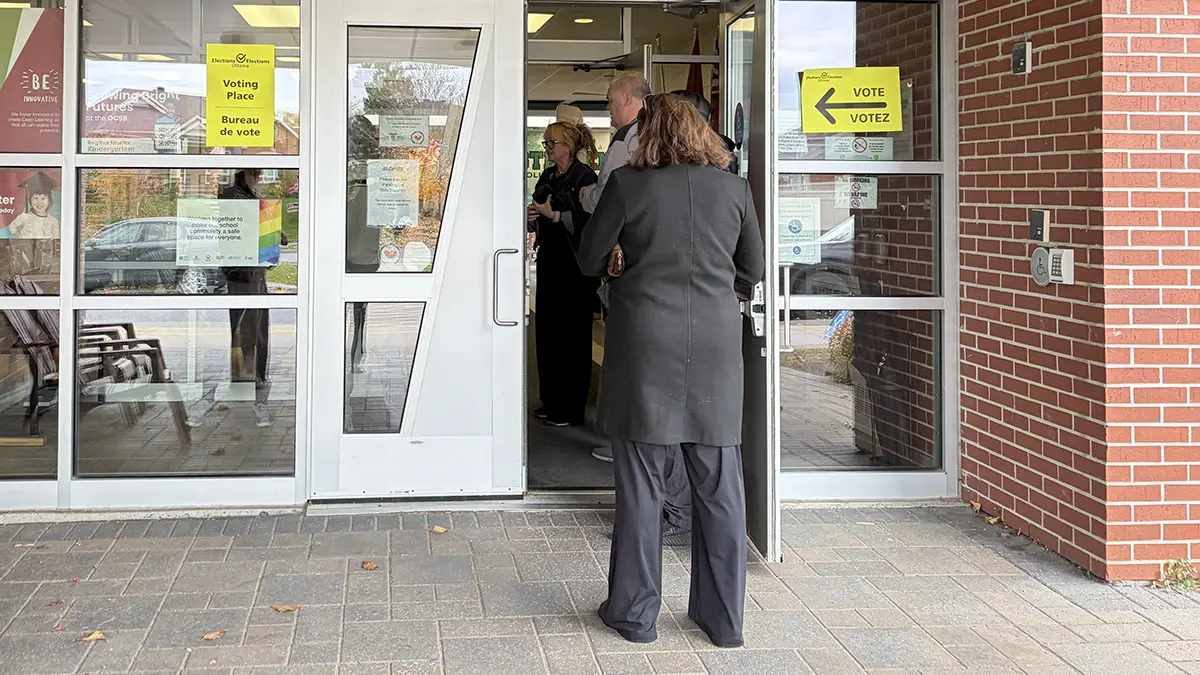
Polls showed Mark Sutcliffe leading the pack in his bid for a second term leading Ottawa’s city council, but a late surge by outgoing Kitchissippi councillor Jeff Leiper suggested the results could be close.
There are 14 candidates in the mix, though most attention has been on Sutcliffe, Leiper, economist Neil Saravanamuttoo, and framing-business owner Alex Lawson.
Sutcliffe has pledged to keep property tax increases to no more than 2.5 per cent in the first two budgets of a new term and points to $252 million in savings at city hall over the past four years. He pledges another $250 million by maintaining hiring freezes and expanding a review of programs. Sutcliffe said he would also cut the adult monthly pass from $138.50 to $95 for the full term, at an estimated cost of $8–17 million. And he has a $10-billion, 10-year plan to close the infrastructure gap, most of which is already in existing plans. It includes road widenings in Orléans, Kanata and Riverside South and four new recreation complexes.
Leiper’s campaign has focused on transit and housing. The three-time councillor says he would reverse OC Transpo bus route cuts and expand dedicated bus lanes. He says he would pay for this by reprioritizing money within the existing OC Transpo budget. Leiper has also proposed adding a one per cent infrastructure levy to property tax bills, which he says would cost the average homeowner roughly $28 a year and raise about $25.5 million annually. He has also committed to building 1,500 non-profit homes a year, or 6,000 over four years in part by dedicating city-owned land and fast-tracking approvals for non-profit builders.
Saravanamuttoo has committed to “buck-a-ride” transit across the city, part of a four-point transit plan. He has also pledged to create a public option on housing, doubling the share of non-market housing by building roughly 25,000 to 35,000 units. He says construction costs would eventually be covered by rent, but but acknowledges the city would need to guarantee loans worth billions. Saravanamuttoo hasn’t committed to specifics on property taxes, saying it depends on the cost of fixing aging infrastructure and the savings he can find.
Alex Lawson is pledging a property tax ceiling for all four years, which includes a freeze in 2027, then increases of 1, 2 and 2 per cent. He said he would also bring a motion to eliminate the vacant unit tax at the first council meeting of the new term. He has also pledging to turn off on-street parking meters and make curbside parking free across the city. He said he also wants to start building a southern ring road built to divert traffic from Highway 417 and take trucks out of rural villages, though this would depend upon federal and/or provincial funding.
CTV reported that voters are mostly concerned with transit, followed by roads and sidewalks. A survey by the Ottawa Lookout also found that transit as the most pressing issue, followed by infrastructure, health care and homelessness.
If early voting is any indication there is more interest in this election than last time out.
A total of 86,592 voters cast early ballots ahead of Ottawa’s election day on Oct. 26.
This year’s early-voter turnout marked an 8.9 per cent increase compared to the 2022 municipal election, when 79,491 voters cast early ballots across the four special advance voting days and the two advance voting days.