
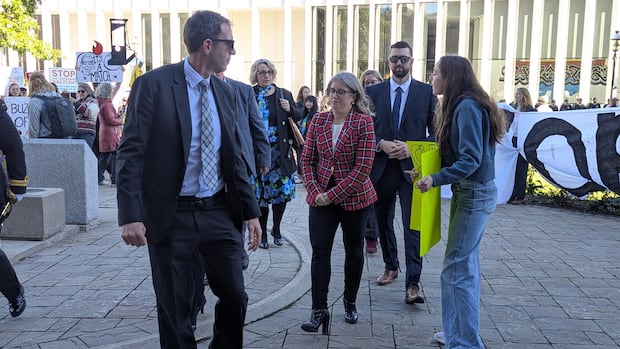
A couple hundred protesters brandished signs and chanted “shame” as Premier Susan Holt walked toward the doors of the legislature to deliver her third throne speech.
One protester walked beside Holt holding a sign that read “Clean Air and Water Are Our Rights.”
The crowd gathered to voice opposition to an artificial intelligence data centre proposal in Saint John, a natural gas power plant in rural Tantramar and the government’s decision to review the moratorium on fracking.
“Don’t go there,” Judy McKie, one of the people there to protest the fracking review, said.
“We’re not going to react any different than we did back then.”
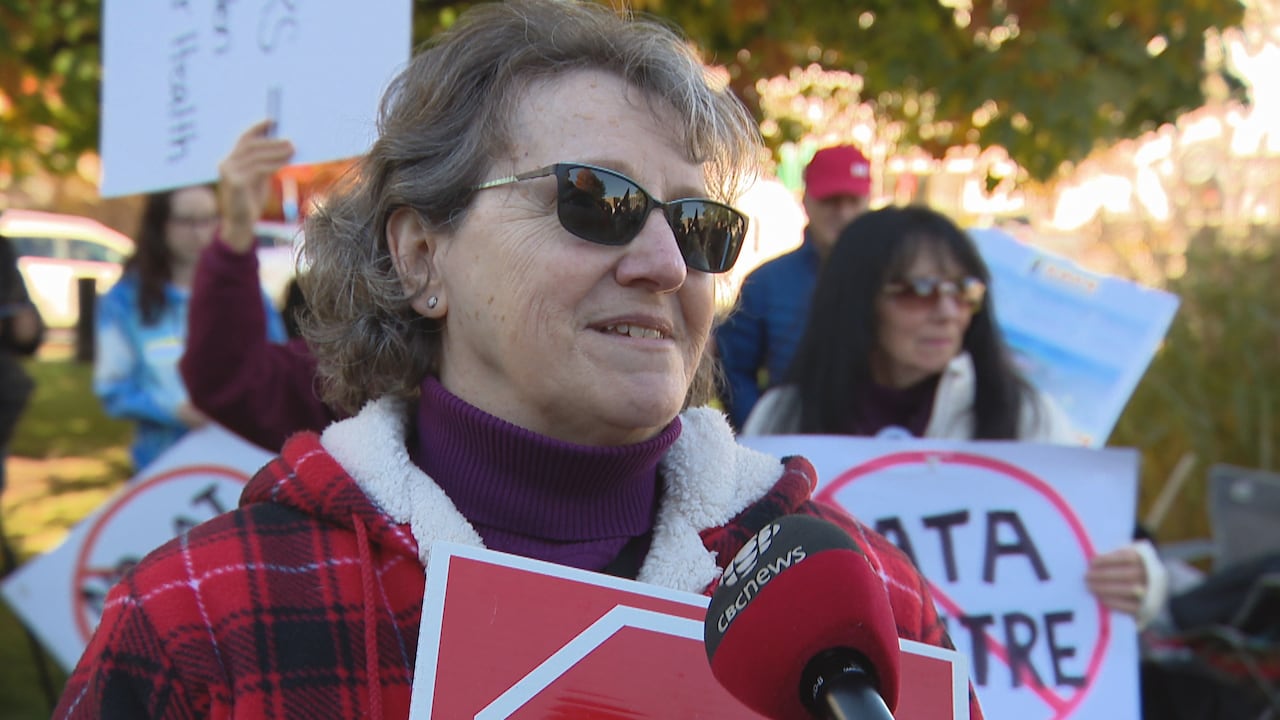
Judy McKie says she’s just as worried by the prospect of fracking today as she was 12 years ago when the moratorium was put in place. (Mike Heenan/CBC)
Just three years ago, Holt seemed to echo the opinion of those same protestors. During a speech in the legislature, she referred to shale gas as “yesterday’s energy solution.”
“New Brunswickers have made it clear, they made it clear that they do not want to take on the risk of hydraulic fracturing,” she said at the time.
So what changed?
If you ask the premier, it was the arrival of the second Donald Trump term and slowing provincial revenues.
WATCH | ‘Economic stability and independence’ behind fracking gamble, Holt says: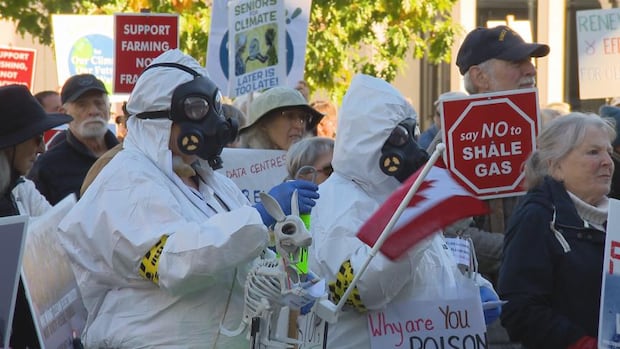
How 3 N.B. politicians have approached more than a decade of shale gas debates
The province is reviewing its fracking moratorium. What has changed politically and economically in the last 12 years?
In 2014, former premier David Alward staked his political career on the resource, structuring his campaign around what he called “the greatest opportunity that New Brunswick has had in generations.”
Alward lost that election and the fracking moratorium was introduced, setting out five conditions that must be fulfilled before it was lifted, including First Nations consultation, environmental protections and social licence.
But Holt is betting on a more amenable electorate this time around — pointing directly to trade tensions with the United States.
“We are looking at all the options that can bring economic stability and independence to our province,” Holt said in August.
Both the data centre project and the new natural gas power plant will require gas to run. The trade conflict with the U.S., where most of the current supply comes from, could make developing local sources more palatable, according to economist Richard Saillant.
Saillant says local supply could spur economic growth in other ways, too.
“That could lead to consumers benefiting from … a hopefully more cost competitive source of energy,” he said. “Then you have potential benefits that could come from developing what they call a cluster.
“So there’s obviously … downstream economic benefits that could come from exploiting shale gas”
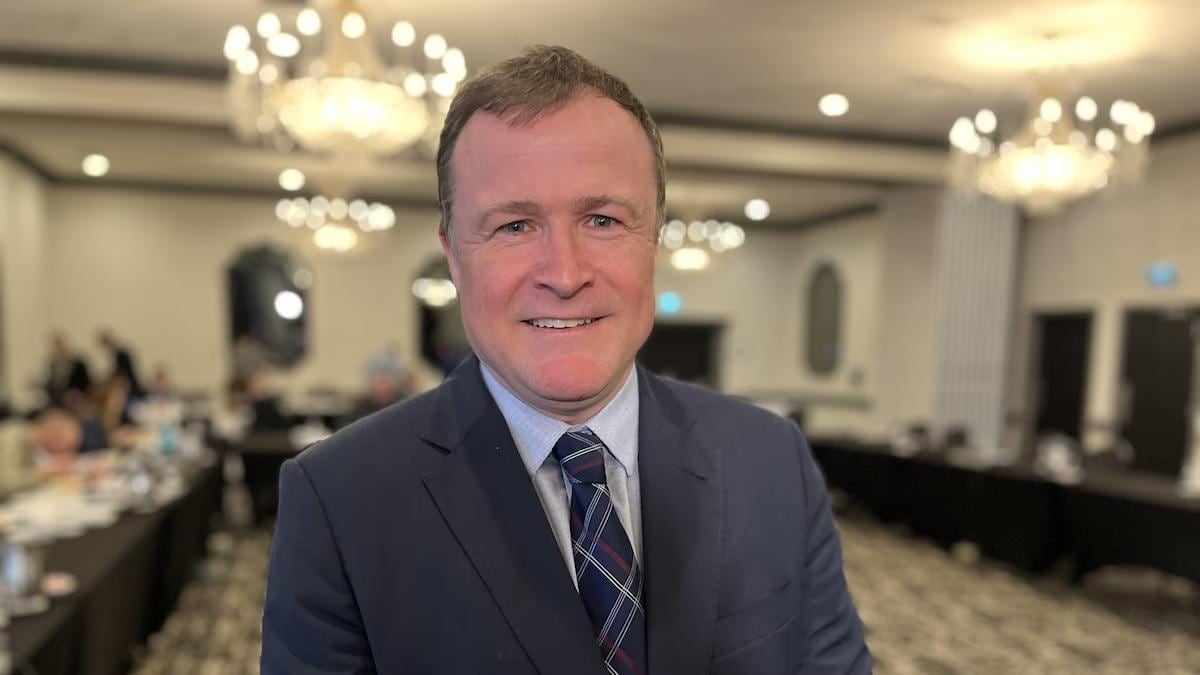
Economist Richard Saillant says that a local supply of shale gas would have spin-off benefits across New Brunswick’s economy. (Nicolas Steinbach/Radio-Canada)
Then, there’s the ever growing elephant in the room: the province’s deficit.
As of the most recent fiscal update, New Brunswick expects to spend nearly $1.7 billion more on services than it will collect in revenues from taxes and federal transfers.
“How do we manage a deficit in our health-care system to deliver the care New Brunswickers deserve and our fiscal deficit where today’s revenues do not cover tomorrow’s expenses,” Holt said when announcing the review.
According to one industry analyst, the economic case for New Brunswick shale gas is better than it was 12 years ago. Todd McDonald, the president of energy trading firm Energy Atlantica, says an increase in demand has driven up prices — a trend that’s expected to last into the near future
“Economically, it’s a very, very attractive play, probably the most attractive play in all of North America because the prices are very high,” McDonald said.
“You’re located in close proximity to Europe where prices are even higher and we’re in an area that needs more of it and needs more of it ASAP.”
As of the latest fiscal update, the province expects to lose nearly $1.7 billion this fiscal year. Saillant understands how the promise of untapped revenue would be attractive.
But he cautions against viewing the industry as an instant windfall that will erase the province’s structural deficit.
“To me, anything about the lure of big projects coming to our rescue is very irresponsible,” he said.
“It’s great to try to pursue growth, but it’s irresponsible from a fiscal management standpoint to count your chicken before your roost.”
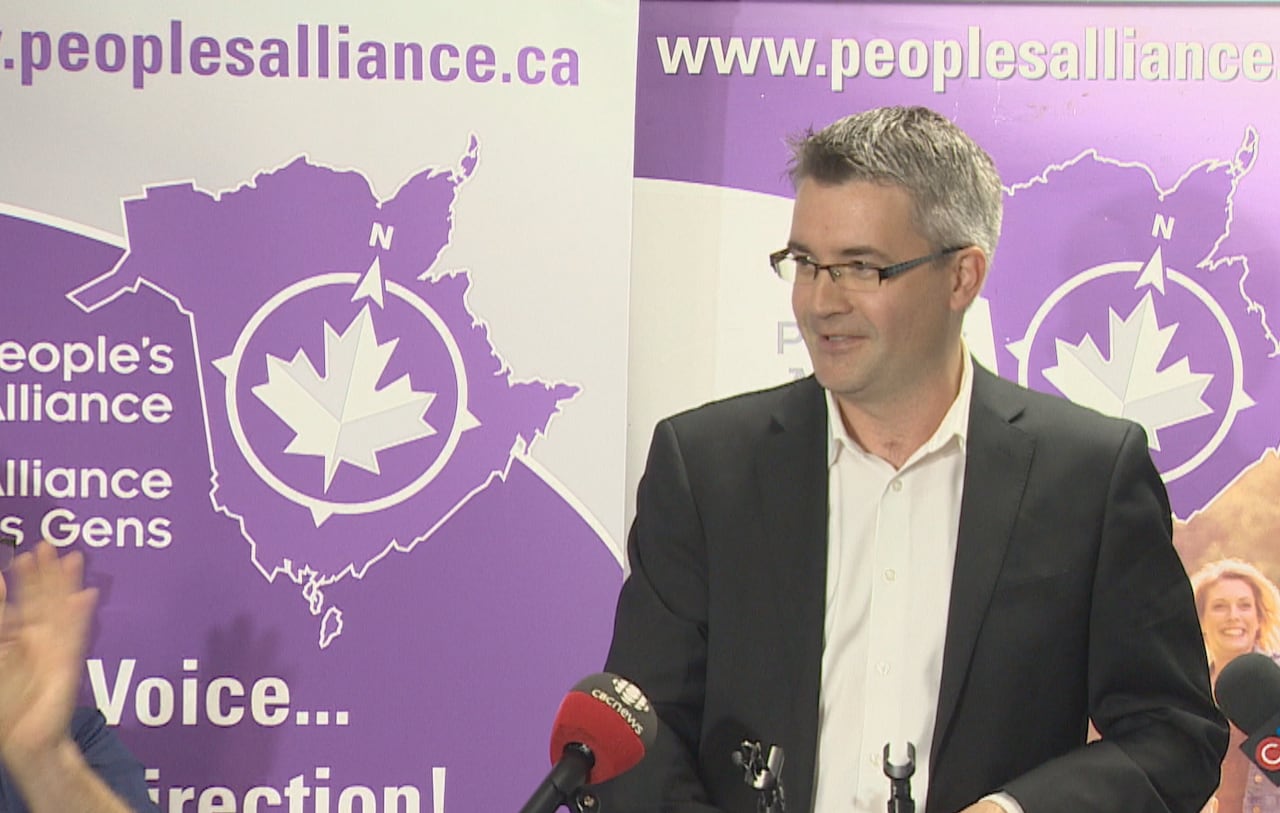
PC energy critic Kris Austin’s thinking on fracking has evolved since he was the leader of the People’s Alliance. He called for a referendum on the issue in 2014 and now supports lifting the moratorium. (CBC)
A 2014 report, written by economic consultant David Campbell, estimated that 150 to 200 gas wells would boost New Brunswick’s economic output between $1.4 billion and $1.8 billion and generate $258 million to $354 million in tax revenue, not including royalty fees.
Adjusted for inflation, those figures would be $348 million to $478 million today, according to Statistics Canada calculations.
The economic allure has caused other politicians to shift their thinking over the last dozen years.
Progressive Conservative energy critic and former People’s Alliance leader Kris Austin called for a referendum during the 2014 election.
“We are actually the only party that firmly believes that resources belong to you, it belongs to the people of this province,” Austin said during the 2014 CBC election debate.
In 2018, then an MLA and party leader with a caucus of three, Austin supported then-premier Blaine Higgs’ throne speech which included a line that fracking could happen in communities that supported it.
Now, Austin says his support for the resource has grown as he has learned more about industry and the potential benefits.
“Technology is always advancing, making it better for the environment in terms of the extraction of the product and ultimately it really boils down to, you know, if it can be done safely,” Austin said. “But equally important is what this could do for the economy.
“I think New Brunswickers are ready for this. I think we’ve let this opportunity slip by us for too long and we’ve got to move.”

Green Leader David Coon credits the fracking debate, in part, with helping propel him to his first electoral victory in 2014. (CBC)
Green Leader David Coon first won his seat in the 2014 election, which he partially credits to the upwelling of anger over efforts to explore the province’s shale gas deposits.
He says the only thing that’s changed since then is that we know more about the dangers posed by the industry and, more broadly, by climate change.
“I don’t know what more evidence needs to be there for the premier to say, no, we can’t continue to burn even more fossil fuels,” he said.
“We need to go in the other direction.”
However, Saillant says that any conversations about the economic potential of the resource remain speculative. Answers around environmental dangers and economic promise requires exploration.
The three member commission put together to study the issue said in its 2016 report that no one knows “definitively if shale gas and/or oil exist within these licenses or if it can be extracted commercially.”
But industry analyst McDonald said that current commodity prices make it much more likely that even somewhat difficult deposits could be economically viable, provided Holt, and the province, “can do the cheerleading” to pull together proponents, First Nations and local communities.
“The reality is that the prices are so high and the demand for the gas is so high that the economic viability, I would say, is highly probable,” he said.
This story is part of the series Shale Gas Development Revisited: What’s Changed. CBC New Brunswick is taking a closer look at what has changed since the provincial government put a moratorium in place on shale gas exploration in New Brunswick in 2014. The provincial government is now reviewing the moratorium until January 2027, when it will decide whether to lift it. If you have a story or tip to share on this topic, please write: nbshalegas@cbc.ca.