
Senior officials from across the civil service will help Capita to steer a new recovery plan for the Civil Service Pension Scheme as the crisis nears the 11-month mark.
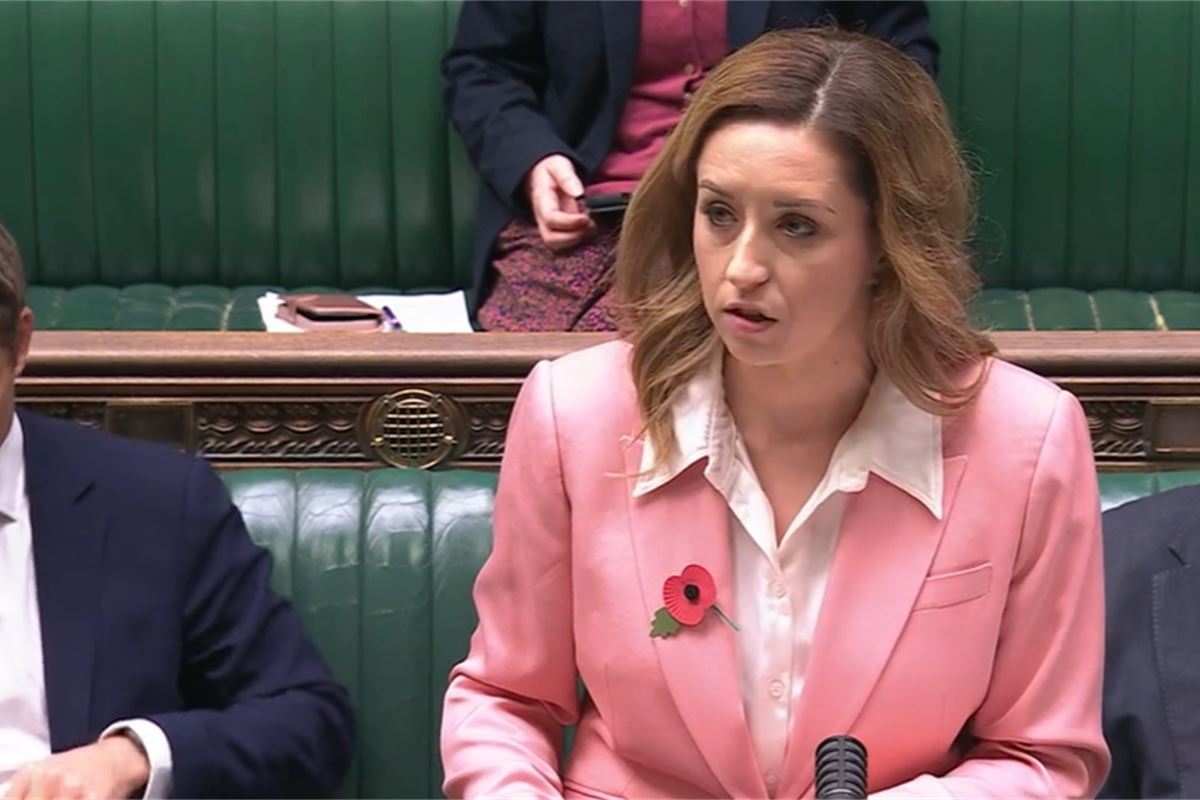
Unveiling the latest rescue plan in a statement to the House of Commons yesterday afternoon, Cabinet Office minister Sally Jameson said Capita’s progress on getting the scheme back on track has been “abysmal”.
The first recovery plan was launched at the end of January amid delays to pension payments and quotes, and resulting financial hardship, following the transfer of administration from MyCSP to Capita on 1 December 2025.
After Capita failed to meet April and June recovery milestones, ministers brought in an independent auditor to assess its systems and ordered the firm to appoint an independent remedial adviser to “force rectification”.
Jameson said that the report from remedial adviser Grant Thornton found that Capita’s rectification planning was “wholly insufficient”, its technology “weak”, and its ambition “was falling well short of restoring the quality services that members deserve”. It also found that Capita didn’t apply “the right techniques to understand demand, productivity and capacity” and failed to put in place “effective mechanisms to detect and escalate failure”, she said.
Jameson did not give details on the auditor’s report but said the Cabinet Office and Capita have worked together to develop a new “credible, workable and realistic” recovery plan out of the recommendations made by both the remedial adviser and auditor, “for which Capita alone will be held to account”.
As part of the plan, Cabinet Office officials now have full access to Capita systems and data for the first time, and expert teams are working alongside Capita to agree priorities, improve quality and processes, and ensure that pensions are paid correctly, she said.
The new recovery plan is made up of five workstreams: the first three looking at cases of differing levels of complexity; the fourth ensuring significant exercises such as the McCloud remedy are not overlooked; and the fifth, on technology, tackling “issues around infrastructure that support delivery”.
“We will require Capita to evidence its focus on fixing complex cases, ensuring that this plan makes the difference that Capita’s original plan could not,” Jameson said.
A group of experts, drawn from across the civil service and led by the Cabinet Office, will provide “challenge and advice”. On this move, Jameson noted that “these problems were not created by civil servants, but it will be through the expertise, commitment and perseverance of the civil service that operational delivery is supported and we shape the solutions with Capita”.
As part of the plan, Capita has committed that every member with a complex case will be written to in the next month, “ensuring that they understand where they are in the system and how they will be supported”.
“Old cases will no longer be allowed to sit on backlogs without progress,” Jameson said. “Any stuck quote or payment will be actively managed through revised complex case management.”
The Cabinet Office will continue to publish fortnightly scheme updates on the pension scheme website – showing the number of outstanding complex cases broken down by age, the service levels for straightforward cases and the number of other tasks that are outstanding – until performance has been stabilised, the minister said.
Asked about the timeline for delivering the latest recovery plan, Jameson said she didn’t want to “set a date here today and end up with there being disappointment”. But she added that “if we do not start to see pretty rapid improvement over the next month, I will come back to this House and explain the next steps that might be taken”.
‘Too many are still left waiting in limbo’
Since taking charge of the CSPS remit in July, Jameson said she has met Capita’s chief executive and senior team twice, and on both occasions “expressed in no uncertain terms my outrage at their performance throughout this contract”.
“Complex issues remain unresolved for too long – 1,800 cases for more than a year,” she said. “Although some individuals have more than one case, too many members and family are still left waiting in limbo.”
Jameson said Capita’s claim that the firm achieved its September recovery goals “does not reflect members’ lived experience or my own correspondence”, calling them “self-imposed, self-determined and self-assured targets”.
She said Capita has also “comprehensively” failed to deliver on its commitment to provide “the most AI-enabled pensions service”.
Jameson said the administration issues have also had a “knock-on effect” on the progress of Capita’s work on the McCloud remedy and promised to update MPs on that issue next month. Earlier this month, Cabinet Office permanent secretary Cat Little said implementing the remaining McCloud remedy cases by the deadline of March 2027 was “no longer achievable”.
The minister said there were some areas of improvement: Capita is now processing more priority cases than it receives, there is more automation, and new tools are being rolled out that allow eligible spouses and dependents to view pension payslips and make online inquiries.
She also acknowledged that Capita staff on the ground are “working hard in difficult conditions”.
Responding to Jameson’s statement in the House of Commons, Public Accounts Committee chair Sir Geoffrey Clifton-Brown warned that “the situation is worse than she has outlined”.
“We have had four PAC inquiries into Capita’s administration scheme this year, and it has missed virtually every single one of the deadlines that it set out in each of those hearings,” Clifton-Brown said.
Capita says teams are ‘working tirelessly’ on outstanding cases
A Capita spokesperson said the firm is “deeply sorry for the frustration that the administration of the Civil Service Pension Scheme has caused members and their families”.
“We know that behind every outstanding case is a person waiting for the pension they have worked for and are entitled to receive, or a family trying to get support at an already incredibly difficult time,” they said.
“We have made progress. But there is still a lot more to do and the service is still falling short for members. Our teams are completely committed to getting this right and are putting everything they can into resolving these issues. They are working tirelessly to resolve outstanding cases as quickly as possible, with particular focus on people who have been waiting the longest and those facing financial hardship or challenging personal circumstances.”
The spokesperson added: “There is nothing more important to us right now than the administration of this scheme. We are working closely with the Cabinet Office and will continue that work until members are receiving the reliable, timely service they expect.”
Update on the scheme’s future
On the longer-term future of the scheme, Jameson said meetings with trade unions, practitioners and experts have made clear that the focus should be on “restoring operational resilience and member trust”. Officials will now evaluate the viability of a range of future delivery options, including insourcing all core business operations, she said.
“There are a number of different insourcing models in operation across the public sector that we will learn from, and we will consider which is the best approach to take for the civil service pension scheme and all the other schemes that it interacts with,” Jameson said. “Once those assessments are complete, I will return to the House to provide a further update, but in the here and now, Capita must deliver.”
Concluding her statement, Jameson said the government “inherited a broken, outsourced administration” and “cannot replace a complex pension operation overnight”.
“But,” she added, “let me be clear: this government will hold Capita to account and continue to apply the most stringent commercial levers, and we will not rest until every civil servant receives the pension they are entitled to.”