
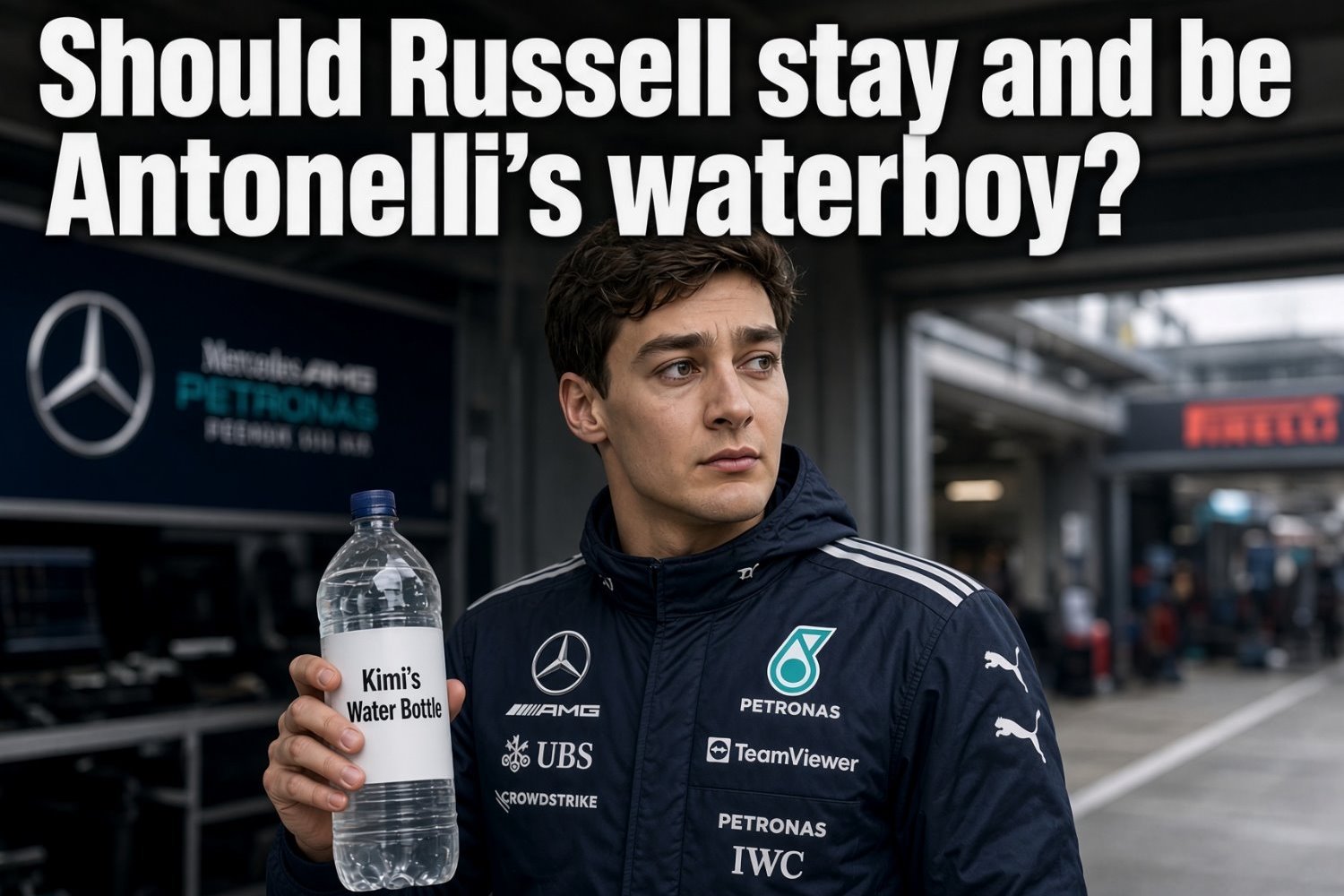
With Kimi Antonelli holding a 123-point lead over Mercedes teammate George Russell after the United States Grand Prix—365 points to 242—and needing only a ninth-place finish in Mexico City to become Formula 1’s youngest world champion, the question hanging over the paddock is stark: has the 20-year-old’s dominance permanently damaged Russell’s title prospects?
–by Mark Cipolloni–
Russell entered 2026 as the clear favorite in a competitive Mercedes. He won the season-opening Australian Grand Prix and looked ready to deliver on the promise of his junior-career titles and his solid performances alongside Lewis Hamilton. Instead, Antonelli responded with a string of victories, building a substantial advantage that he has never relinquished. The Italian has nine wins to Russell’s three; head-to-head results and average pace have consistently favored the younger driver in the same car.
Damon Hill, the 1996 world champion, believes the damage runs deep. Speaking to Fox Sports, Hill described Russell’s season as a “crushing blow” and a “huge shock to the system.” “When they’ve been level pegging, Kimi has always caught him up,” Hill said. “The possibility of being a world champion when you’re shown up by someone who is clearly faster—it’s very difficult to recover from that.” He compared the situation to someone carefully building a matchstick model of the Cutty Sark only for another person to smash it. Hill noted that few expected Antonelli to be this strong so soon, and that being comprehensively outperformed by a teammate forces a driver to “readjust his sights.” On current evidence, he added, Antonelli “is a lot better than everyone else.”
Russell himself has acknowledged the psychological toll. He has described 2026 as a season that “tested my character and resilience,” with performance gaps and reliability issues keeping him awake at night earlier in the year. After the Austin race he said finishing second in the drivers’ standings would “mean nothing” as long as Mercedes secured the constructors’ title. Observers have noted a visible drop in confidence; Russell has often looked short of answers when asked about the gap to his teammate.
Mercedes team principal Toto Wolff rejects the idea that Russell’s career is finished. Defending the British driver against suggestions from Helmut Marko that he has been permanently relegated to number-two status and will never win a title, Wolff said: “I think he’s wrong on George. George has all the ability. I think the car doesn’t suit him.” Wolff acknowledged the difficulty of the situation—“At the beginning of the season, it’s maybe difficult to cope with a situation where you feel this is your year, and then you have a wunderkind on the other side who starts to chip away”—but insisted the raw talent remains. “If we provide him with a quick car, it’s absolutely possible. He has what it takes to win a championship.”
Wolff’s comments also came amid news that Antonelli intends to keep racing with the number 12 even after becoming champion, citing Ayrton Senna’s use of the number at Lotus in 1985–86. The Italian has shown no desire to switch to the traditional number 1.
Should Russell move on or stay as Antonelli’s waterboy?
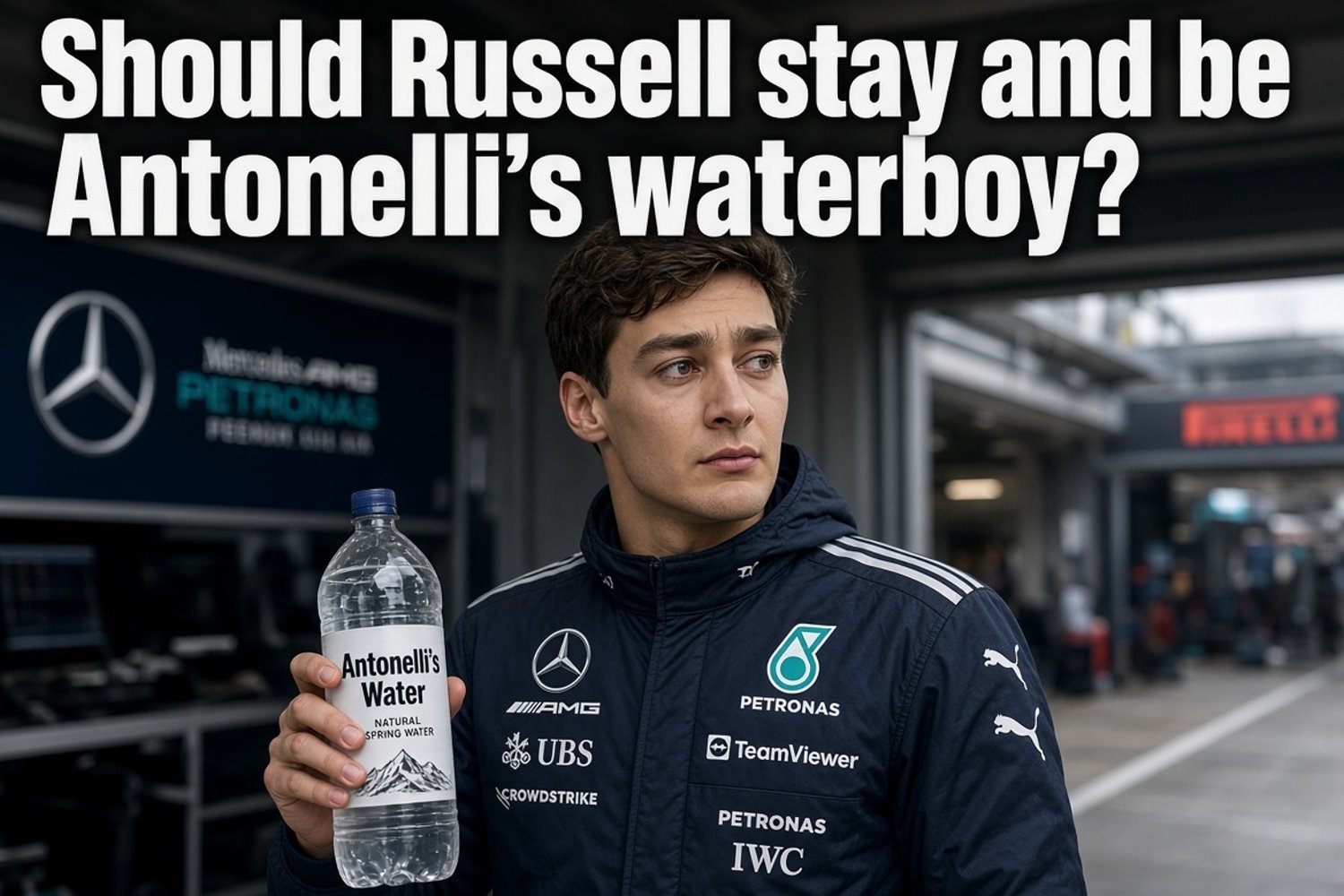 Should Russell move on or stay as Antonelli’s waterboy?
The scale of Antonelli’s superiority has inevitably triggered debate about Russell’s long-term future at Mercedes. Remaining would mean accepting a clear supporting role—essentially becoming the experienced number two, or “waterboy,” to a teammate eight years younger who has already established himself as the team’s spearhead and the sport’s next dominant force. Russell’s $34 million salary and existing contract options through 2027 give him security, but they do not guarantee equal status or development priority once Antonelli’s title is secured and his own new deal is negotiated.
Leaving carries risks of its own. Top seats are scarce; most competitive teams already have established line-ups or preferred juniors. A move to a midfield squad would likely mean worse machinery and fewer chances to prove he can still fight at the front. James Hinchcliffe, among others, has suggested the unique circumstances—Antonelli as Toto Wolff’s long-term personal project, hand-groomed through the junior ranks and now delivering a championship in year two—could prompt Russell to at least consider options elsewhere, even if only as leverage.
Wolff’s public defense indicates Mercedes still values Russell’s ability and experience. Yet the on-track evidence of 2026 is difficult to ignore: when the car has been competitive, Antonelli has extracted more from it, more consistently. Russell has won races and shown flashes, but the gap has been structural rather than the product of isolated bad luck. Staying could preserve a high-paying seat in a top team and allow him to rebuild if the car’s operating window is widened for 2027. Moving might offer a cleaner slate and the chance to be the lead driver again, but only if a genuine opportunity exists.
For Russell, now 28, the choice is less about short-term pride and more about the next five to seven years. Remaining as Antonelli’s teammate risks cementing a permanent number-two reputation that, as Hill warned, can be difficult to escape. Departing risks trading a front-running car for uncertainty. Neither path is risk-free; both depend on whether Russell still believes he can close a gap that has looked structural this season.
Whether Antonelli’s rise has merely interrupted Russell’s trajectory or fundamentally rewritten it remains open. Teammate beatings of this magnitude are rare and often reshape a driver’s self-image and market value; history is full of drivers who never fully recovered their status after being outpaced by a younger teammate in the same car. At the same time, Russell is still under contract, and Wolff’s backing suggests Mercedes has not written him off. How he responds in 2027—and whether he chooses to stay or seek a fresh start—will decide whether Hill’s “crushing blow” proves permanent or merely a painful chapter in a longer career.