
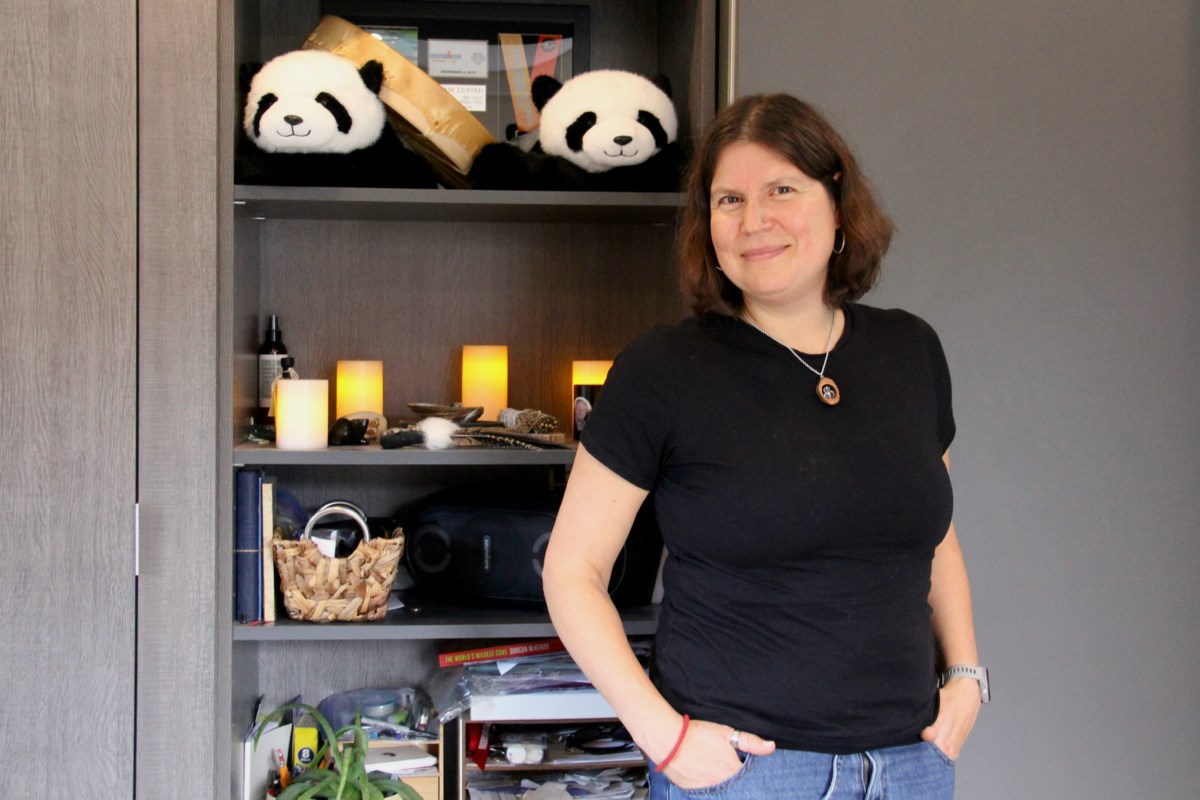
‘The goal of the group is to build mental and emotional resilience by providing a safe space for people to connect with other people who are going through hardships’
A mental fitness coach has recently started free, drop-in mental health walks in Orillia.
Kimberly Desmoulin, a psychotherapist, started the walks earlier this month at Tudhope Park; they’re held on Wednesdays at 6:30 p.m. Newcomers, especially those going through a tough time, are welcome to attend.
“The goal of the group is to build mental and emotional resilience by providing a safe space for people to connect with other people who are going through hardships so they don’t feel so alone,” said Desmoulin.
People that are going through a hardship, such as a death in the family, often don’t know what to do with themselves. The group can act as an anchoring device, she explained.
“If you set an intention that you are going to do something, it makes you more hopeful and more able to walk through whatever it is. It’s a bit of a brain trick.”
The walk also comes without expectations.
“Because there are no expectations, everyone is comfortable saying what they want, sharing what they want and talking to each other,” said Desmoulin.
No direct counselling is done on the walks, however she may talk about living in the moment. She has hosted two walks so far.
“It’s a trial, but I’d like to keep it ongoing because I feel like there’s more of a mental fitness aspect to it,” she said.
Desmoulin runs Walking Through It Mental Fitness Coaching and Psychotherapy, from her Orillia home. Her practice uses body and movement-based therapy as opposed to traditional talk therapy.
This therapy style is particularly beneficial to neurodivergent people, said Desmoulin. The umbrella term, neurodivergent, takes in people who process information differently, including those with autism and attention-deficit/hyperactivity disorder.
“Some folks can’t move forward when they are sitting still,” she said.
Desmoulin has a master’s degree in counselling psychotherapy, graduating in January, and is a neurodivergent individual herself.
“The idea of typical therapy never appealed to me,” she said.
She approaches therapy from the body. She looks to discover where people are holding tension. It could be in the back or the neck or the jaw and she works with people to breathe and bring awareness to the tense areas in order to calm the body and to promote a sense of safety.
“Eighty per cent of information comes from the body to the brain and not from the brain to the body. That’s why I do body-based therapy,” she said.
The idea is to bring the person into a state of feeling calm and safe. When a person feels safe, they are open to new ideas and new directions, she explained.
“The goal is to create it as a lifestyle, rather than therapy. It’s a lifestyle — that I’m taking care of my body so that I can handle everything that comes to me,” she said.
In her home studio she makes use of a heated grounding mat with red-light therapy. When you lay on it, it calms the nervous system, reduces inflammation and promotes sleep, helping people with anxiety and depression, she said.
Anyone interested in walking with the group should meet by the Moose Beach washroom building before 6:30 on Wednesdays. The walk is self-paced at a distance of 2.5 to 5 kilometres and takes approximately 45 minutes. There is a waiver to sign first.
For more information about Desmoulin’s practice visit practice better or her Psychology Today profile.