
Samsung.com
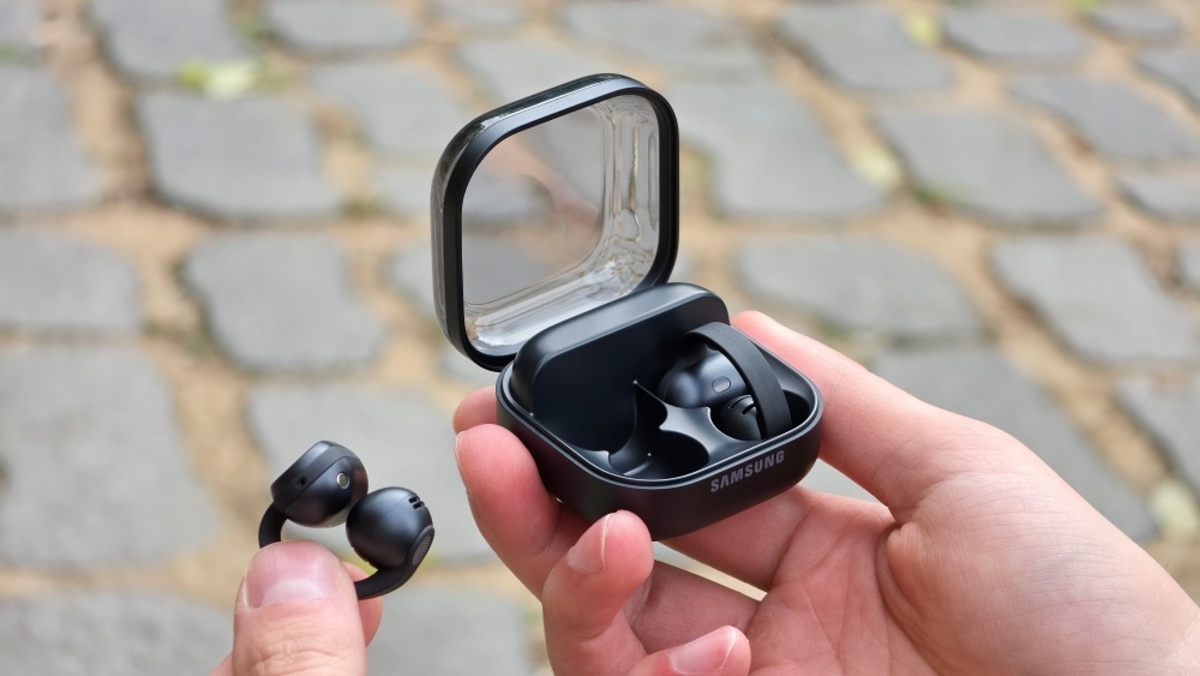
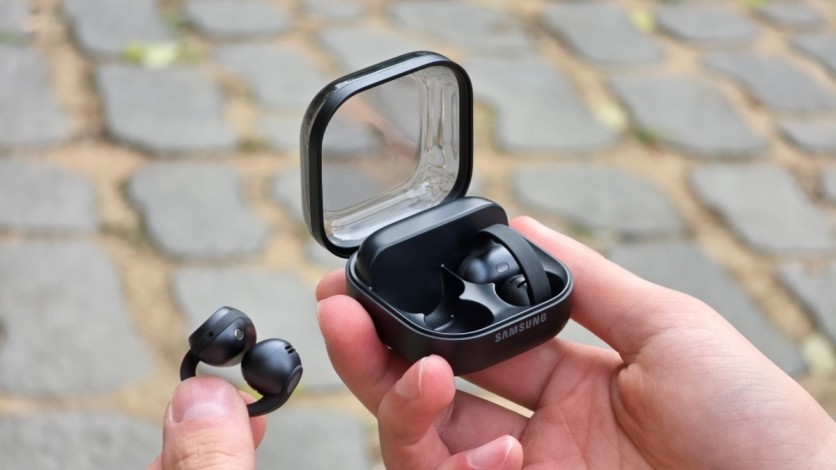
Samsung released the Galaxy Buds On in South Korea on October 27, marking the company’s first entry into the clip-on earbud category — a market where open-ear shipments grew 12 percent year over year to 11.1 million units in Q2 2026 while the rest of the true wireless stereo industry contracted. The more revealing story is not the launch date but the engineering choices Samsung made to address the two physics problems that have historically kept open-ear earbuds from sounding as good as in-ear designs: losing bass without an ear-canal seal and handling voice calls without acoustic isolation from the environment.
The Galaxy Buds On is priced at KRW 299,000 (approximately $226 USD) and is currently available only in South Korea. The US Federal Communications Commission FCC cleared model SM-U600 on September 15, 2026, a required step before US sale, though Samsung has not announced a US launch date or US pricing.
Why Open-Ear Audio Has Always Been a Physics Problem
When an earbud sits outside the ear canal rather than inside it, it loses the one acoustic advantage that makes deep bass physically possible: an enclosed air column. In-ear designs create a sealed chamber between the driver and the eardrum; the driver pressurizes that column and generates the low-frequency energy that makes music feel present and physical. Without a seal, that pressurization never forms.
The problem compounds. Bass frequencies — the 20 Hz to 200 Hz range that carries kick drums, bass guitars, and the weight of a film score — propagate as long-wavelength waves that spread in all directions. An open-ear driver radiates most of that energy into the surrounding room rather than toward the eardrum. The listener intercepts only a fraction. Ambient environmental sound — HVAC systems, traffic, office noise — occupies the same frequency band and masks what little low-end does reach the ear.
Samsung learned this the hard way with the Galaxy Buds Live in 2020. The bean-shaped design sat adjacent to the ear canal without sealing it, and reviewers found the bass consistently flat. Bass Boost and Dynamic EQ presets offered marginal improvement. The Galaxy Buds+ — a conventional in-ear design — outperformed the Buds Live on sound quality despite costing less. That failure is part of what this engineering represents: a serious second attempt at the form factor.
Samsung’s 11.3mm TwinBoost Driver and Class D Amplifier Address the Bass Gap
The Galaxy Buds On pairs a larger-than-typical acoustic driver with an efficient power supply to compensate for the missing seal. The driver — an 11.3mm (0.44-inch) unit Samsung calls TwinBoost — uses a dual-diaphragm architecture designed to maximize low-frequency output without the help of canal pressure. At 11.3mm, the Galaxy Buds On driver is among the larger units deployed in a clip-on open-ear design; a bigger cone moves more air per cycle, producing more acoustic energy at the ear with the same amplifier drive level.
Driving that cone efficiently requires an amplifier that can deliver clean transient power without eating through a compact battery. Samsung uses a Class D amplifier — a switching design that operates output transistors in a saturated on/off state rather than in the linear region used by conventional Class A or Class AB amplifiers — where Class D exceeds 90 percent efficiency compared to the 50 to 70 percent typical of Class AB designs. This means the vast majority of the battery’s energy reaches the acoustic driver rather than converting to heat. In the Galaxy Buds On, which weighs 6.65g (0.23 oz) per bud and houses a 61mAh cell, that efficiency advantage is what makes a 9.5-hour playback claim achievable at this weight. A less efficient amplifier would require a larger battery, adding weight that would make the clip-on form factor uncomfortable.
The digital processing chain runs on the Snapdragon S7 Gen 1 Sound Platform, which Qualcomm describes as delivering six times compute capability and nearly double the AI processing of the previous-generation S5 Sound Platform. Those additional cycles handle real-time audio optimization and on-device inference for the call quality system described below.
How Samsung Handles Voice Calls Without a Seal: Bone Conduction and the VPU
The call quality problem is different from the bass problem and, for many buyers, more pressing. Without an ear-canal seal, the microphone system has no acoustic isolation from the environment. A crowded subway car or a street corner presents the same ambient noise to every microphone element, and conventional beamforming — using spatially separated microphones to computationally suppress off-axis sounds — loses effectiveness when those off-axis sounds arrive from many directions at once.
Samsung’s solution fuses two physically different sensing modalities. The first is a conventional three-microphone array at the outer surface of each bud. The three microphone positions enable beamforming: the processing system compares the arrival timing and phase relationships of sounds at each capsule and amplifies signals coming from the direction of the speaker’s mouth while reducing signals from other directions. This works well in moderately noisy environments.
The second modality is a bone-conduction Voice Pickup Unit (VPU). Rather than measuring airborne sound pressure, the VPU reads mechanical vibrations conducted through the skull and jaw during speech. The sensor architecture — first documented by Sonion and now deployed across multiple Samsung and third-party earbuds — uses a sealed vent MEMS microphone design combined with a tuned mass-spring structure. When the user speaks, vibrations from jaw movement and vocal resonance pass through skull bone and skin into the mass, which deflects, creating a measurable pressure change that the MEMS microphone records. This design makes the sensor virtually insensitive to airborne sound pressure — background noise that overwhelms conventional microphones does not register on the VPU.
Human bone and tissue act as a low-pass filter, attenuating bone-conducted speech above approximately 4 kHz. The high-frequency consonants that make speech intelligible — the fricatives (f, s, sh) and plosives (p, t, k) — do not travel efficiently through bone. This means a VPU alone cannot recover a full speech signal. Samsung’s Intelligent Clear Call system addresses this through machine learning: the Snapdragon S7 Gen 1 fuses the VPU’s clean low-frequency voice reference with the three conventional microphone channels, using the VPU signal as a noise-free template to guide the suppression applied to the full-frequency output. The result, Samsung claims, is clean voice reproduction in environments where conventional beamforming alone would fail. Independent benchmark measurements of Intelligent Clear Call in high-noise conditions are not yet available for this specific device.
Audio Leakage Reduction: Containing Sound That Would Otherwise Escape
Open-ear designs have a problem distinct from bass quality: they can be heard by the people around the wearer. The same physics that allow bass to escape the ear also allow all music and audio to radiate outward. This makes open-ear earbuds impractical in quiet environments — a library, an open-plan office during a meeting, a commuter train in a quiet car.
Samsung describes Audio Leakage Reduction as a first for the Galaxy Buds line. The system uses the external microphone array to detect outward-propagating sound and applies an inverse signal through the driver to partially cancel it — analogous to active noise cancellation, but directed outward rather than inward. Samsung has not published independent measurements of how much leakage reduction this achieves in decibels, and independent audio publications have not yet benchmarked the feature. It is presented here as a Samsung claim.
The Galaxy Buds On does not include conventional active noise cancellation (ANC). That absence is not a feature gap but a physics constraint. Effective ANC requires a sealed acoustic path so that the cancellation signal and the ambient noise arrive at the eardrum from the same channel and can be precisely subtracted. Without a seal, that precision cancellation cannot occur — the cancellation signal and the ambient sound take different paths to the eardrum and cannot be reliably matched. Every open-ear earbud on the market makes the same omission for the same reason. The relevant engineering question is not whether an open-ear earbud has ANC, but whether its driver size, equalization, and playback volume are tuned to compensate for the environmental masking that ANC would otherwise address.
Open-Ear Is the Only Wireless Earbuds Segment Growing Right Now
Samsung’s engineering investment reflects market data. According to Omdia’s Q2 2026 analysis, global open-ear wireless stereo shipments rose 12 percent year over year to 11.1 million units, capturing 13.5 percent of the total true wireless stereo market — up from approximately 12 percent a year earlier. Overall TWS shipments declined 0.7 percent to 82.1 million units in the same period, making open-ear the only growing format in the category.
Clip-on designs — the architecture the Galaxy Buds On uses — clip-on captured 61 percent of open-ear shipments in Q2 2026; ear-hook designs account for the remaining 39 percent. Omdia projects open-ear shipments projected to 90.5 million units by 2030, up from 43.9 million in 2026. The $100–$199 price tier grew 253 percent year over year in Q2 2026, the fastest-growing price band in the open-ear wireless stereo segment — and the tier the Galaxy Buds On targets at its Korean price.
The Galaxy Buds On’s most direct competitor is the Bose Ultra Open Earbuds 2, which launched in the US at $299 in September 2026. The Bose model uses a comparable clip-on architecture, carries an IPX4 water resistance rating, uses Bluetooth 5.4 with Snapdragon Sound (aptX) support, and delivers 9 hours of battery life. At the Galaxy Buds On’s Korean price of KRW 299,000 (~$226 USD), Samsung would undercut Bose by approximately $73 if US pricing tracks the Korean launch price at current exchange rates.
What Does the Galaxy Buds On Mean for US Buyers?
Samsung has not announced US availability or pricing. European retail at 219.99 euros appeared in late October 2026 (approximately $246 USD at the October 27, 2026 exchange rate of 1 EUR = $1.1170), which would place the US price in a similar range if standard Samsung regional pricing patterns hold.
The September 15, 2026 FCC clearance under model SM-U600 confirms Samsung intends to sell the Galaxy Buds On in the United States. The gap between FCC clearance and commercial availability varies across Samsung products; prior Galaxy Buds models have typically launched in the US within one to three months of FCC clearance. No global launch event has been announced as of this publication.
US buyers considering the Galaxy Buds On should also note codec compatibility. The SSC UHQ lossless codec — Samsung’s proprietary high-resolution audio format — is only available when streaming from a Samsung Galaxy source device. iPhone users are limited to AAC, a significant quality step down from SSC UHQ but comparable to what Bose’s aptX delivers on non-Samsung Android devices. The Galaxy Buds On also ships initially in black only; firmware code has referenced a white color option that has not been formally announced.
Galaxy AI features available at Korea launch include Gemini Live hands-free assistant integration, Quick Voice Memo, Bixby search, and Head Gestures (which allow accepting or rejecting calls with a nod or shake of the head). Which of these features — particularly those relying on Samsung’s Galaxy AI cloud infrastructure — will be available to US buyers at launch has not been confirmed.
(Exchange rate as of October 27, 2026; conversions are approximate.)
Frequently Asked QuestionsHow is the Samsung Galaxy Buds On different from the Galaxy Buds Live?
The Galaxy Buds Live, released in 2020, had an open-style design that sat adjacent to the ear canal without sealing it — and reviewers found the bass consistently flat as a result. The Galaxy Buds On addresses that failure directly with a larger 11.3mm (0.44-inch) driver, a Class D amplifier tuned for low-frequency compensation, and a bone-conduction VPU for call clarity — none of which the Buds Live used. The Buds On also introduces Audio Leakage Reduction (a first for the Galaxy Buds line) and adds the Snapdragon S7 Gen 1 processor with on-device AI. The Buds Live used a proprietary Samsung audio chip with no equivalent processing capability.
Does the Samsung Galaxy Buds On have active noise cancellation?
No — and that is a physics constraint, not a missing feature. Active noise cancellation requires a sealed acoustic path between the driver and the eardrum so that a cancellation signal can precisely subtract incoming noise at the ear. Open-ear earbuds, including all clip-on designs, do not have that seal by definition. The same is true for the Bose Ultra Open Earbuds 2, the Sony LinkBuds Clip, and every other clip-on open-ear earbud on the market. What Samsung does offer instead is Audio Leakage Reduction, which uses the microphone array to reduce the amount of audio that escapes to listeners around the wearer — a different problem, addressed through a different mechanism.
How does the bone-conduction VPU improve call quality in noisy environments?
The Voice Pickup Unit reads mechanical vibrations from the skull and jaw produced by speech, rather than measuring airborne sound pressure the way a conventional microphone does. Because those vibrations travel through bone — not through air — background noise that would overwhelm an external microphone does not register on the VPU. The Galaxy Buds On’s Intelligent Clear Call system fuses the VPU’s clean, noise-free low-frequency voice signal with the three conventional external microphones (which recover high-frequency consonants the VPU misses) and applies machine learning on the Snapdragon S7 Gen 1 to produce the final call output. The practical result is improved voice intelligibility in environments — subway platforms, crowded cafes, city streets — where conventional beamforming alone typically struggles. The sensor’s design means bone vibrations bypass ambient noise the way airborne sound pressure cannot, giving the system a clean voice reference even in loud conditions.
When will the Samsung Galaxy Buds On be available in the US?
Samsung has not announced a US release date or price. The FCC cleared the Galaxy Buds On under model number SM-U600 on September 15, 2026, which is a required step before US commercial sale. European retail listings appeared at 219.99 euros (~$246 USD), and Korean pricing at KRW 299,000 (~$226 USD) suggests US pricing will likely land between $229 and $249 when Samsung announces it. Based on typical Samsung product timelines following FCC clearance, a US launch in the first quarter of 2027 is plausible, though the company has not confirmed any timeline.