
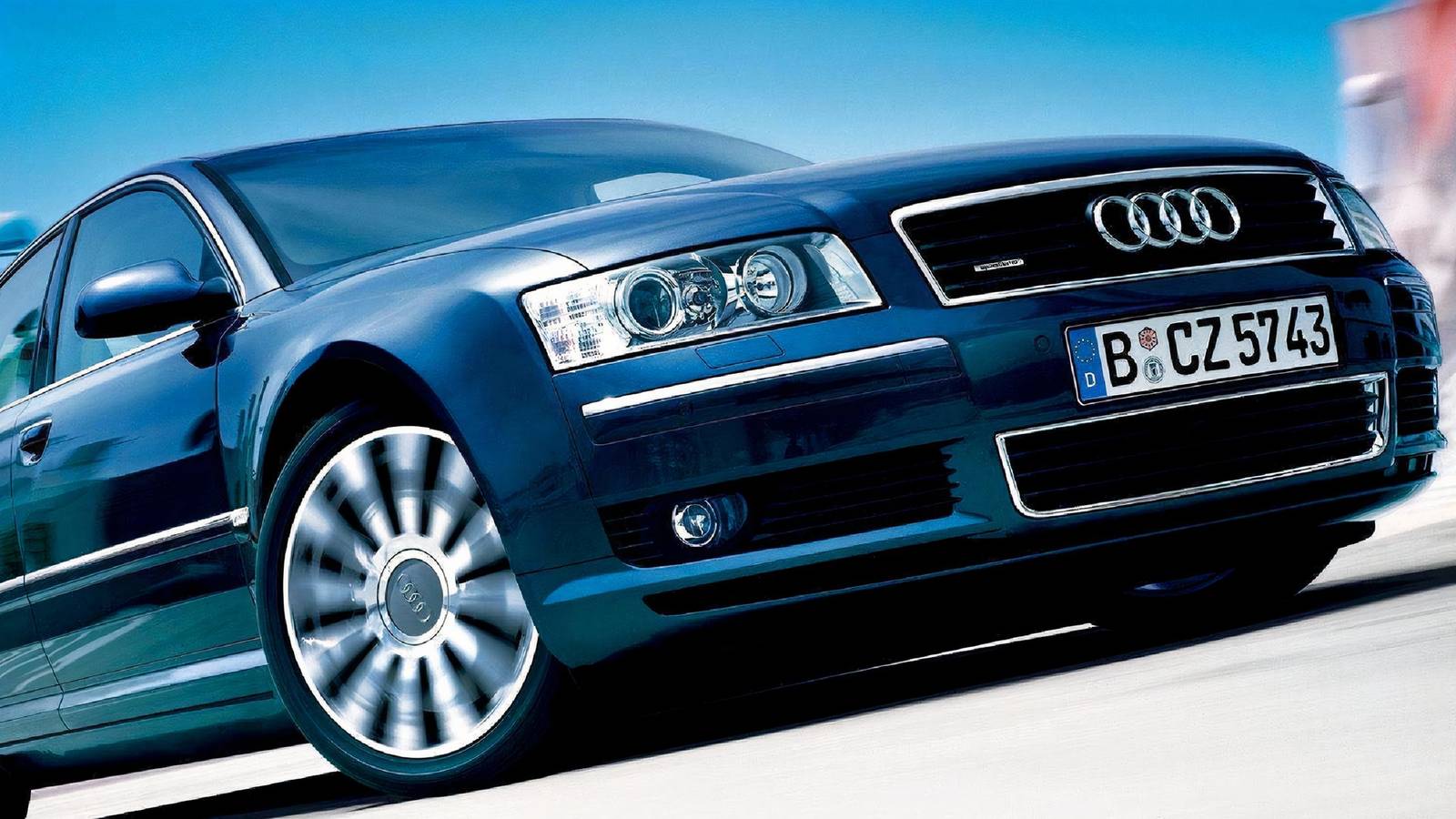
Look at any new car on the road today, and you’ll instantly recognize its distinctive LED daytime running lights. What began as a mandatory safety feature rapidly evolved into an automaker’s ultimate visual signature—and it all started with one car in 2004: the Audi A8 W12.
By debuting the world’s first production LED daytime running lights, Audi kicked off a lighting revolution. Two decades later, LED DRLs are universal. Whether it’s Volvo’s “Thor’s Hammer” or Kia’s sharp geometric light strips, every brand now relies on LEDs to forge an unmistakable identity.
Here is how Audi took automotive lighting from a simple functional tool to the premier element of modern car design.
The Xenon Days
When the LED running lamps arrived in 2004, the A8 was still using xenon headlights — a technology that was by then well-developed. These high-intensity discharge (HID) lights were first used in the BMW 7-Series in the early 1990s, with Mercedes-Benz and Audi following suit within a few years, along with many others. At the time, most cars still relied on more primitive halogen headlights, and xenon lighting was largely reserved for pricier vehicles before eventually becoming more widely available. In time, LED technology replaced them both — but not for some years yet.
In 2003, the year before the A8’s LED running lights arrived, tiltable modules were added to the lighting system to help control the level of the xenon headlight beam. This advancement, followed by LED running lights the following year, represented a significant development leap — intended, says Audi, to boost light quality and enhance the overall driving experience.
Meet the 2005 Audi A8L W12
By the time the 2005 A8L W12 arrived, the D3-generation A8 had been on sale for two years, and Audi had developed numerous new and exciting technologies to engage potential shoppers, including a revised five-valve-per-cylinder V8 engine for the 4.2L model, sophisticated adaptive suspension, and the latest version of the Audi Space Frame with its aluminum-intensive construction designed to keep weight down and fuel efficiency in check.
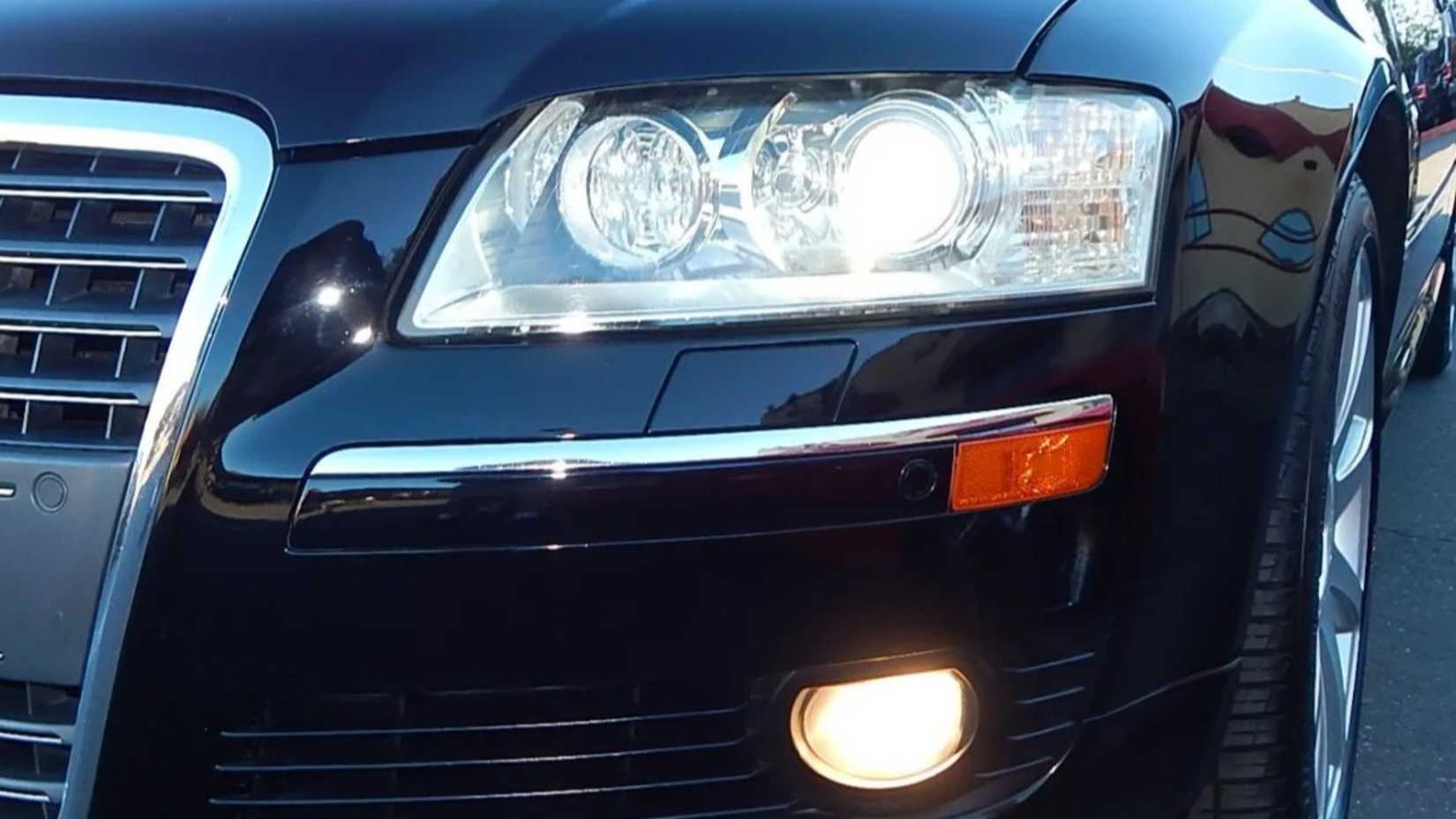
2005 Audi A8L W12 Headlight w LED DRL Close-UpBring a Trailer
On the lighting front, the new LED running light technology was featured exclusively on the 6.0L W12 flagship, where it improved visibility and safety while opening up new design possibilities — compact, powerful LED units gave designers fresh ways to bring character to new areas of the vehicle. The upgraded headlights of the W12 model used bi-xenon outer lights, with the center lenses occupied by new five-point LED DRL units, as you can see above and in the photo at the top of this article. The W12 served as the luxury flagship, while the V10-powered S8 was the sporty model; the W12 engine that hailed from the VW Group’s famous VR engine family displaced a full 6.0 liters and packed a mighty punch, as you can see below.
2004 Audi A8L W12 Specifications
Engine
6.0L NA W12
Transmission
6-speed auto
Horsepower
444 hp
Torque
428 lb-ft
Drive
AWD
0-60
4.8 seconds
Many didn’t know it at the time, but this was a first step toward a major high-tech push into some of the most advanced lighting technologies on the road. The A8’s pioneering use of LED DRLs in 2004 was just the beginning. In the years that followed, the cost of LED lighting fell steadily as the technology was widely embraced as a modern replacement for halogen in everyday life.
The LED Revolution to Follow
Four years after introducing LED running lamps in the A8, Audi had launched another flagship: the R8. This high-performing, mid-engined supercar was Audi’s performance halo car, and as flagships must, it had to deliver some meaningful firsts. Among them: the 2008 Audi R8 marked the first use of full LED headlights in a production car, making Audi the first automaker to put LED headlights on the road — and for a time, the only one offering them.
Over the following decade or so, full LED headlamps began appearing in more and more premium cars, displacing xenon and halogen before them. In 2016, eight years after the R8 brought LED headlights to market, the Insurance Institute for Highway Safety (IIHS) began evaluating the headlight performance of new cars and requiring top scores to achieve their coveted Top Safety Pick rating. Those ratings sell cars, so many automakers needed a way to upgrade their headlights to improve their safety scores. In the years that followed, LED quickly became the technology of choice for headlights in virtually all modern vehicles, and even the most affordable cars on the road began delivering lighting performance once reserved for top-dollar flagships.
Then The Lasers Arrive
In 2013, Audi began pushing into new areas of lighting technology that would enhance and elevate the core LED platform to new levels. For that model year — just nine years after bringing the first LED running lamps to market — the A8 featured LED matrix headlights with 25 individual LEDs apiece, each capable of being independently dimmed or switched off. This gave the headlights the basic functionality of a digital projector, allowing the lighting pattern to be altered in real time in response to navigation data, oncoming traffic, and similar inputs.
With the ability to roughly double the reach of the high-beams, laser technology arrived next. Initially launched in the Audi R8 LMX, the technology was combined with the latest matrix LED system in the 2017 Audi A8. Now 13 years after the debut of LED running lights, Audi would sell you an A8 with HD LED Matrix headlamps and a laser-boosted high-beam. According to Audi, the laser can be activated at speeds above 43 mph and works as a spotlight that reaches 1,870 feet up the road.
Then, in 2019, the Audi e-tron arrived and brought another technological leap to the Matrix LED system with the introduction of a Digital Micromirror Device (DMD), a technology with roots in the world of digital video projectors. A small chip contains 1.3 million micromirrors that can be manipulated using electrostatic fields, with all 1.3 million capable of tilting at a rate of up to 5,000 times per second.
Concentrated light generated by three high-performance LEDs arrives at the DMD chip after passing through an array of lenses. From there, the DMD chip controls the light output with the precision of a video projector. The LED headlights can effectively “paint” patterns onto the roadway ahead to better illuminate lane changes, identify lane edges, and even spotlight pedestrians detected by the night vision system.
Headlight technology has advanced by leaps and bounds and has become one of the most thoroughly developed modern automotive safety features. It’s almost remarkable to think that not so long ago, the Audi A8’s LED DRLs were a genuine novelty — but every revolution has to start somewhere, and Audi is rightly credited as the automaker that started this one.
Sources: Audi.