
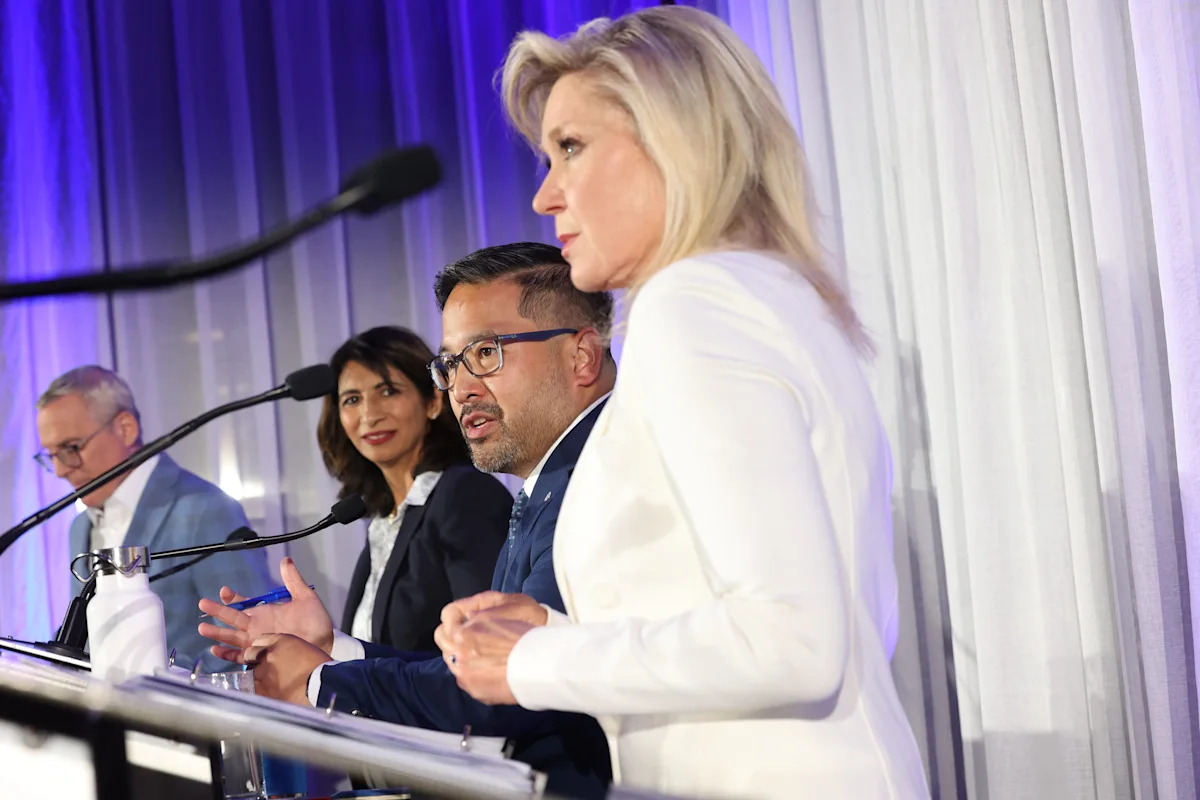
Alvin Tedjo’s victory in Mississauga’s mayoral election has delivered a political upset, and one urban studies expert believes it could signal a broader shift in the city’s priorities.
Tedjo defeated incumbent Carolyn Parrish and former mayor Bonnie Crombie in Monday’s municipal election, according to projections from CBC News.
But the result may say as much about Mississauga itself as it does about the candidates.
The Tedjo win was unexpected but perhaps reveals that Mississauga is maturing as a city.
Tara Vinodrai, economic geography and urban studies expert, University of Toronto
“It is one of Canada’s largest cities and it is a very diverse city, making it ripe to embrace a change agenda and take seriously the real urban challenges the city faces, including affordability and transit connectivity, for all different types of residents and workers,” Vinodrai added.
How Alvin Tedjo turned Mississauga’s mayoral race around
Tedjo’s rise was striking.
In August, he had just 12 per cent support among decided and leaning voters, according to Liaison Strategies. Parrish and Crombie were tied at 35 per cent.
By Oct. 22, Tedjo had climbed to 31 per cent, just four points behind Crombie and ahead of Parrish.
The result also ended Crombie’s attempted political comeback. She left the mayor’s office to lead the Ontario Liberals before returning to municipal politics this year.
Parrish, meanwhile, had won the 2024 mayoral byelection, defeating Tedjo, who finished second.
Online reactions highlight Parrish-Crombie rivalry
Tedjo’s victory quickly stirred debate online, with some suggesting the rivalry between Parrish and Crombie helped his campaign.
“Not a surprise,” wrote X user Adam Jefferson, who argued that a heated mayoral debate weeks earlier had damaged both candidates.
Jefferson also questioned whether voters had forgiven Crombie for leaving city hall or felt Parrish had delivered enough.
Journalist Harrison Lowman described the outcome as a political setback for Crombie following her unsuccessful provincial ambitions.
Meanwhile, another X account, Ontario Proud, highlighted that both former mayors, who previously served as Liberal MPs, had lost to Tedjo.
While the reactions offer different interpretations of the upset, they don’t necessarily explain what motivated voters.
For Tedjo, the challenge now shifts to governing.
His campaign promises include a two-year property tax freeze, but delivering on affordability and transit will be another test.
Whether he can meet those expectations could determine how much change Mississauga actually sees under its new leadership.